

A high school student may recognize the title “diesel technician” without knowing what the work involves. A mobile career workshop can give that student a specific problem to solve: open an engine compartment, use a voltmeter and inspect a damaged connector. Suddenly, there is something concrete to discuss with a teacher, training provider or employer.

That is the opportunity behind mobile workforce recruitment. Bring career exploration to a school or community event, give students a meaningful task, and connect their interest to a next step. At Groove Jones, our work in gamification https://www.groovejones.com/gamification, virtual reality and interactive storytelling supports that journey across skilled trades, STEM education and military recruiting.
Be Pro Be Proud: taking technical careers to students
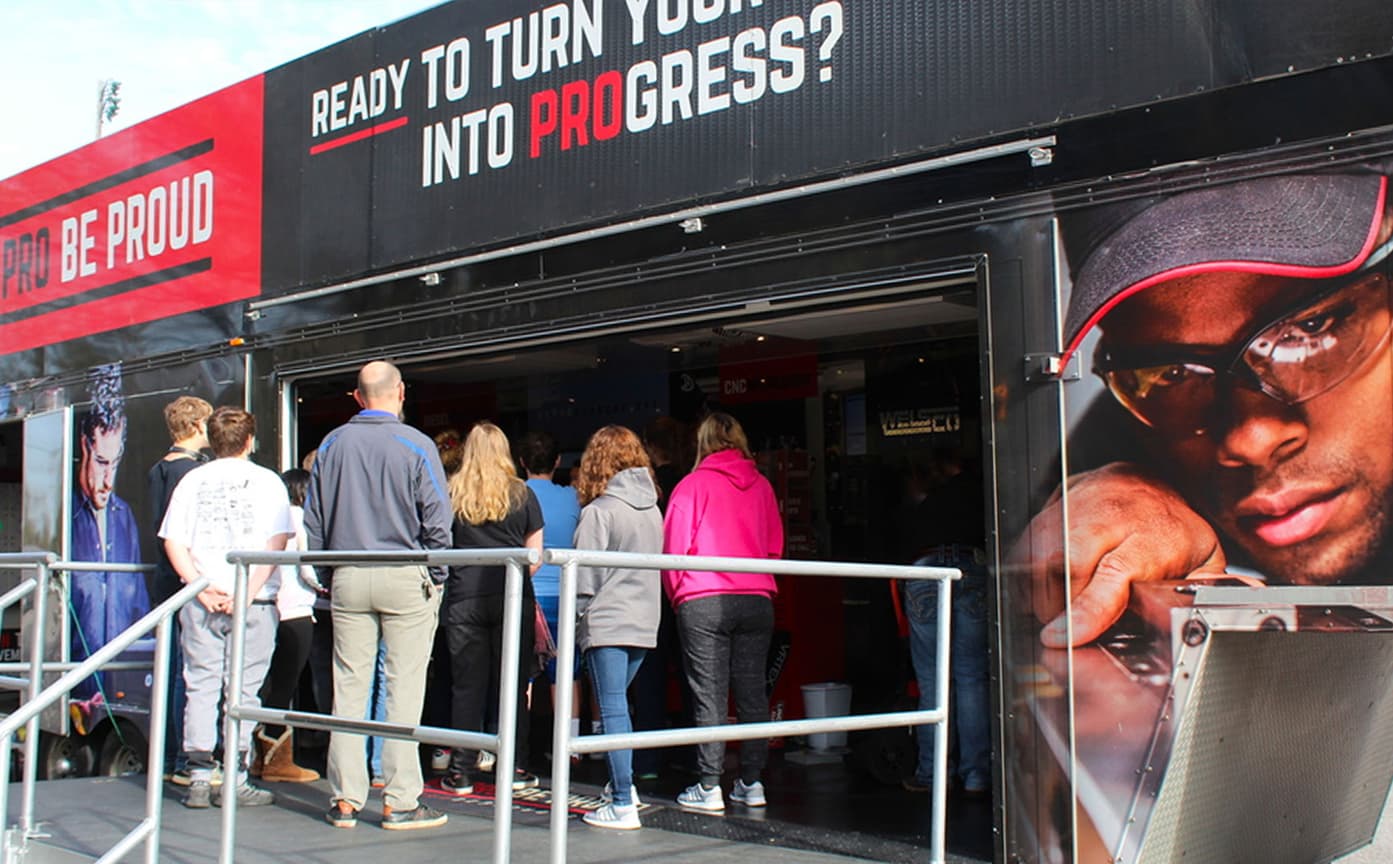
Be Pro Be Proud has built a national initiative around bringing skilled professions into students’ communities. It began in Arkansas in 2016. Its August 2026 expansion announcement identified South Dakota as its tenth state and reported that the initiative had introduced more than 600,000 students to technical career opportunities. Those are program-wide exposure figures, encompassing the broader initiative and its partners. Be Pro Be Proud expansion announcement, reproduced by Iron Trader News https://irontradernews.com/be-pro-be-proud-expands-to-south-dakota-as-organization-reaches-10th-state/.

The expansion continues through both state partnerships and touring events. In September 2026, Be Pro Be Proud and Meta announced a 10-stop anniversary tour across eight states, supported by a $500,000 Meta investment. The organizations also reported introducing nearly 70,000 students to technical workforce opportunities together since 2023. The anniversary route extends outreach beyond the locations of licensed state programs. Be Pro Be Proud’s September announcement https://beprobeproud.org/newsroom/meta-be-pro-be-proud-launch-10th-anniversary-mobile-workshop-tour.

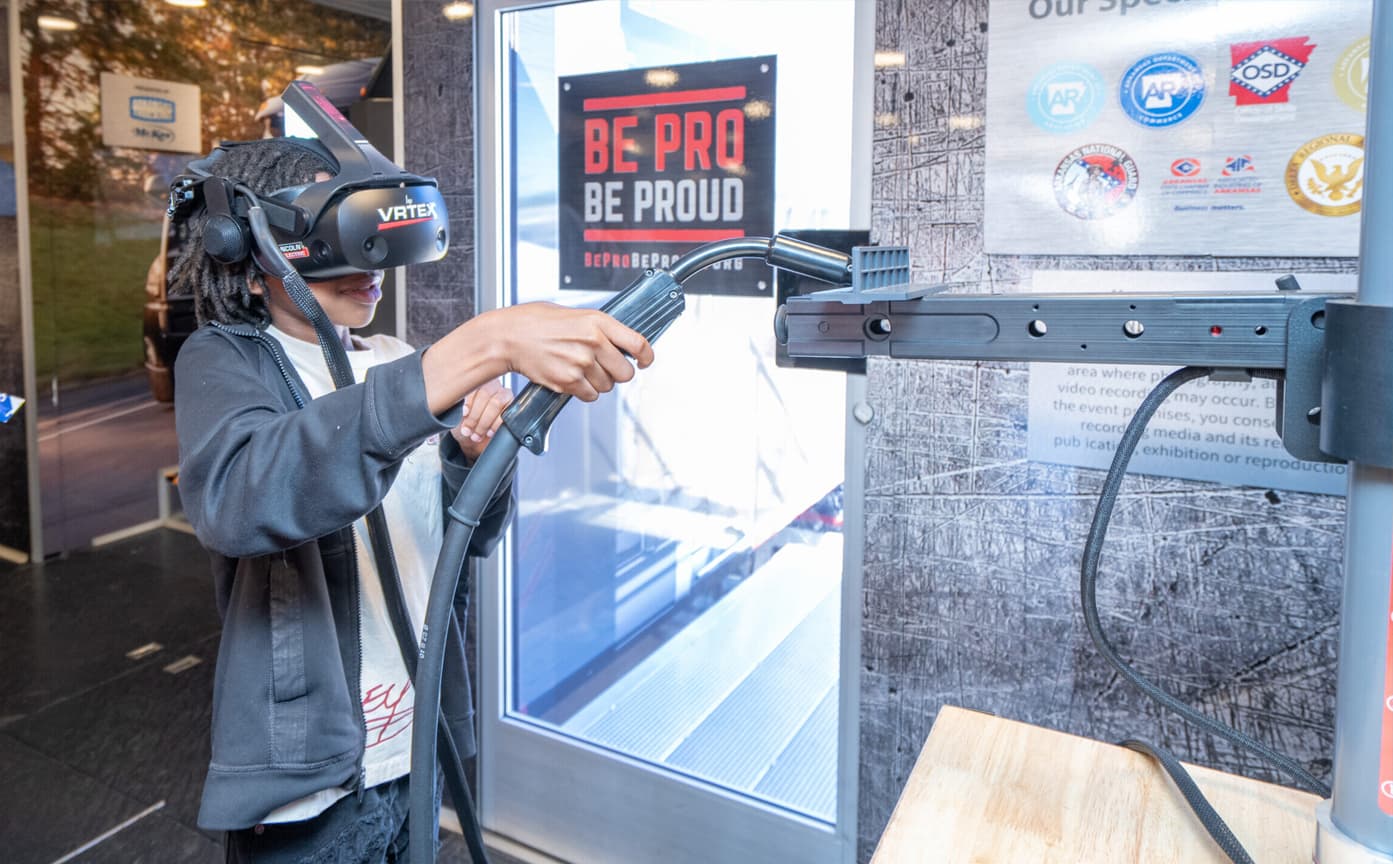
Groove Jones has worked with Be Pro Be Proud leadership and state sponsors to create gamified VR experiences – https://www.groovejones.com/vr-experiences-to-recruit-next-generation-skilled-workforce around plumbing, HVAC, electrical work, carpentry and pest control. Students move through job-related challenges and receive feedback on their performance, along with information about potential earnings.

Later projects expanded the range of work students could explore. In Water Works – https://www.groovejones.com/be-pro-be-proud-water-works-vr-sim-to-recruit-next-generation-skilled-workforce, students repair a broken water main by shutting off the supply, removing the damaged pipe, securing a replacement and restoring pressure. Truck Tech – https://www.groovejones.com/be-pro-be-proud-diesel-technician-repair-vr-experience places them in a virtual truck repair facility, where they perform diagnostic tasks and see a scoreboard with simulated earnings and career information.
These short experiences offer an introduction to the work. The next conversation can become much more specific: Where can I learn this? What qualifications would I need? Which employers hire people with these skills?
The connection after the experience
Be Pro Be Proud’s Draft Day program shows how career exploration can connect to employer access. In Arkansas, graduating seniors are matched with companies for interviews based on employer needs and students’ skills and interests. Younger students can explore employers and training providers through a career expo.

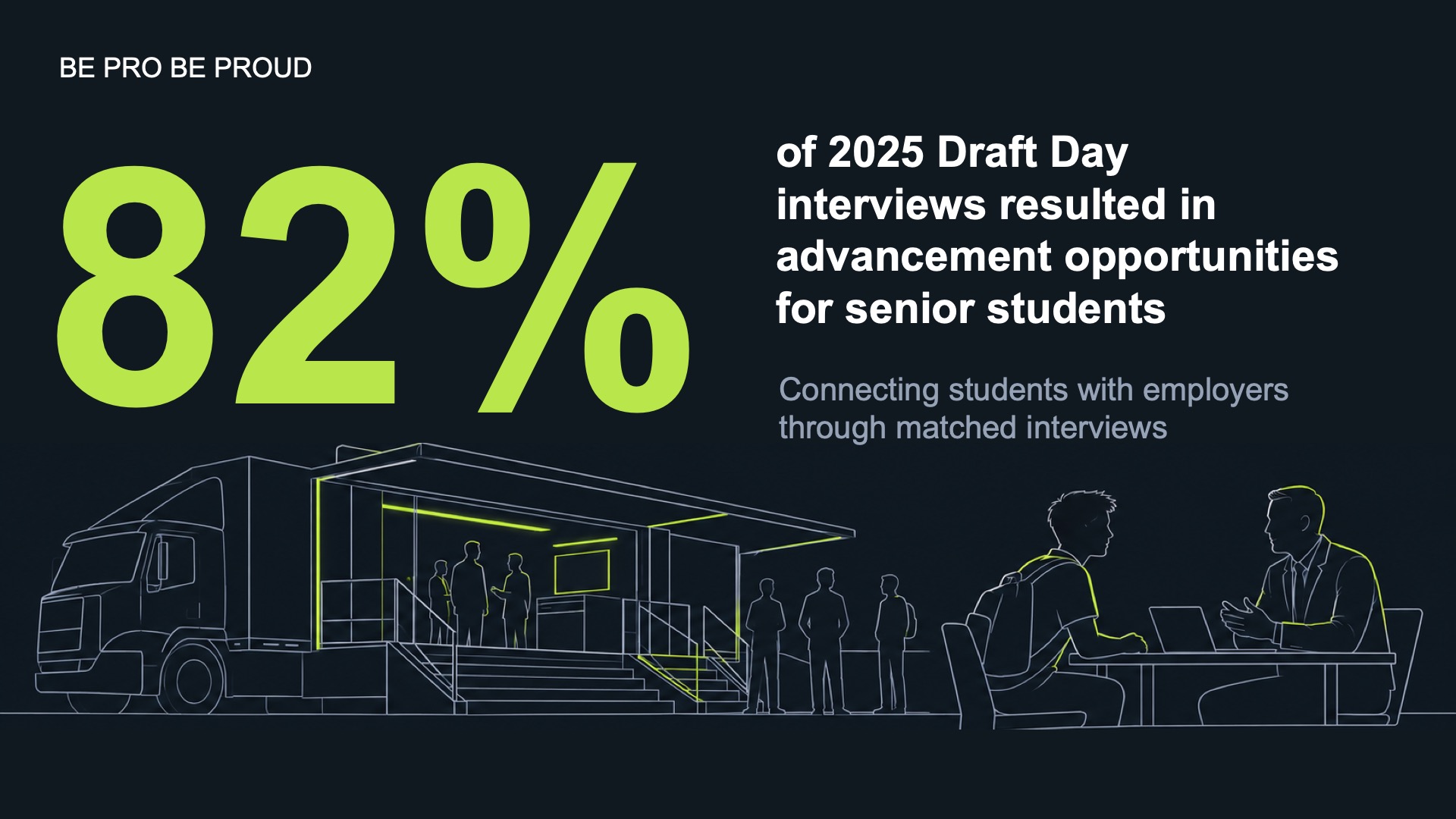
The program reports that 82% of its 2025 interviews resulted in advancement opportunities for seniors. That is a useful indicator of progress after an employer conversation, although it is not a job-placement rate or a measure of what happened to everyone who visited a mobile workshop. Be Pro Be Proud Arkansas’s Draft Day information – https://ar.beprobeproud.org/draft-day-2026.
For organizations considering a tour, this connection deserves as much planning as the experience itself. A student who discovers an interest should leave knowing where to find relevant training, whom to contact and how to continue exploring.
Angelo State: bringing STEM pathways into the community
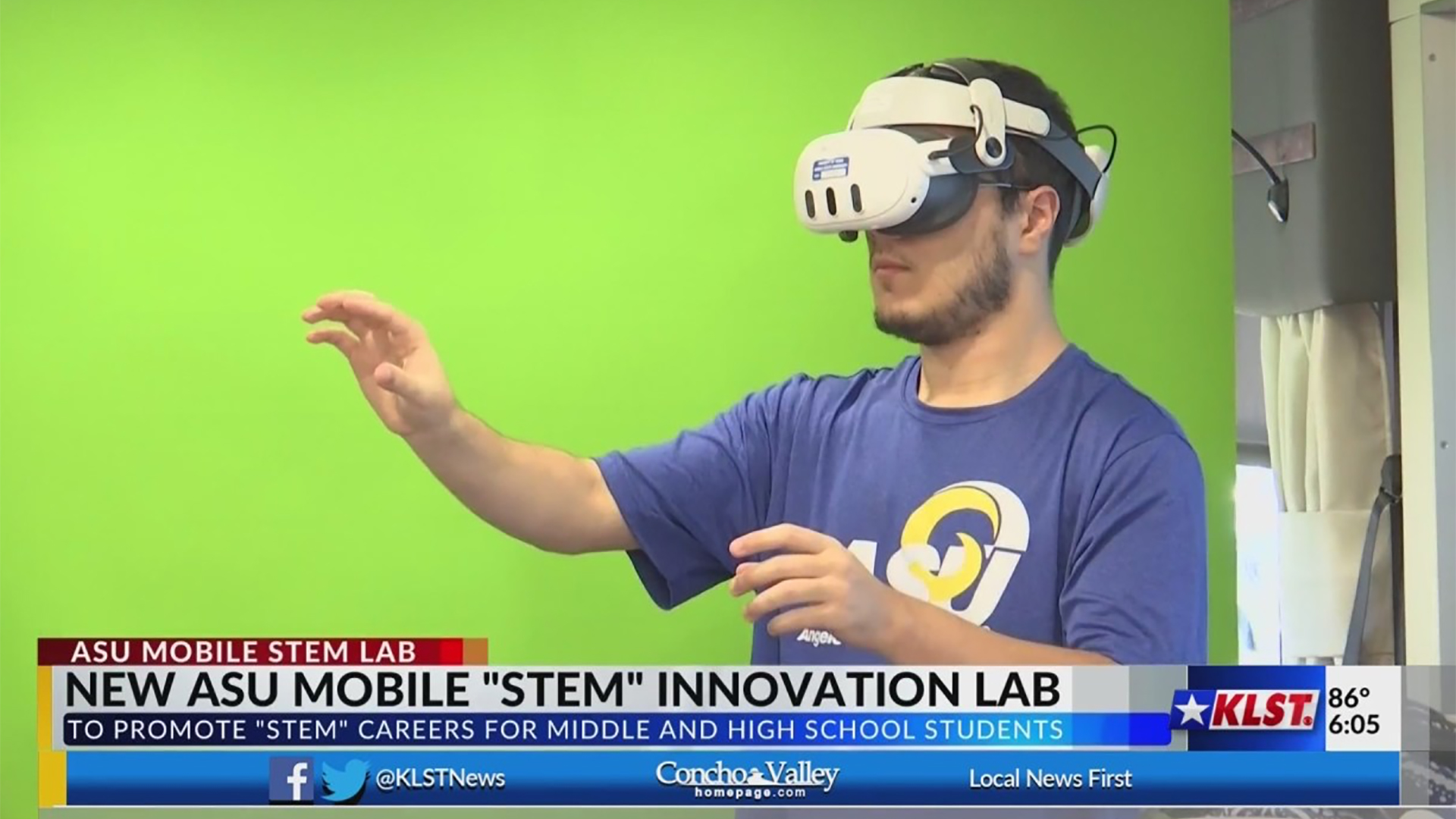
Angelo State University’s Mobile STEM Innovation Lab connects this approach to university outreach and the future technical workforce. ASU announced in July 2026 that the lab was fully functional and available for visits across West Texas. Farber Specialty Vehicles crafted the vehicle, with lab software and equipment developed by Groove Jones. ASU says it will support academic programs, recruiting, faculty outreach and community partnerships. Angelo State’s operational announcement – https://www.angelo.edu/live/news/19901-mobile-stem-innovation-lab-is-ready-to-roll.

For the mobile lab, Groove Jones created Cybersecurity Command Center VR – https://www.groovejones.com/cybersecurity-command-center-vr-for-asu-mobile-stem-lab. Students protect a virtual system through challenges involving firewalls, phishing, encryption and other cybersecurity concepts. The experience connects gameplay with career information, including educational pathways related to ASU courses and cybersecurity work in the San Angelo area.
Our STEM Heroes touchscreen experience – https://www.groovejones.com/asu-interactive-touchscreen-career-experience offers another point of entry. Students explore eight career characters through animated comic stories and knowledge questions across fields including biology, agriculture, engineering and computer science. Together, these experiences give an outreach team different ways to start a conversation about STEM. The university can introduce itself through a subject a student has just explored, well before that student is ready to choose a degree program.
National Guard: a traveling experience can fill a gym
The vehicle is only one way to make an experience mobile. A portable installation can also bring career exploration into an existing school space.
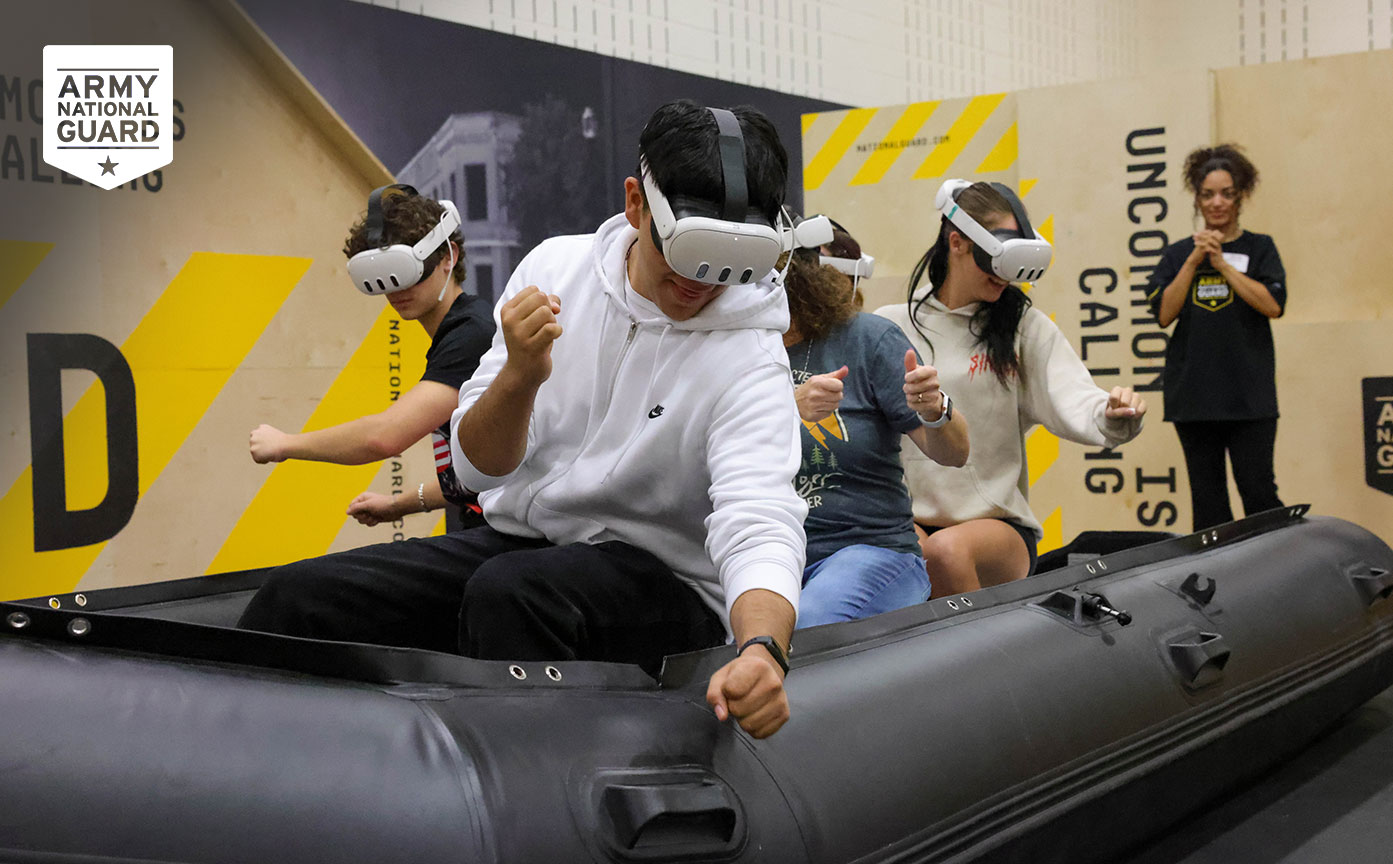
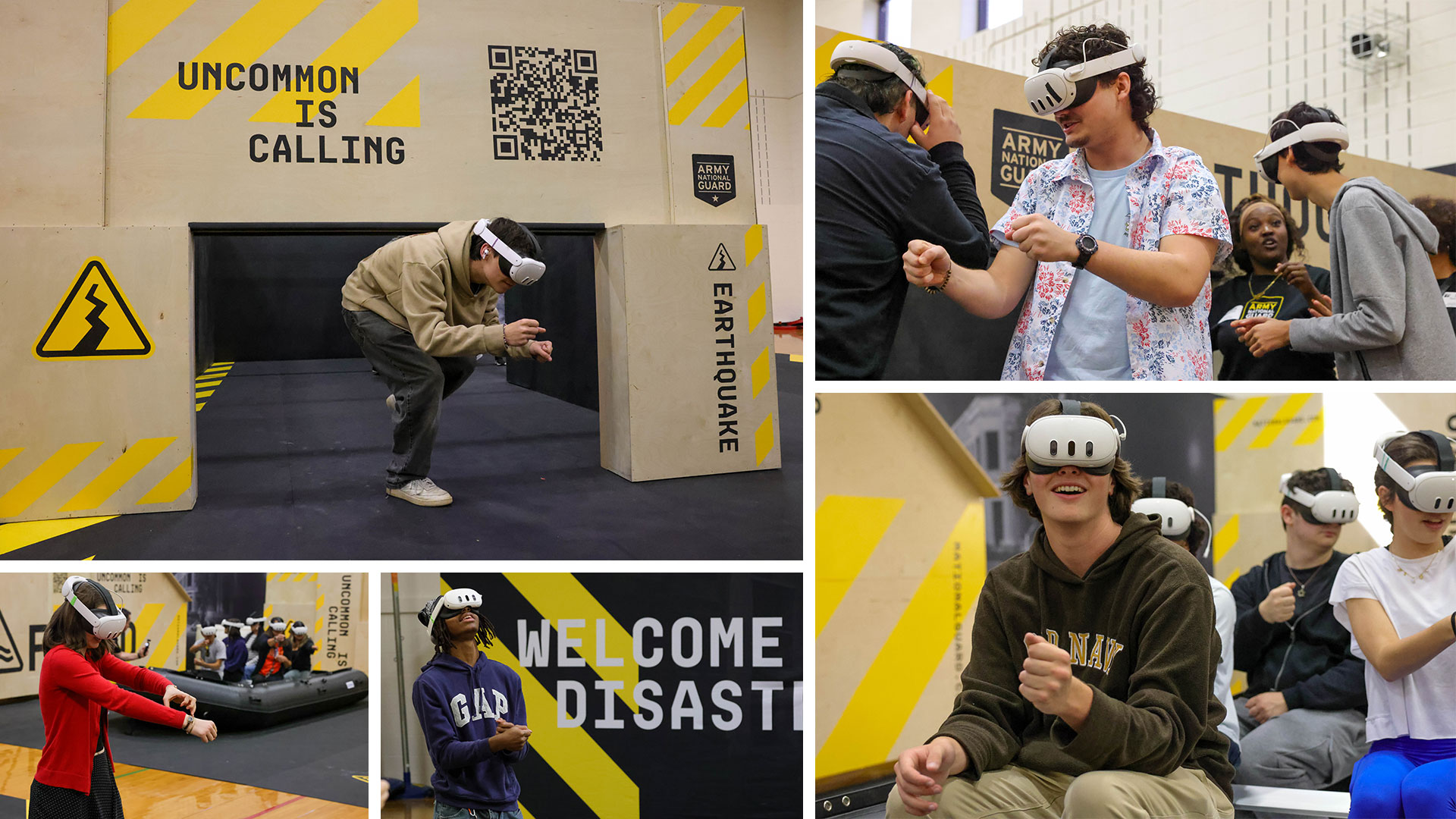
For the U.S. Army National Guard’s Disasterville https://www.groovejones.com/disasterville-mixed-reality-experience-army-national-guard, Groove Jones collaborated with Team DDB and TMA on a mixed-reality experience that transforms high school gyms into simulated disaster-response environments. Students work together through missions involving flood rescue, firefighting and earthquake relief.

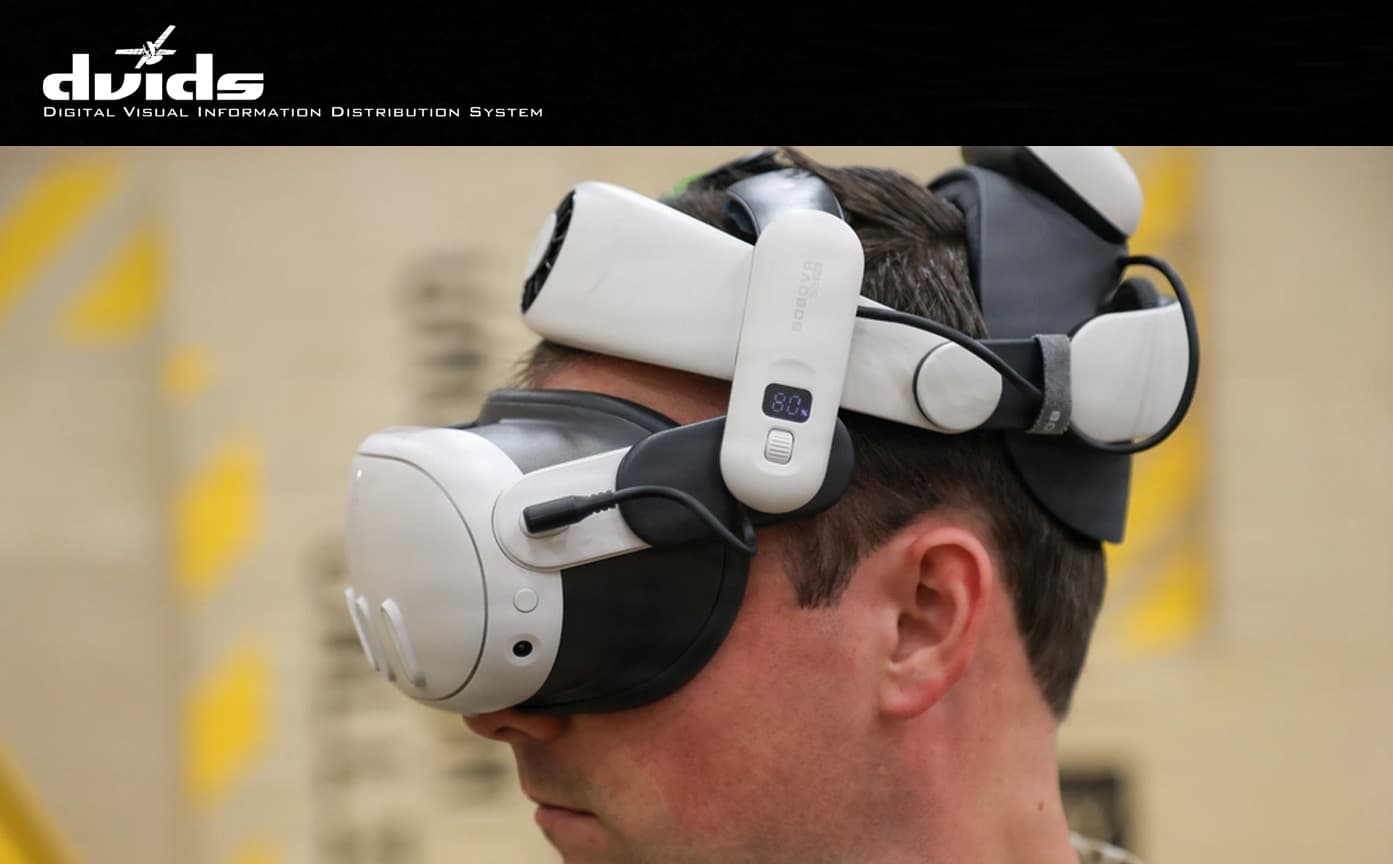
Using Meta Quest 3 headsets, groups of five participate with hand tracking and physical props. On-site recruiters guide students, answer questions and connect the experience to National Guard opportunities. The program makes the Guard’s community-response role something students can explore together and discuss with someone who understands the service.
Army recruiting: competition and personal career exploration
Two separate Groove Jones projects for the U.S. Army illustrate other ways to engage recruiting prospects at events.
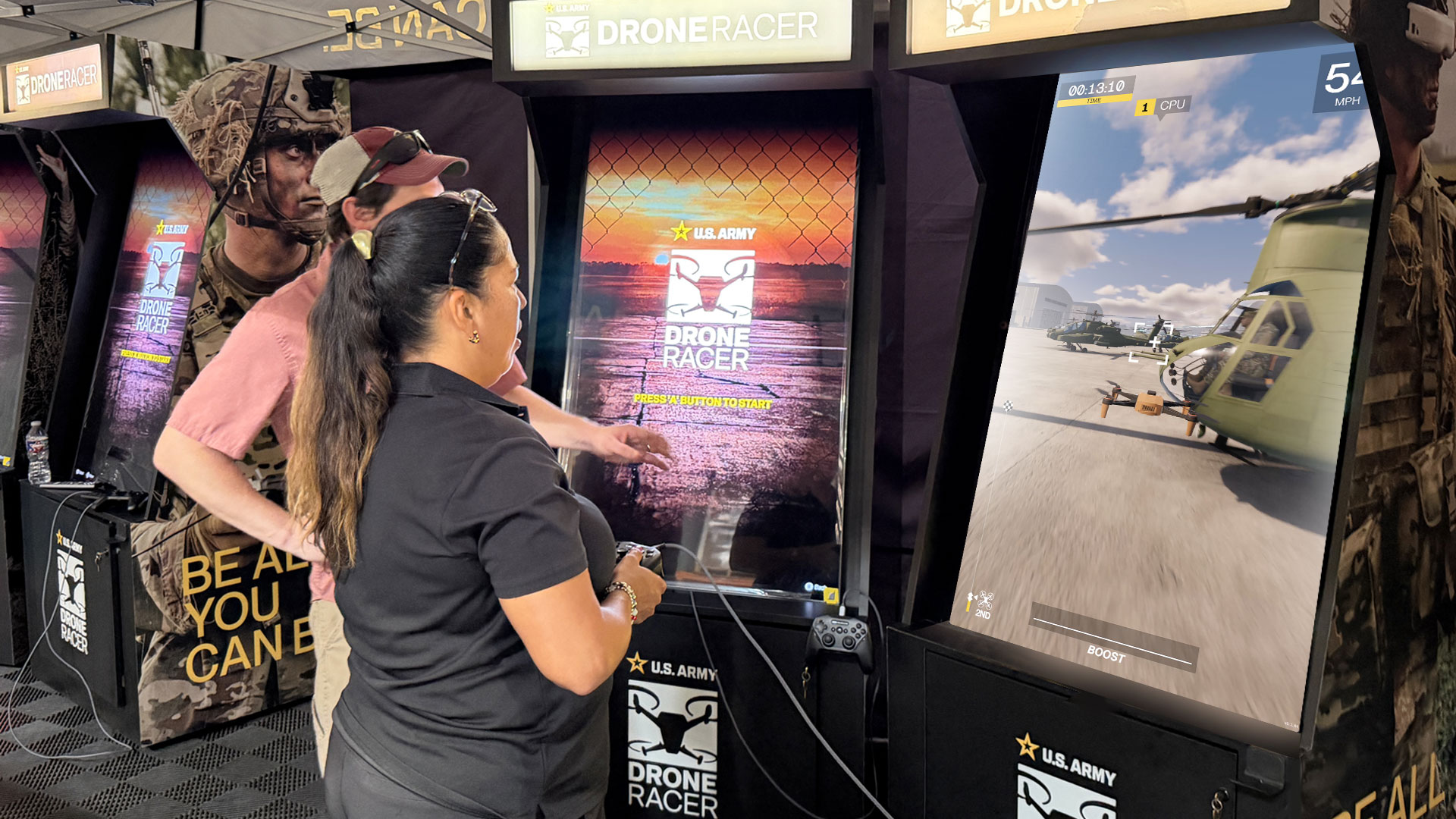
U.S. Army Drone Racer – https://www.groovejones.com/us-army-drone-racer-multiplayer-experience, created with Team TBWA and TMA, is a portable multiplayer arcade experience introducing young adult prospects to Army drone operations through competition. Approachable controls and a leaderboard give visitors a challenge they can enter quickly and return to improve their performance.
Mission Ready – https://www.groovejones.com/us-army-mission-ready-careers takes a personal approach. Guests answer interest-based questions, explore a curated selection of Army careers and choose a role. A guided portrait then becomes a personalized digital image depicting that choice, delivered with role information through a text or email link. The guest controls the choice; the experience offers career exploration rather than an eligibility determination.
These projects demonstrate different ways to begin a recruiting conversation. Their public case studies describe the experiences and delivery, but do not establish an increase in enlistments.
What other mobile programs tell us
Outside our portfolio, the National Association of Manufacturers and the Manufacturing Institute’s Creators Wanted mobile experience – https://www.creatorswanted.org/about/meet-the-mobile-experience/ used a traveling, multi-room challenge to introduce manufacturing through teamwork, puzzles and problem-solving.
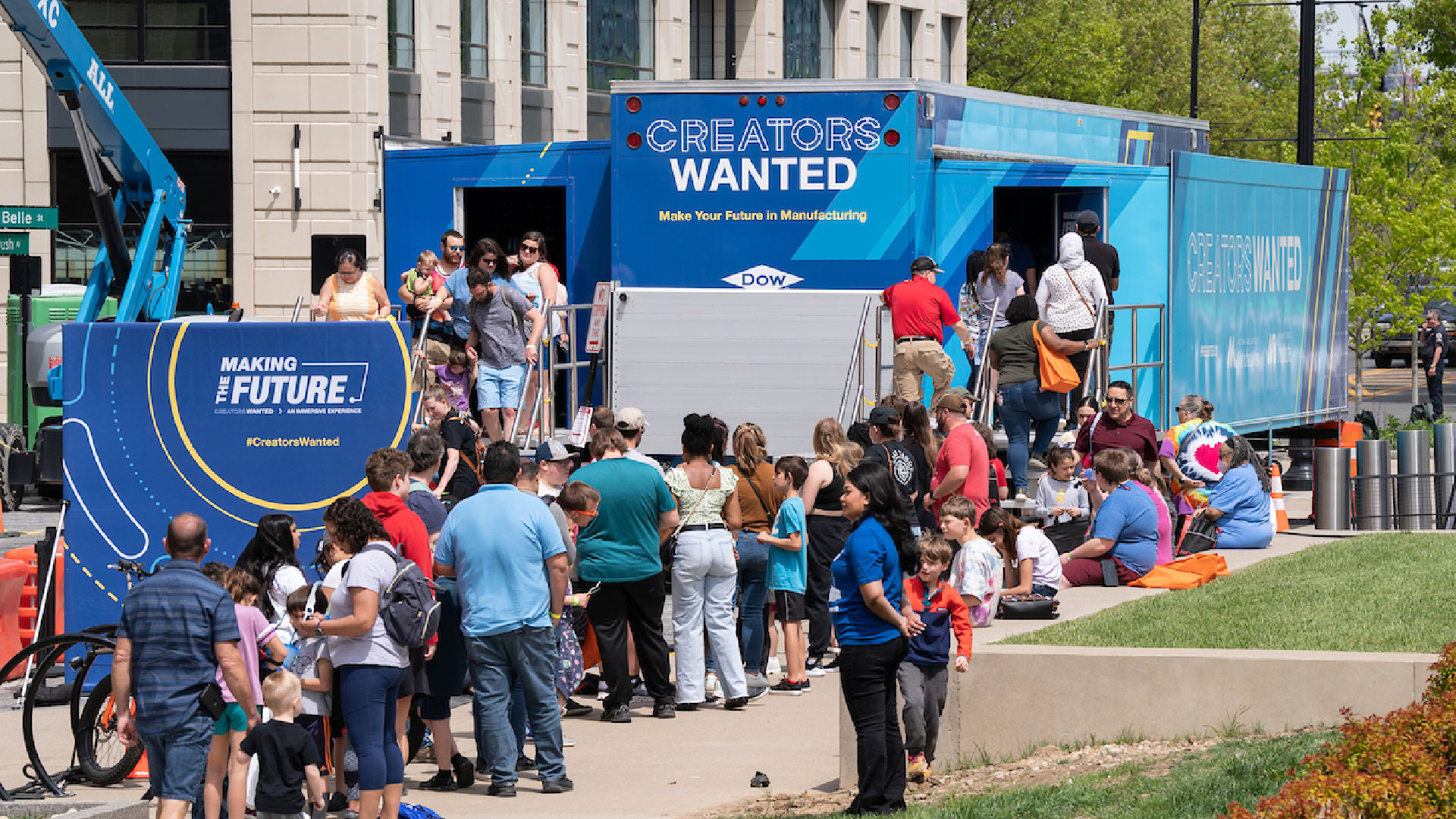
At its October 2023 finale, the campaign reported nearly 17,000 participants across the tour and said post-tour surveys found 84% viewed manufacturing more positively. These are organizer-reported participation and perception measures. They show immediate engagement, while leaving longer-term career decisions to be measured separately. Creators Wanted’s finale report – https://www.creatorswanted.org/creators-wanted-tour-sets-new-records-at-ohio-finale/.
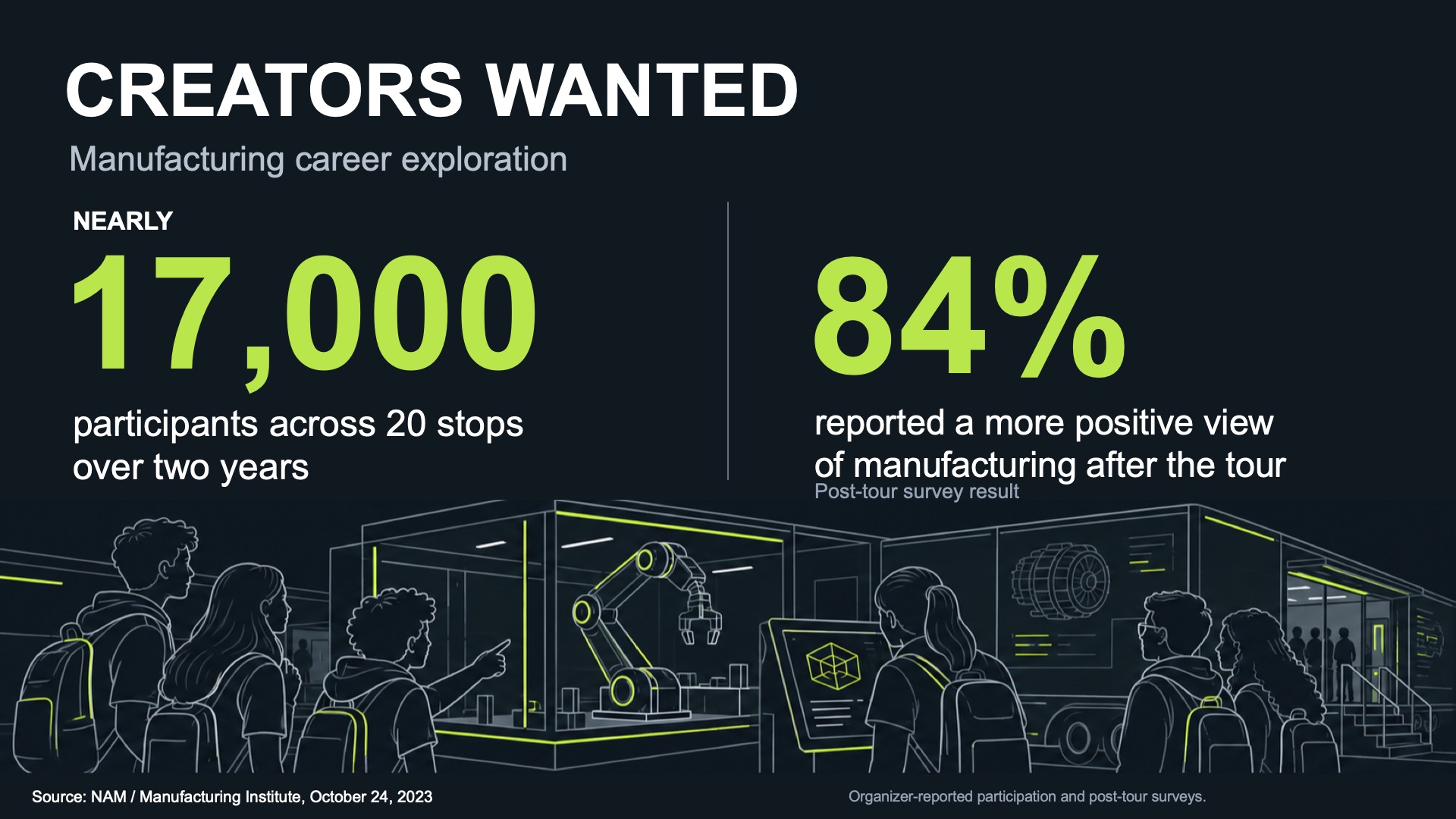
The University of Tennessee, Knoxville’s Advanced Mobility Innovation Lab brings interactive transportation technology to students through a portable trailer. Its first event reached more than 250 students; 132 of 156 surveyed students said they learned something new. The stations cover autonomous vehicles, smart traffic systems, drones and electric vehicles. CR2C2’s program report – https://www.cr2c2.com/news-and-events/2025/amilvideoannounce.
Published research offers a useful qualification. A 2018 study of Seattle Children’s Research Institute’s Science Adventure Lab found that 14.2% of respondents selected an answer indicating newly expressed interest in a STEM career after their visit. The authors acknowledged that excitement could influence those responses and that they might not predict future career plans. Study in the Journal of STEM Outreach – https://www.jstemoutreach.org/api/v1/articles/3681-improving-access-to-hands-on-stem-education-using-a-mobile-laboratory.pdf.
Design the next step into the tour
The evidence supports mobile experiences as a way to reach students and encourage career exploration. Stronger claims about recruitment require follow-through: training inquiries, applications, interviews, enrollments and, eventually, hires or other verified outcomes.
For an employer, university or workforce organization, the practical question is what a student can do after the experience. Build the tour around a task worth trying, connect that task to an identifiable career, and make the next step easy to find. Then measure how far students choose to go.