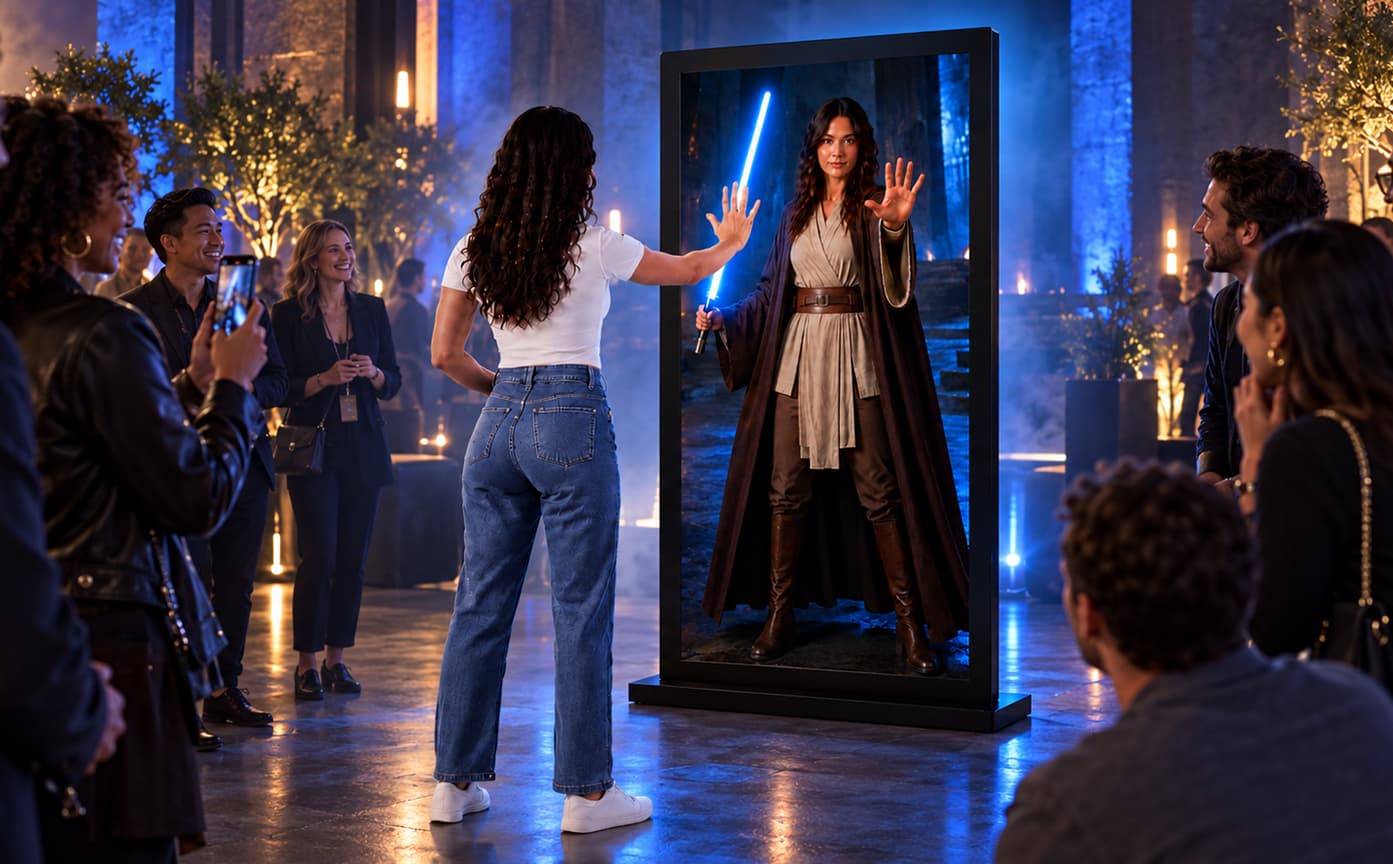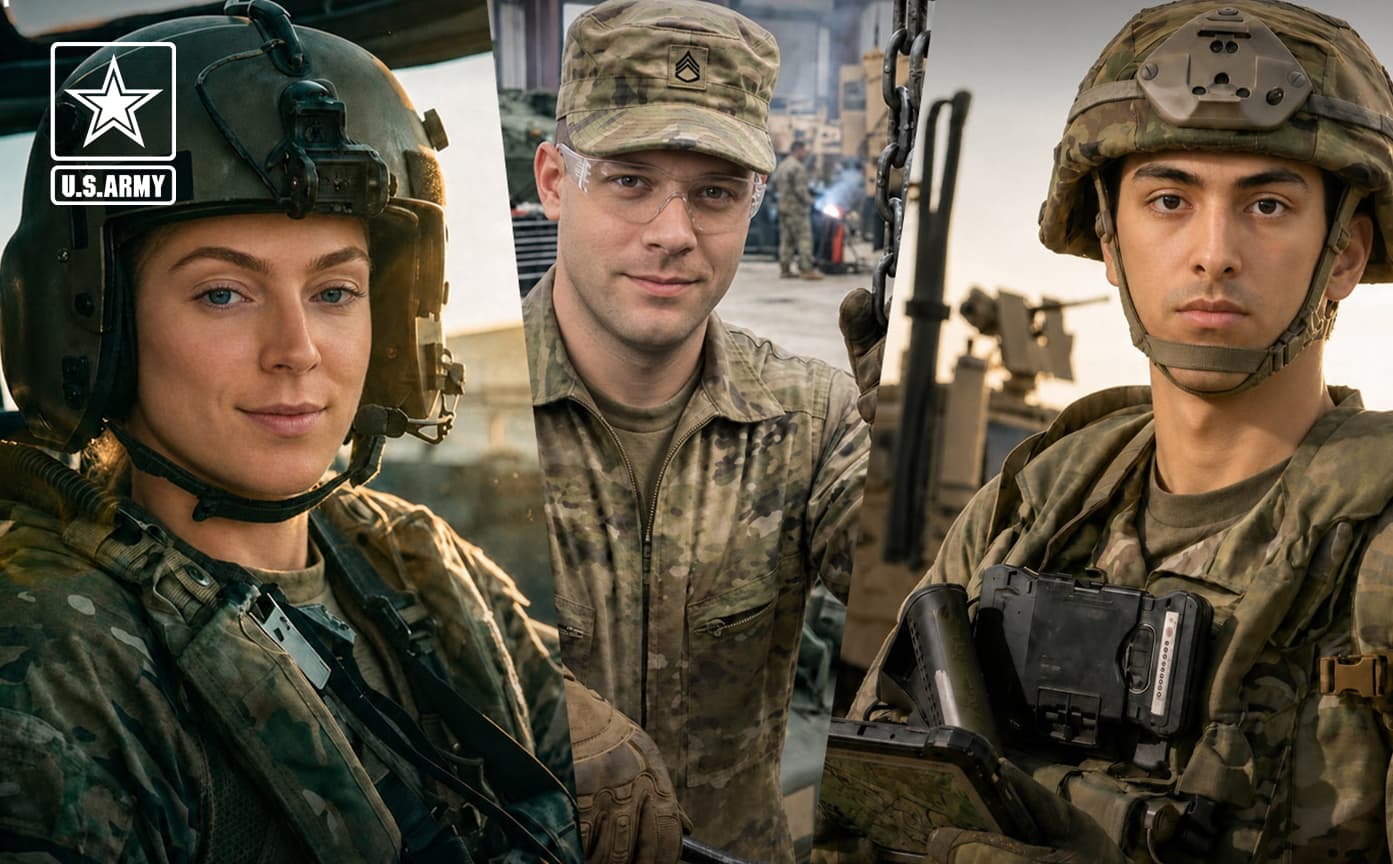




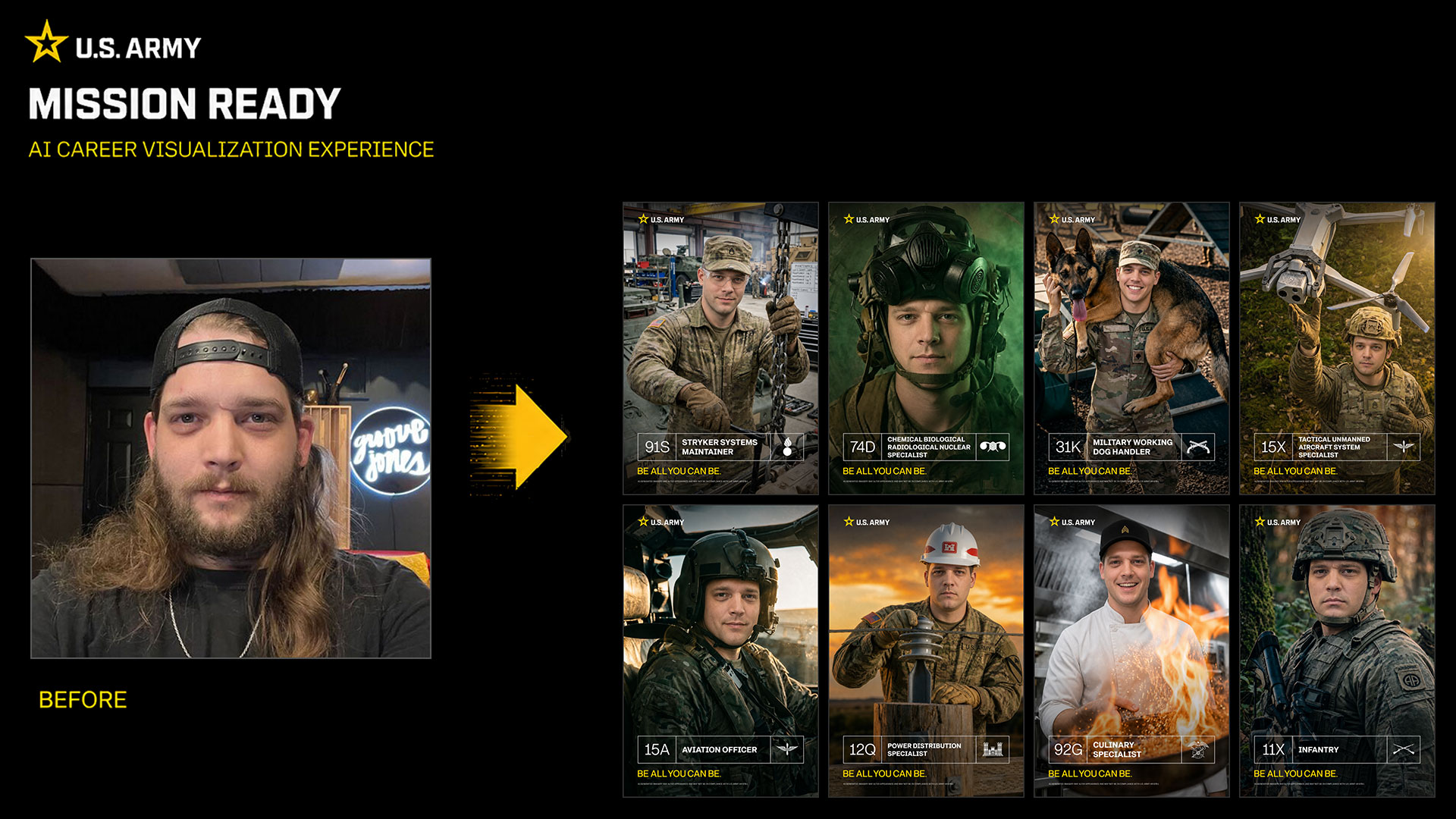
The Mission Ready interactive photo booth turns a broad field of the U.S. Army career options into a guided, personal experience. Created by Groove Jones in partnership with TMA and Team TBWA for the U.S. Army, the activation invites guests to explore career interests, choose a Military Occupational Specialty (MOS), and picture themselves in that role through a personalized, shareable digital image.
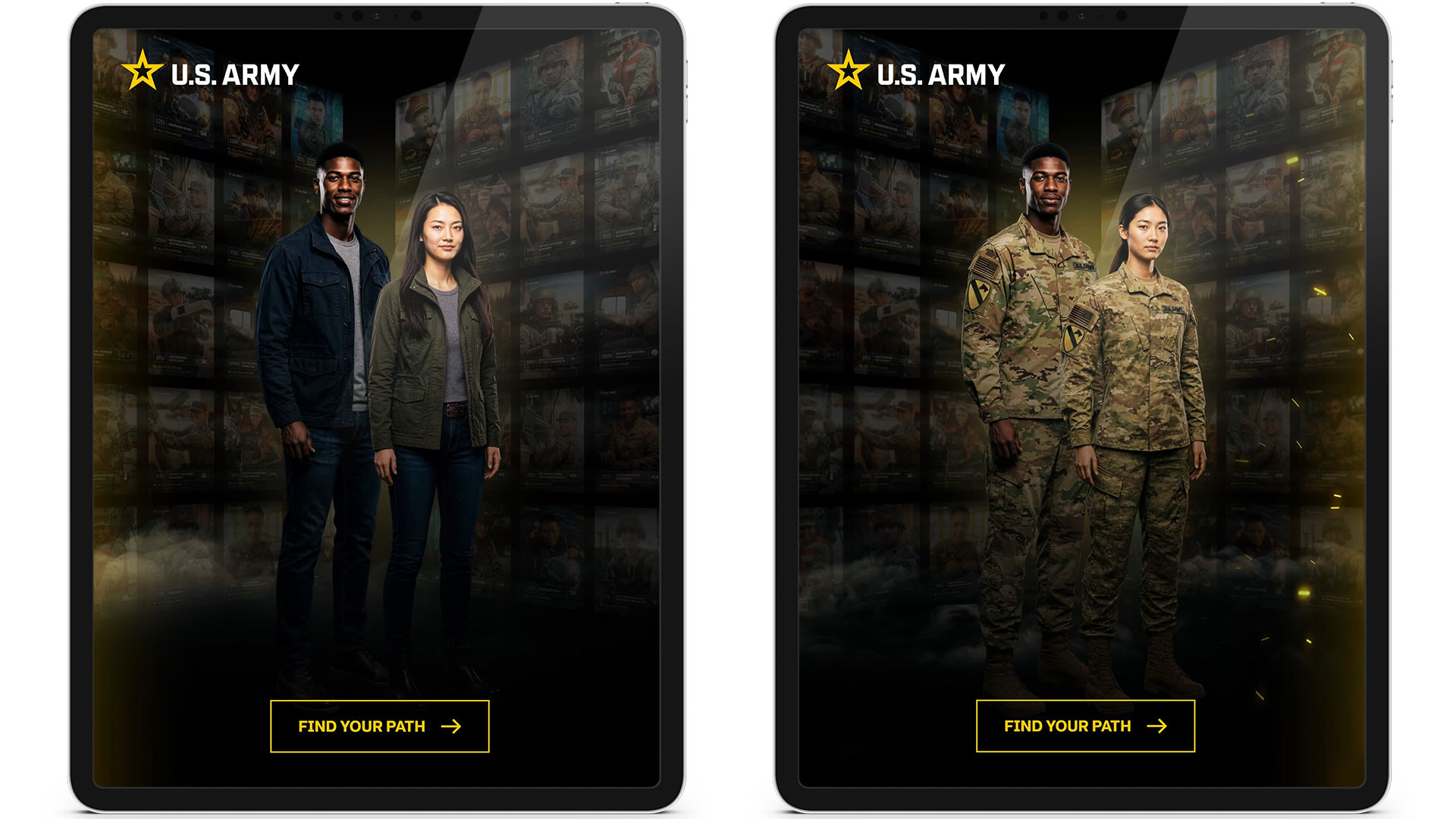
First deployed within an Army recruitment presence at PBR Stampede Days in Nashville, Mission Ready moved from an ambitious AI concept into a working live experience built around guest choice, visual accuracy, and practical event operations.
The Challenge: Make Opportunity Easier to Picture
The Army offers a wide range of career paths, but that scale can feel abstract to someone encountering it at an event. A list of job titles can explain what is available without helping a prospective recruit imagine where they might fit.
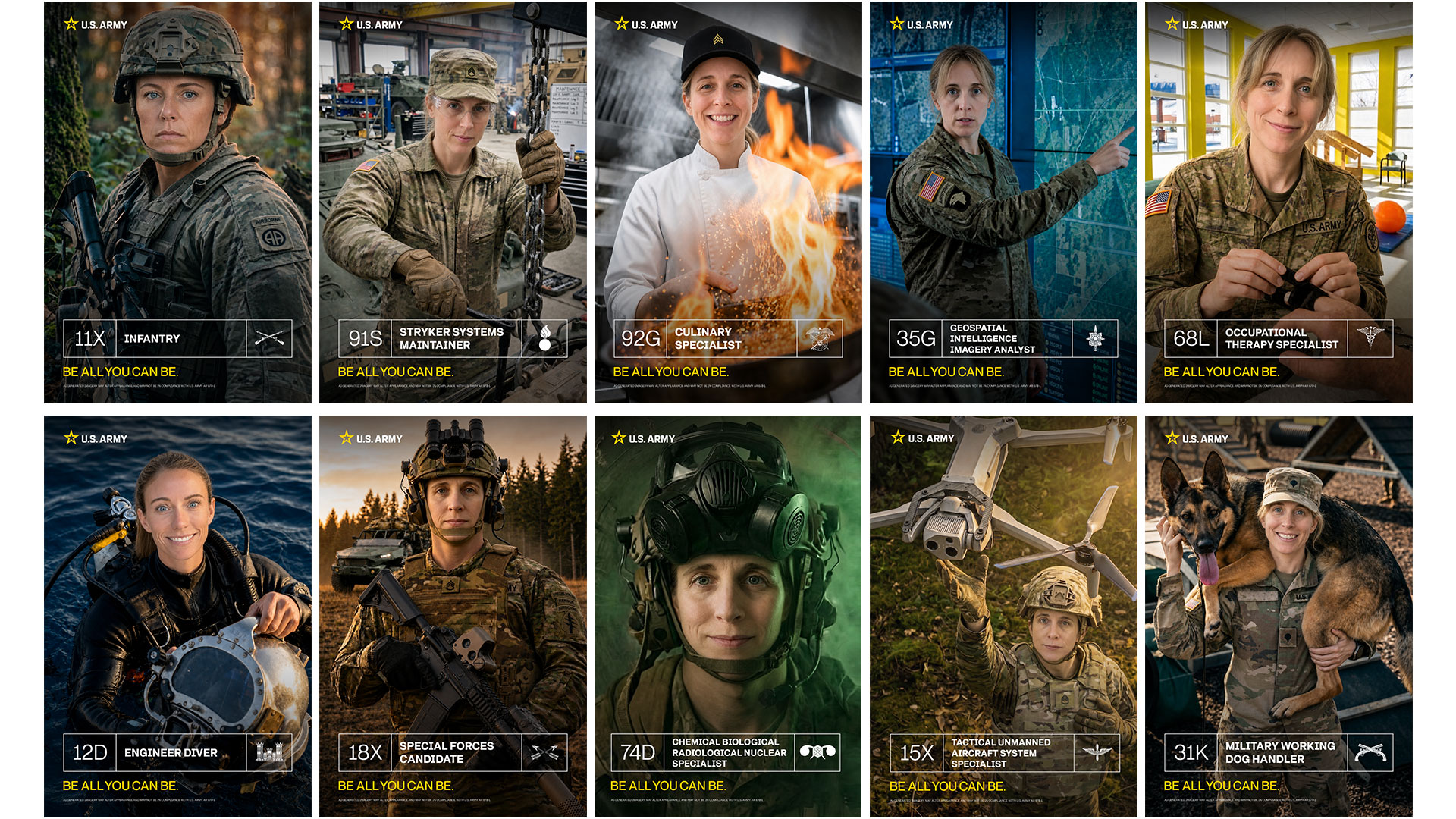
Mission Ready was designed to close that gap. The experience needed to introduce a curated range of Army roles without overwhelming guests or presenting the quiz as an eligibility decision. It also needed to move quickly, keeping questions brief so prospects could get to the exciting part: seeing themselves in a new role through a recognizable, personalized portrait tailored to their Army role, all within the constraints of a live event activation.
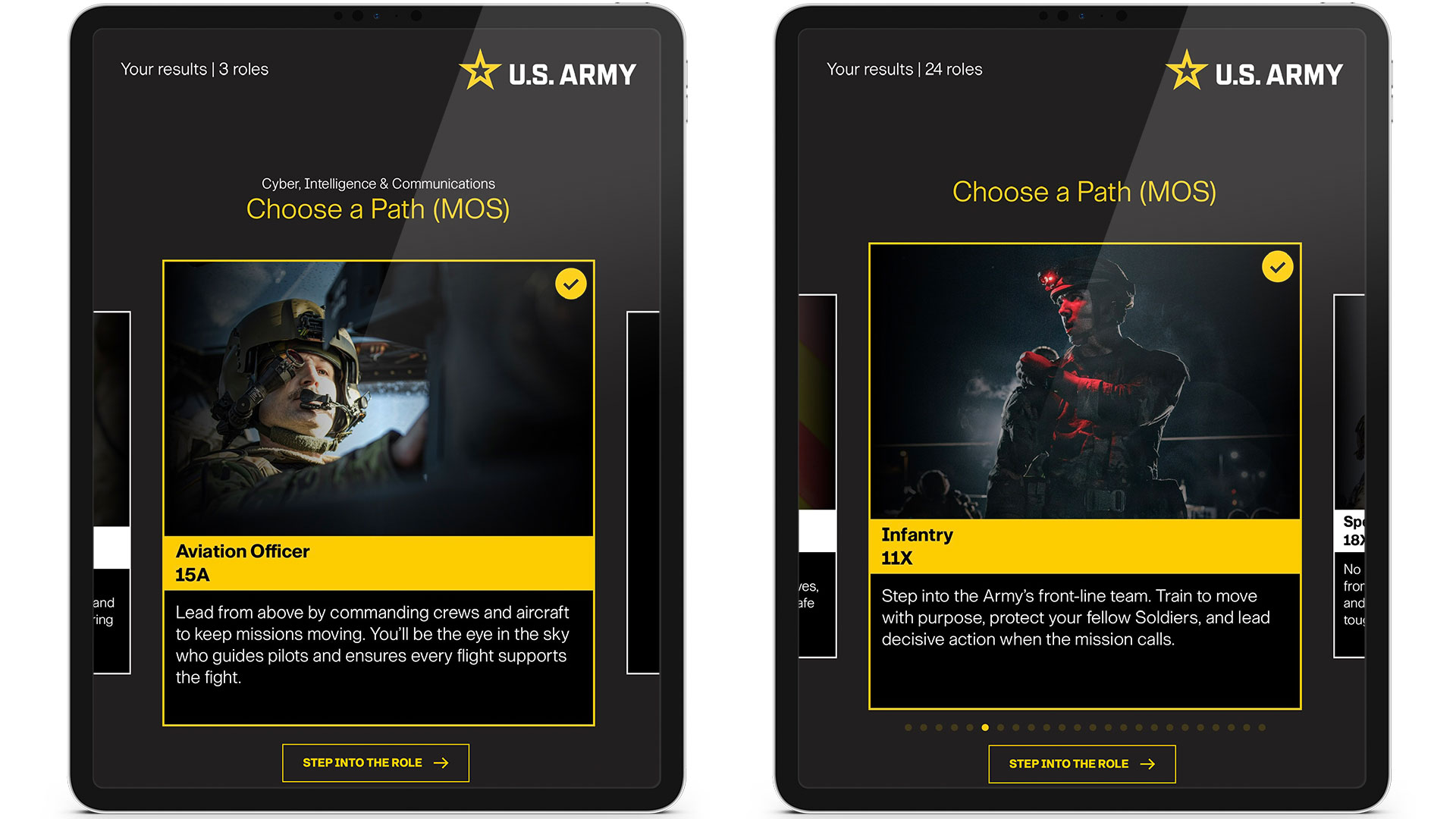
The goal was not to have AI choose a future for the guest. It was to help the guest make an informed choice and then turn that choice into something personal: a visual answer to the question, “What could this role look like with me in it?”
A Guided Journey with the Guest in Control
The iPad-led experience moves through four simple stages:
- Explore. The guest answers a short series of interest-led questions adapted from the Army’s broader career quiz.
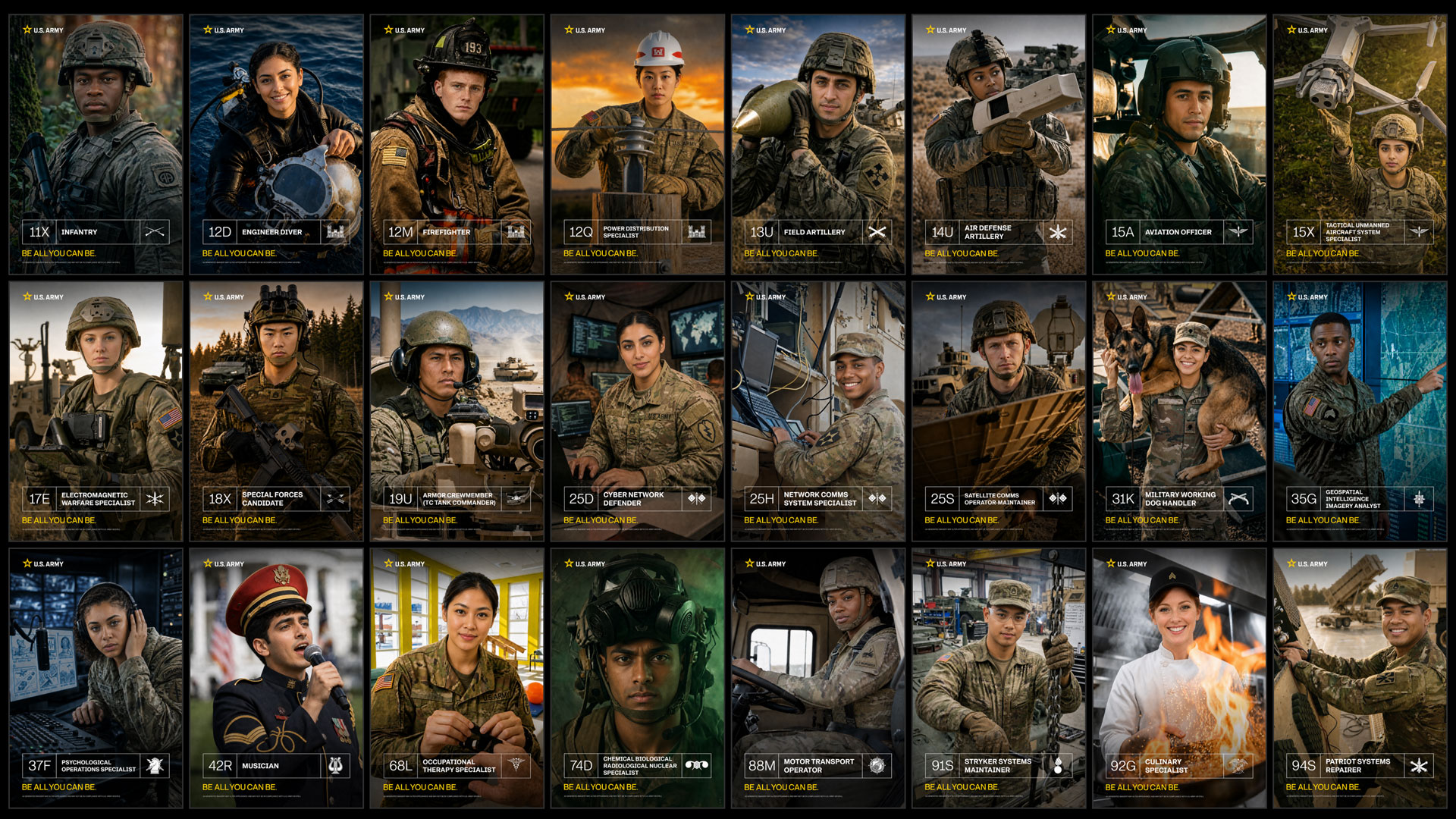
- Choose. Mission Ready narrows the field to a relevant group of options. The guest can select from those suggestions or browse the full curated set of up to 24 MOS career options.
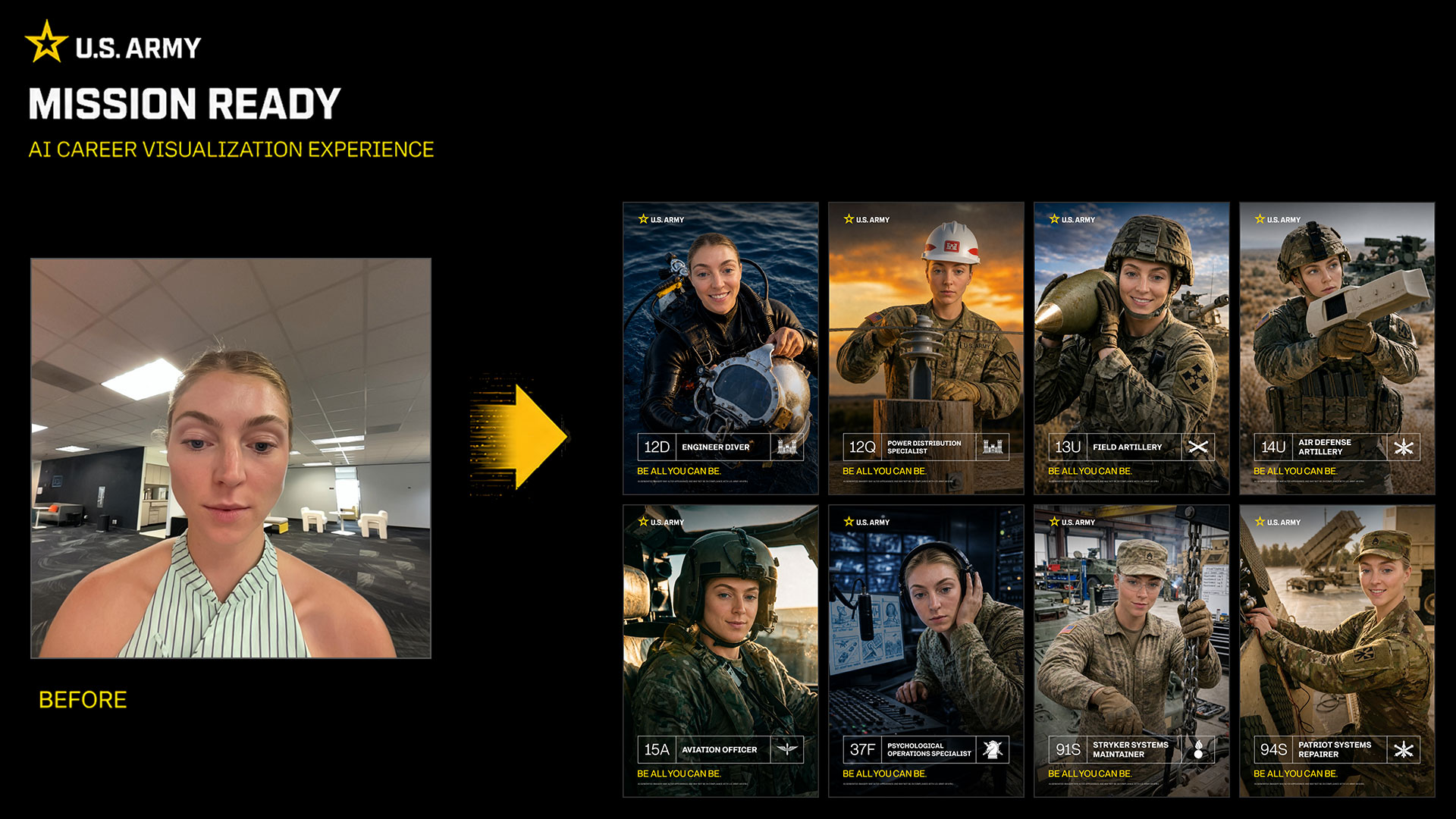
- Create. After choosing a role, the guest captures a guided portrait at the kiosk. The photo and selected MOS enter a controlled image-production workflow.
- Receive. The guest receives a text or email link to a reveal page with personalized image options, role-specific details, and branded graphics ready to view or download on a personal device.
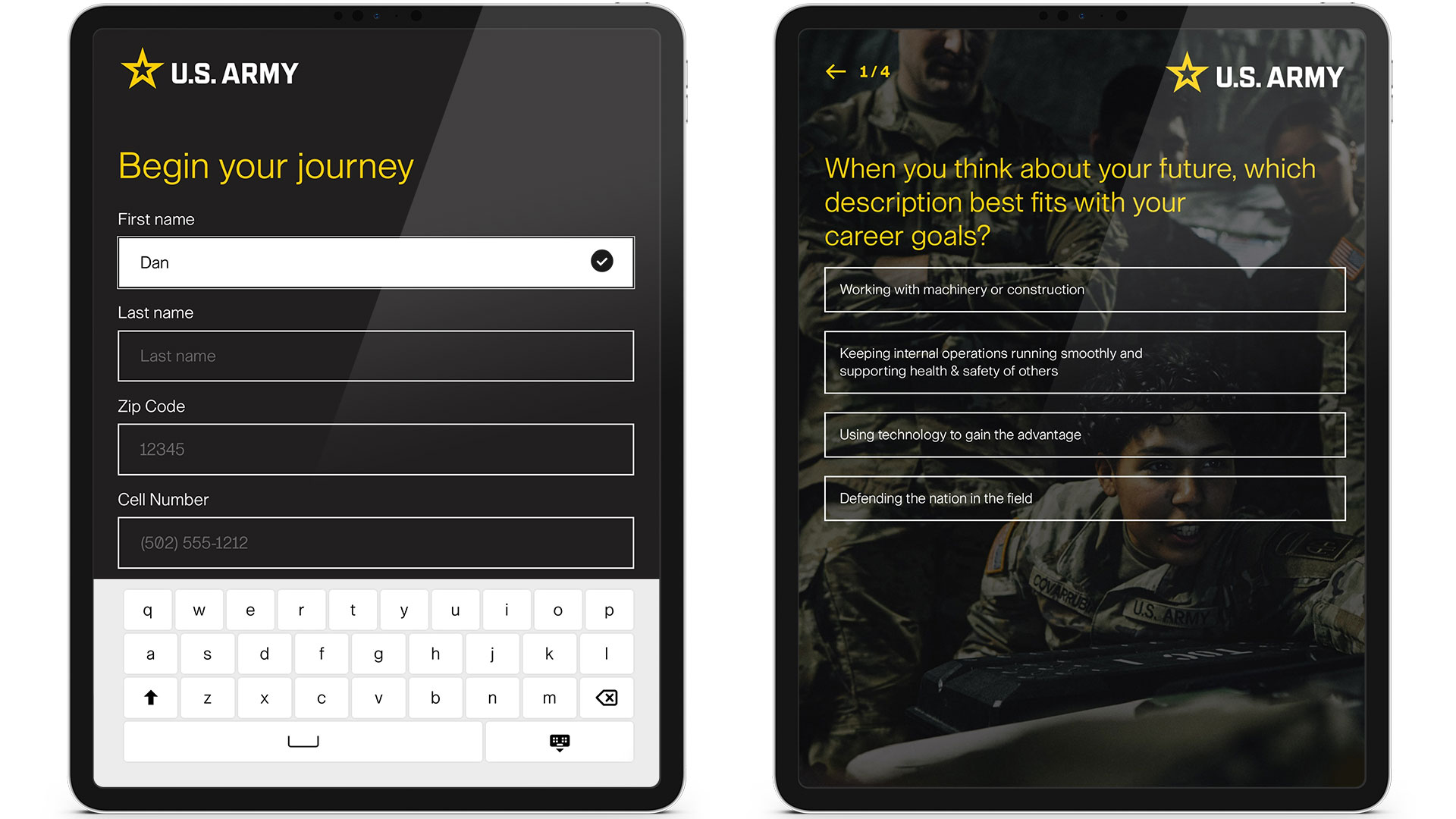
For Gen Z prospects exploring their interests and where they might fit, Mission Ready offered a way to imagine a possible future. That distinction between guidance and assignment shaped the entire experience. The quiz organizes the possibilities; the guest decides which path to explore. The finished image brings that choice to life as a creative visualization, not a claim of qualification, eligibility, or placement.
Building a Controlled AI Image Pipeline
Creating a generic military portrait would have been straightforward. Creating a recognizable image tied to a specific role demanded much tighter creative and technical control.
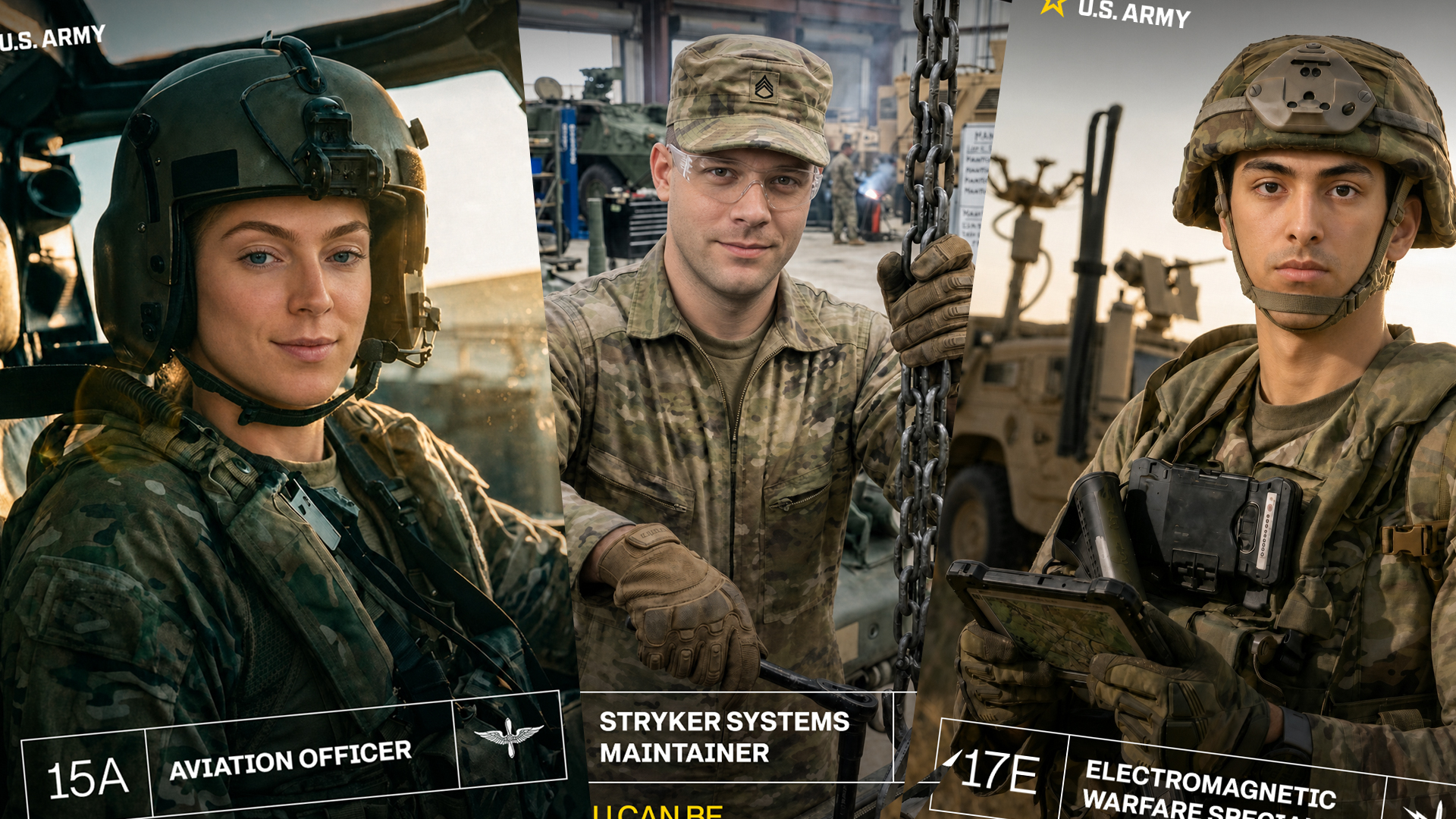
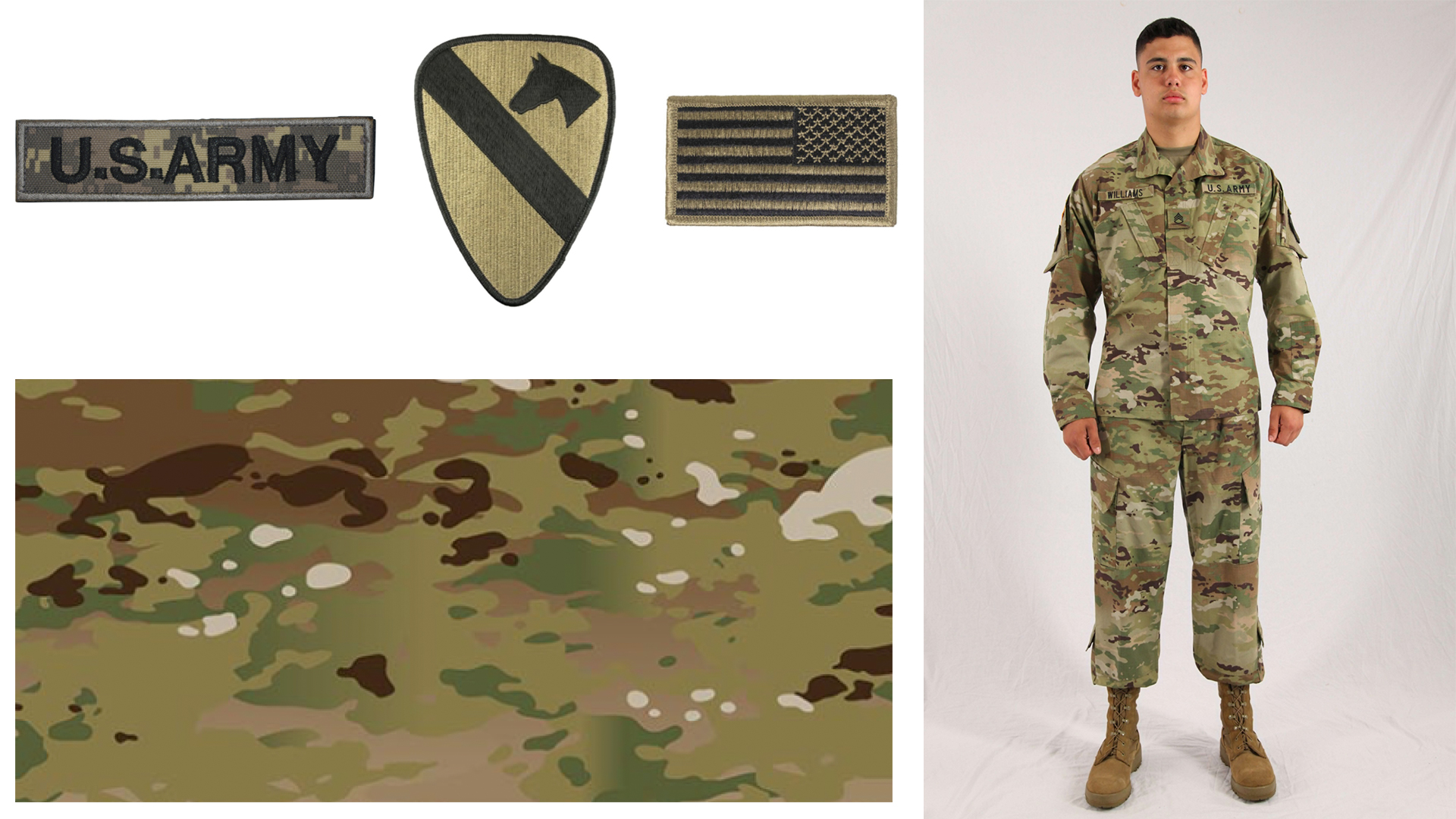
Each MOS scenario required its own visual world, including role-appropriate uniform, insignia, equipment, headgear, pose, lighting, and environment. Groove Jones developed a role-specific base scene for every scenario using marketing references supplied through TMA. Specific uniform patterns, equipment references, and other visual details moved through an iterative stakeholder-review process before becoming part of the experience.
To bring those elements together, Groove Jones applied its Personalization Engine approach, combining guest inputs, curated role assets, and staged AI processing to create a personalized result. Instead of asking one model to solve every detail in a single generation, the team divided the work into stages. A custom ComfyUI workflow first prepared the guest portrait, then focused on preserving identity within the selected role, and finally refined role-specific visual details. Controlled overlays added titles, insignia, and brand elements without relying on generative AI to reproduce exact graphics or typography.
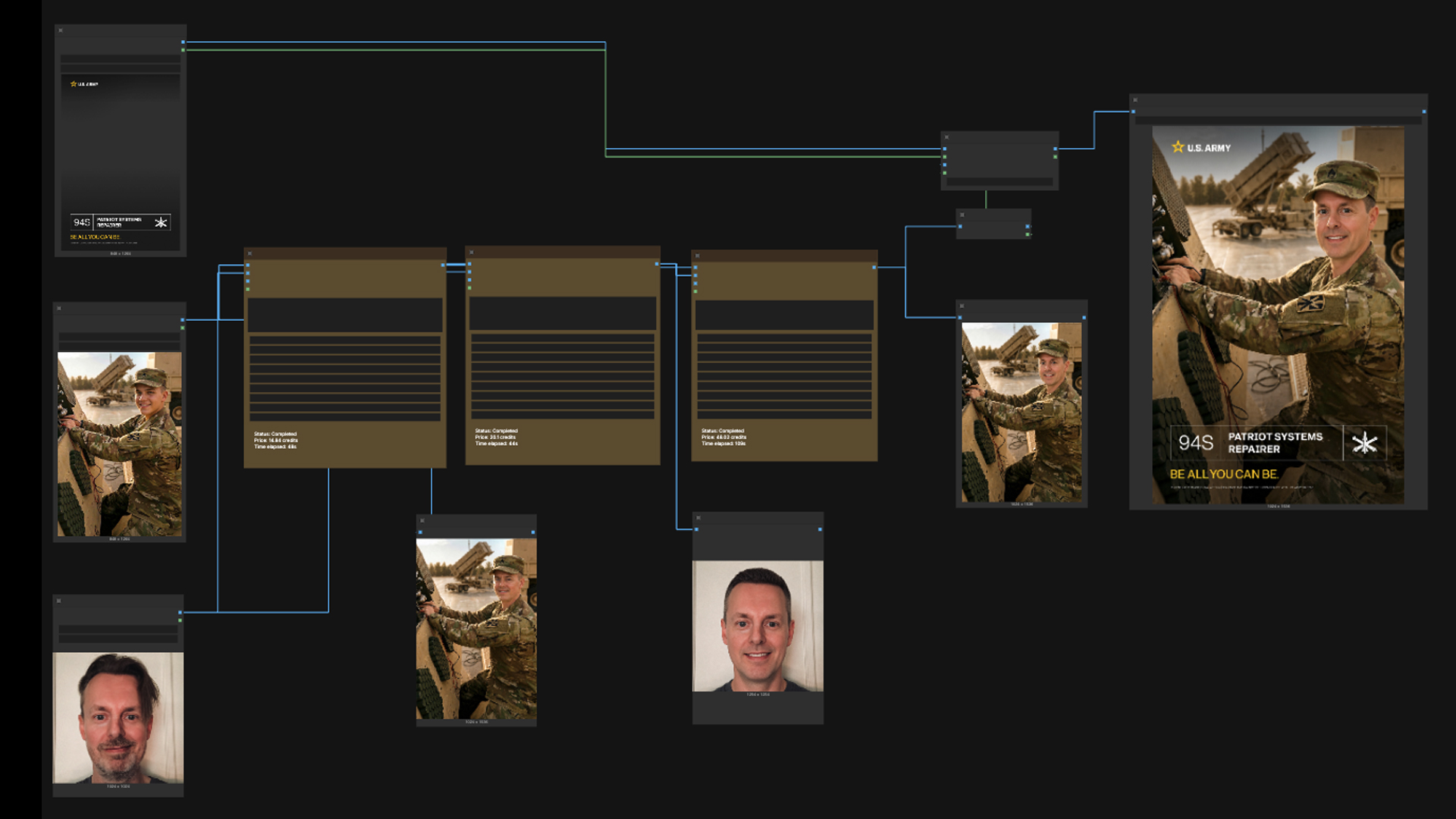
This multi-pass approach gave the team more control over the two things that mattered most: maintaining a recognizable likeness and carrying the selected role’s defining visual details into the final image. It also made individual parts of the workflow easier to test and improve as the experience moved through review.
Designed for a Live Event, not a Lab
Mission Ready had to work where guests would actually use it: on four fourth-generation iPad Pro kiosks with ring lights inside a busy recruitment activation. Groove Jones iterated on portrait framing, camera behavior, full-screen operation, and the physical distance needed to capture a usable image. Behind the interface, AWS processing capacity could respond to changes in queue demand.
The team also designed delivery around the realities of event connectivity and image-processing time. Rather than hold the kiosk while the final result is rendered, Mission Ready sends each guest a follow-up link by text or email. The guest could move on, and the kiosk is ready for the next participant. The project team estimated the complete journey at roughly two to three minutes.
Turning Participation Into Useful Insight
The activation included a custom analytics dashboard that gave TMA a view into the experience funnel and the interests guests expressed along the way. The dashboard tracked starts, completions, image generations, failures, repeat plays, downloads, and preferences by career category and MOS.
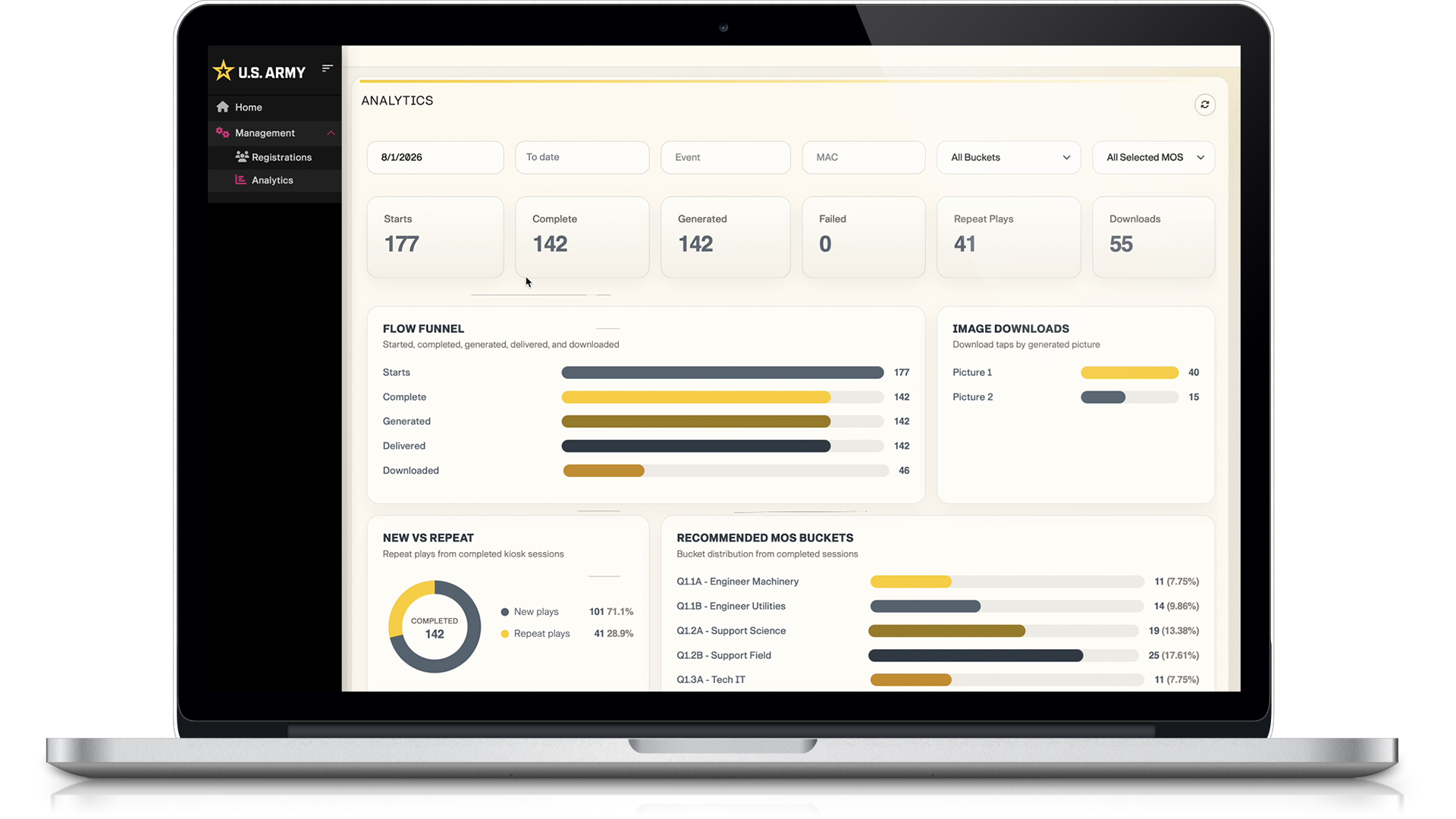
That transformed the activation from a standalone career quiz to a learning tool and shareable keepsake demo for a person’s future in the Army. The team could see where guests moved through the experience and which career directions drew attention, while exportable quiz data supported deeper analysis without attaching participant names.
From Career Information to Personal Recognition
Mission Ready successfully moved from design, model testing, and device calibration into live operation in Nashville. The finished experience gave guests a more immediate way to engage with Army career possibilities: not as a generic catalog, but as a choice they could explore and a role they could begin to picture. For the Army, it generates a database of leads with important information about the person and their propensity to join and career interest.
For Groove Jones, the project demonstrates what personalized AI can do when it is treated as a complete experience rather than a single prompt. Career-routing logic, curated visual assets, staged image processing, kiosk design, cloud delivery, analytics, and human review all work together to support one concise moment of recognition: seeing yourself in the story.