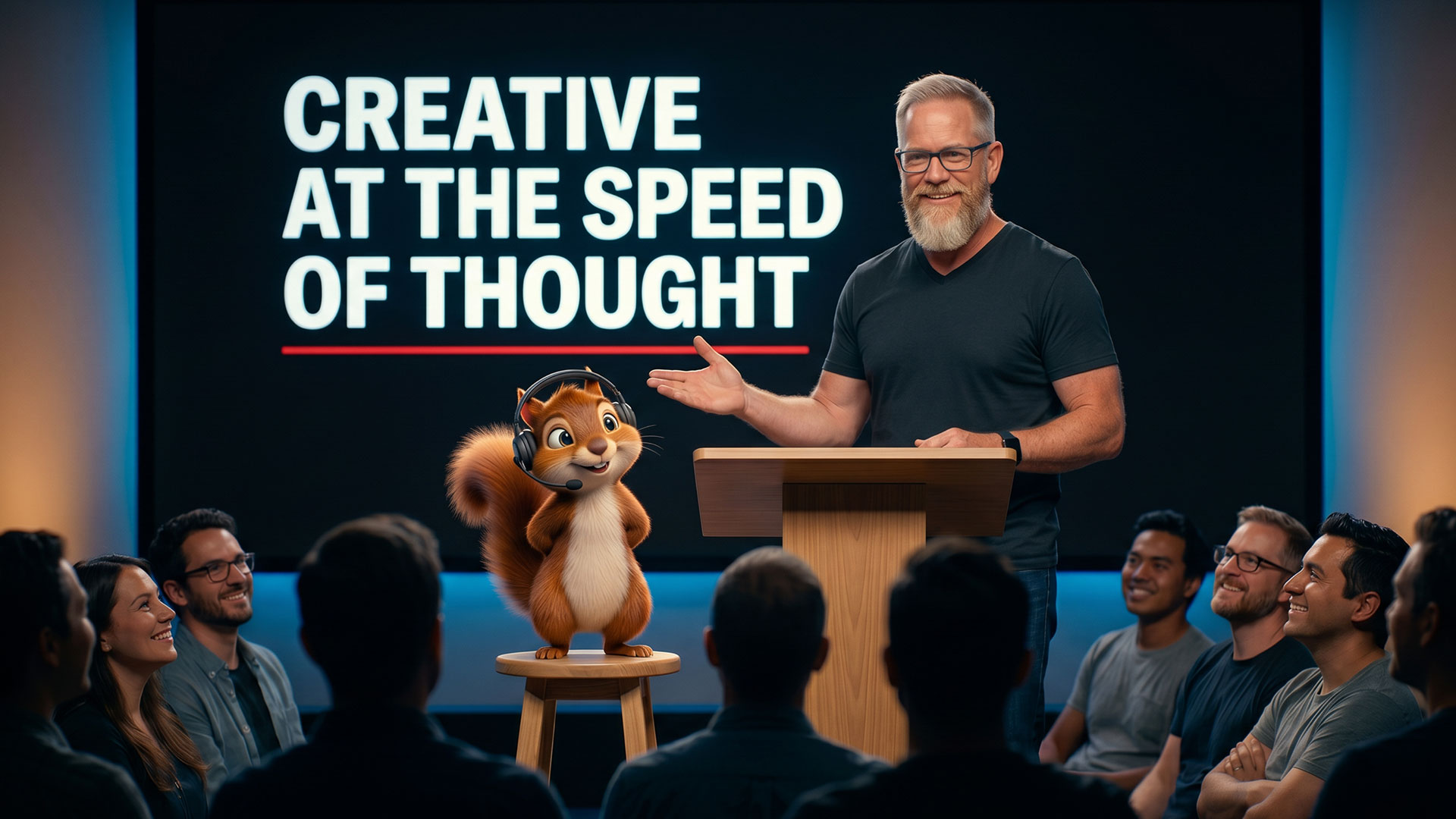




I have been chasing the same sentence for twenty-four years: Creative at the speed of thought. In March 2002, I was the visual effects supervisor on Spy Kids 2. We had 130 visual effects shots and three months to make them. At Reel FX, we built an on-set compositing system called Outpost because we wanted the work to move differently.
Less waiting. Less translation. Less of that painful gap between seeing something in your head and finally getting it in front of you.
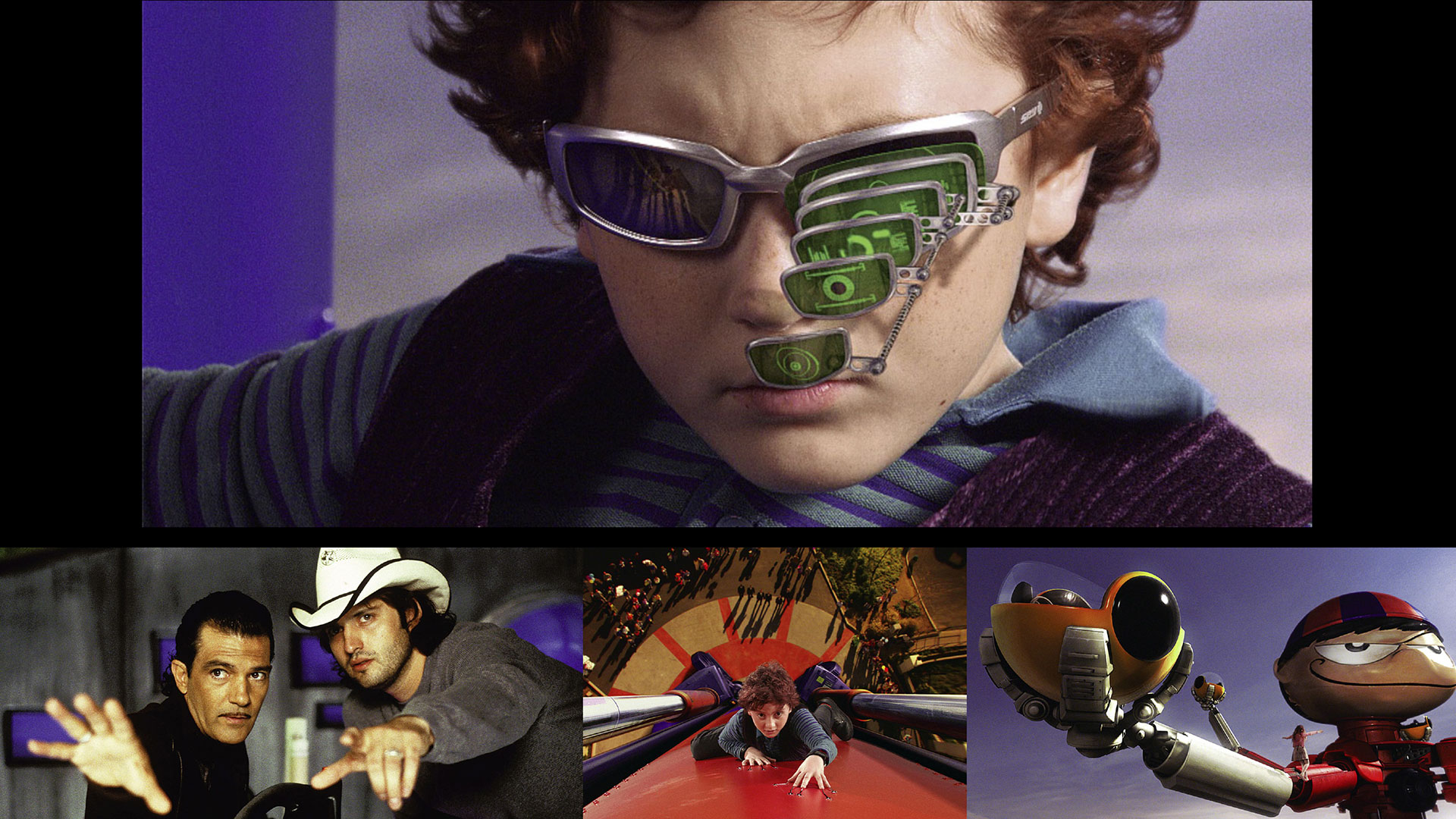
Ten months later, Cinefex ran a story on Spy Kids 2 with the headline “Working at the Speed of Thought.”
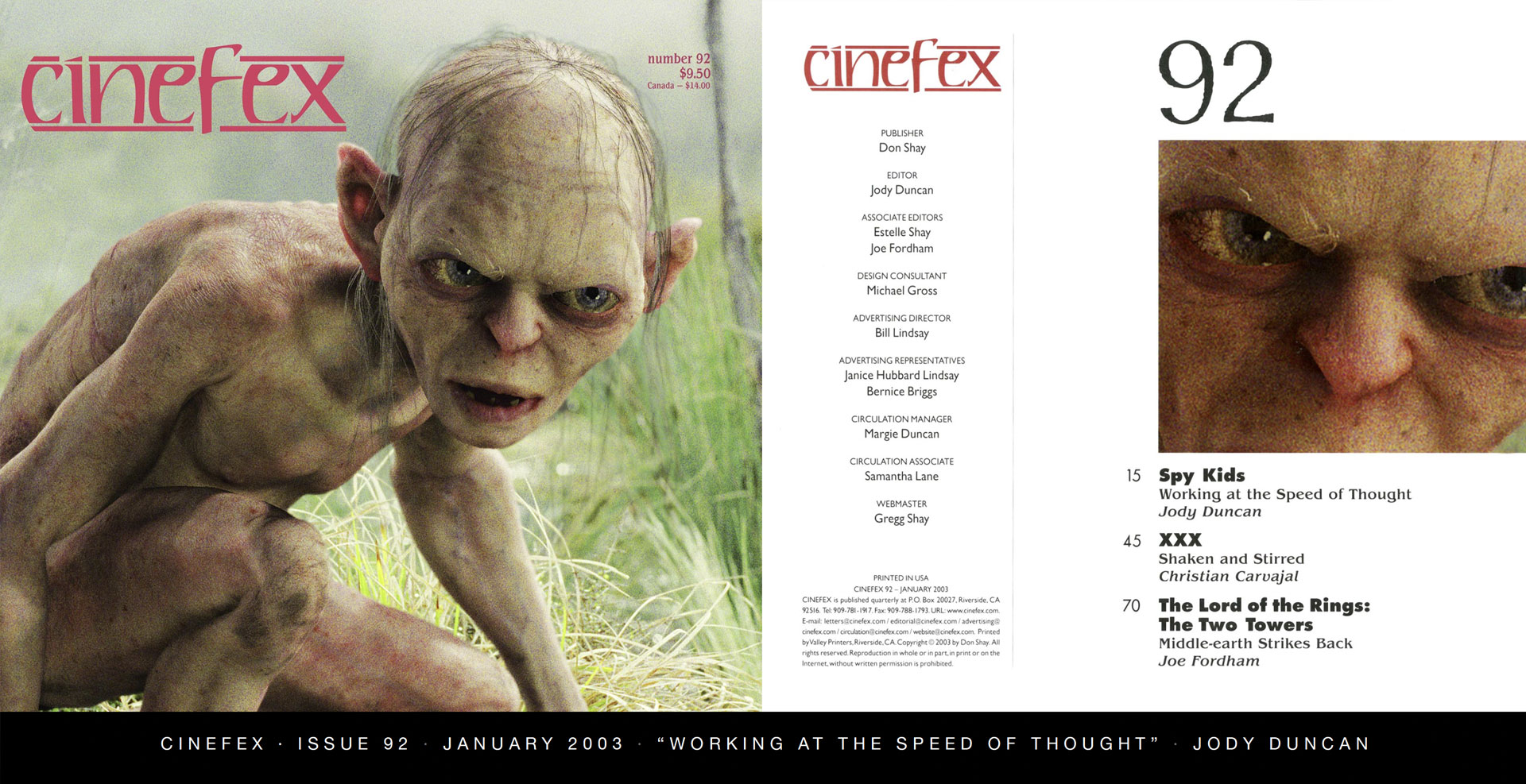
I loved seeing that phrase in print because it named the thing I had been trying to build my whole career. Not faster software for its own sake. Not automation for the novelty of it. A different relationship between imagination and execution.
For the next two decades, every tool got faster. Computers got faster. Render farms got bigger. Pipelines got more sophisticated. We built immersive work at Groove Jones for brands that needed to make people stop, lean in, and feel something.
But the gap stayed.
Every creative person knows that gap. It is the 2 a.m. idea versus the version that survives the calendar, the budget, the meeting, the revisions, and the hundred small compromises that happen before anything ships.The version that ships is not always the version that woke you up.
That is why Chip matters to me.
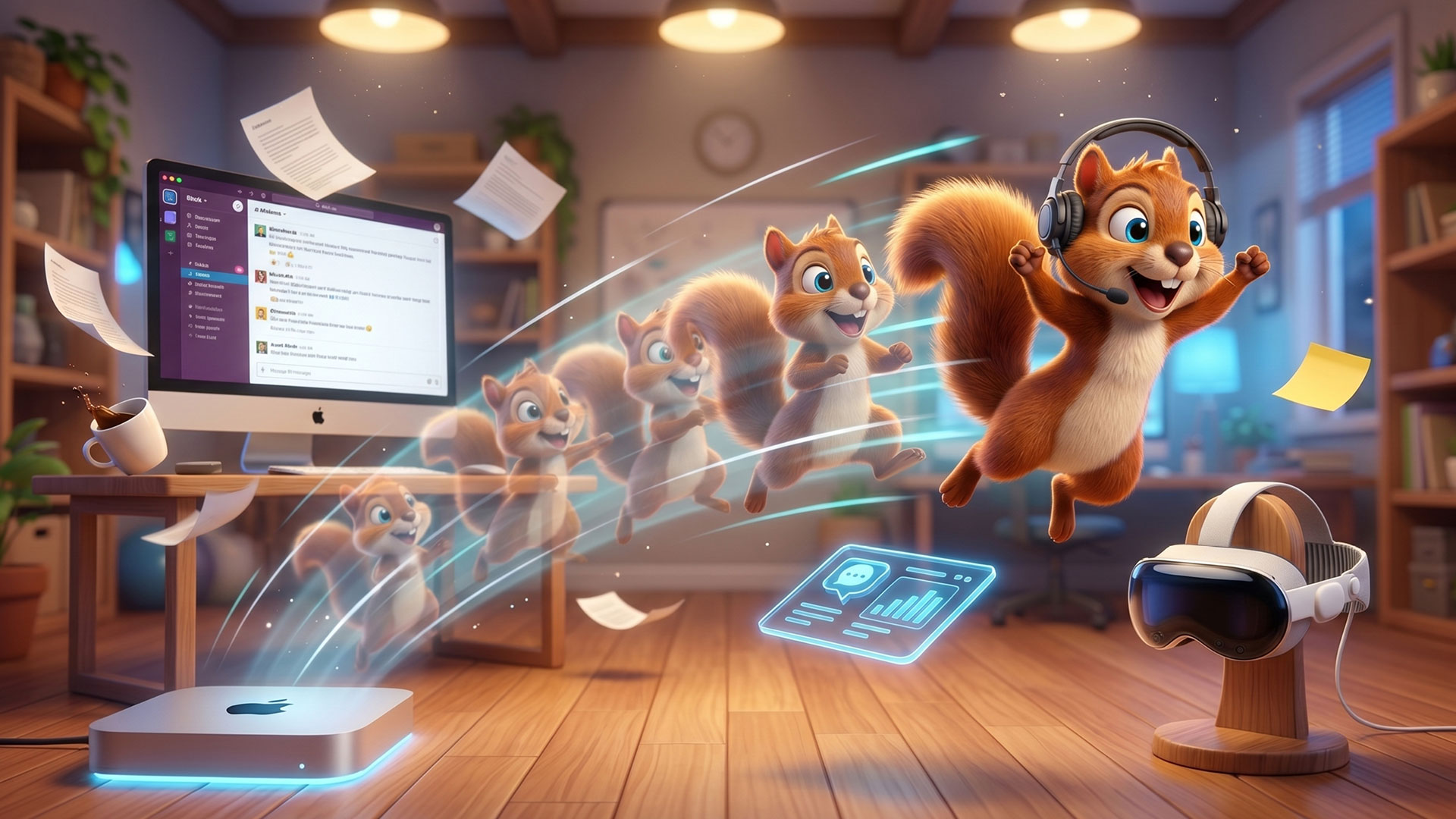
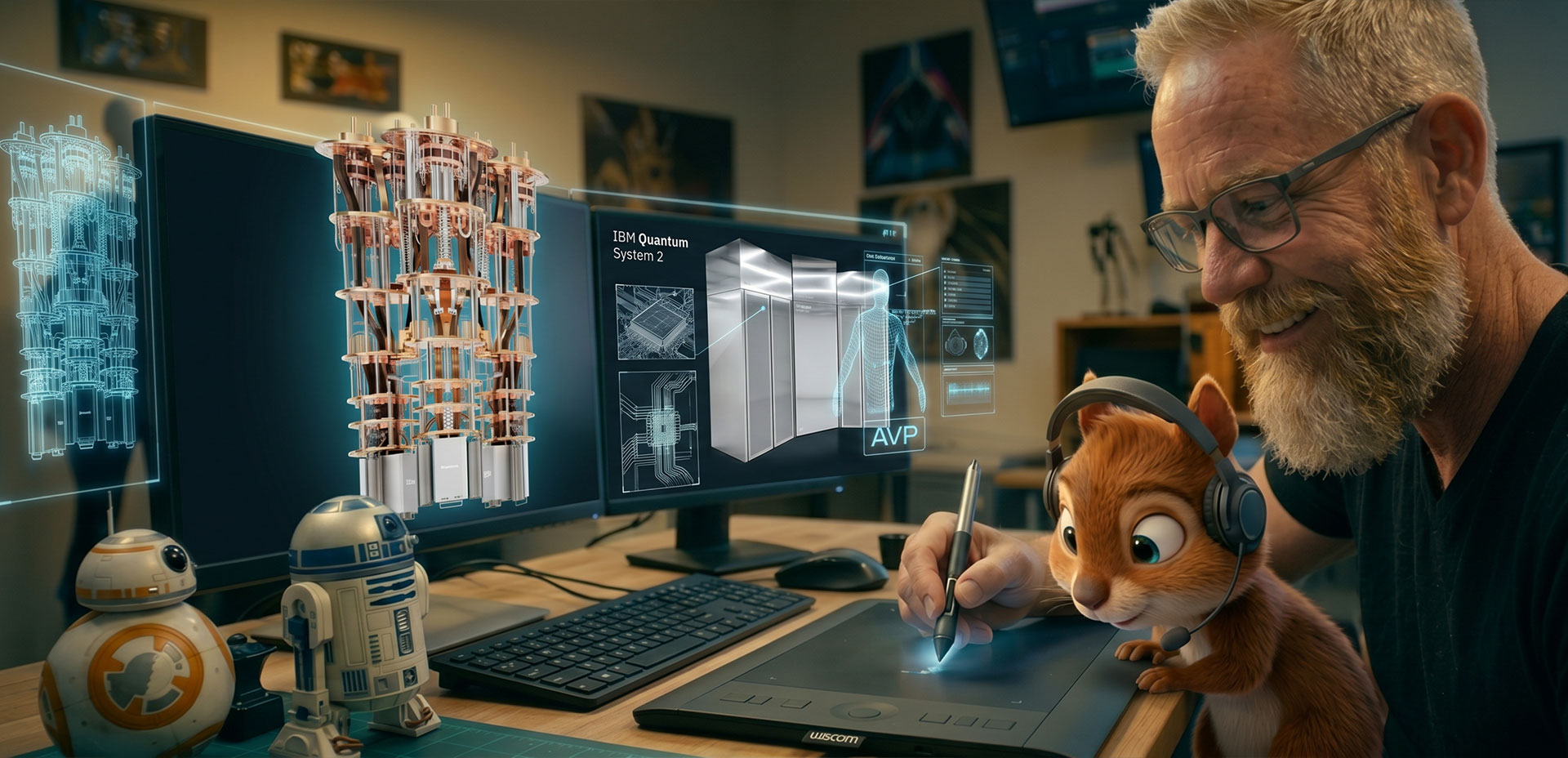
Chip is the AI agent I built for myself. He lives on the Mac mini under my desk. He helps me write code, read documentation, prototype ideas, summarize inputs, and build the connective tissue between systems that used to sit in separate corners of the company.
But the most important thing Chip does is not that he makes things faster. The most important thing is that he lets me stay in the conversation with an idea longer.
That distinction matters.
A lot of the AI conversation is still stuck in the wrong place. People ask whether AI can make a pretty image. Whether it can write a paragraph. Whether it can generate a form. Those are interesting questions, but they are not the deepest ones. The deeper question is: what happens when the friction between direction and execution collapses?
We got a very real answer on a recent IBM Quantum project.
A client asked us to take a complex technical object from CAD files and put three full-fidelity versions of it inside Apple Vision Pro. This was not a simple model. It was dense, intricate, mechanically specific, and built from thousands of repeated parts. The source model was about 1.6 million polygons. One of them would have pushed the hardware.
The ask was three of them, side by side, with real lighting and ambient occlusion, running at 90 frames per second on a device you wear on your face.
The sensible answer was to simplify the model. Cut the fidelity. Reduce the geometry. Make it “good enough.” That is often where creative ambition dies. Not in one dramatic failure, but in the phrase “good enough.”
Instead, I sat down with Chip.
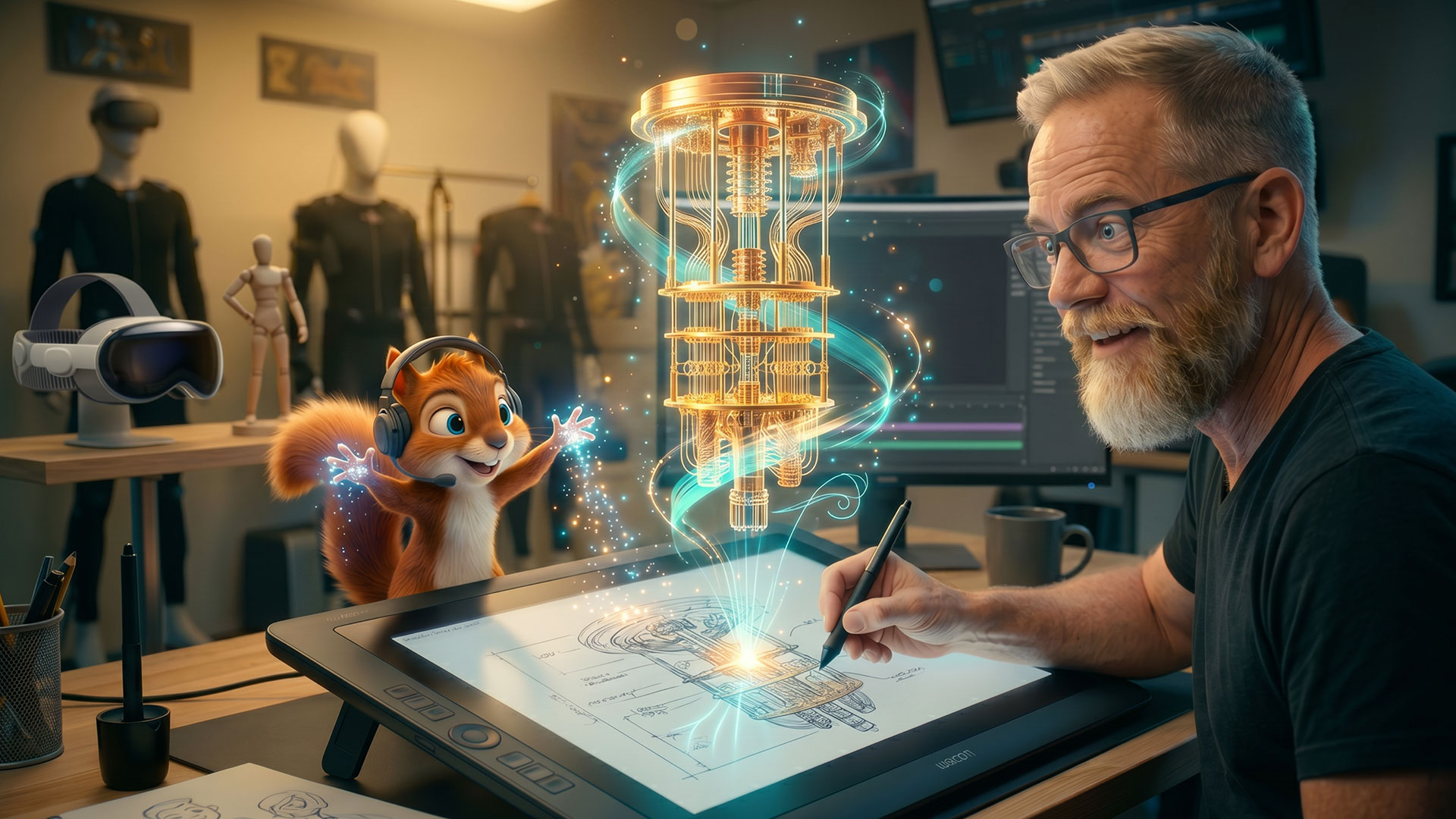
I described the problem. I described the constraints. We read documentation. We tested ideas. We worked through the pipeline. The solution was not magic. It was not “press a button and AI makes it work.” It was a technical strategy that needed taste, judgment, persistence, and a lot of iteration.
Where the GPU was being asked to draw the same repeated elements over and over again, Chip helped me build a repeatable Blender process that let the hardware draw those parts once and stamp them where they belonged. The result took the cryostat from 1,074 GPU draw calls down to about 142 across the trio.
Same silhouette.
Same chandelier.
A seventh of the work.
That was the moment the old sentence felt real again. Creative at the speed of thought was no longer an aspiration. It was available. But here is the part I think creative leaders need to hear: the cryostat was the dramatic example, not the whole story.
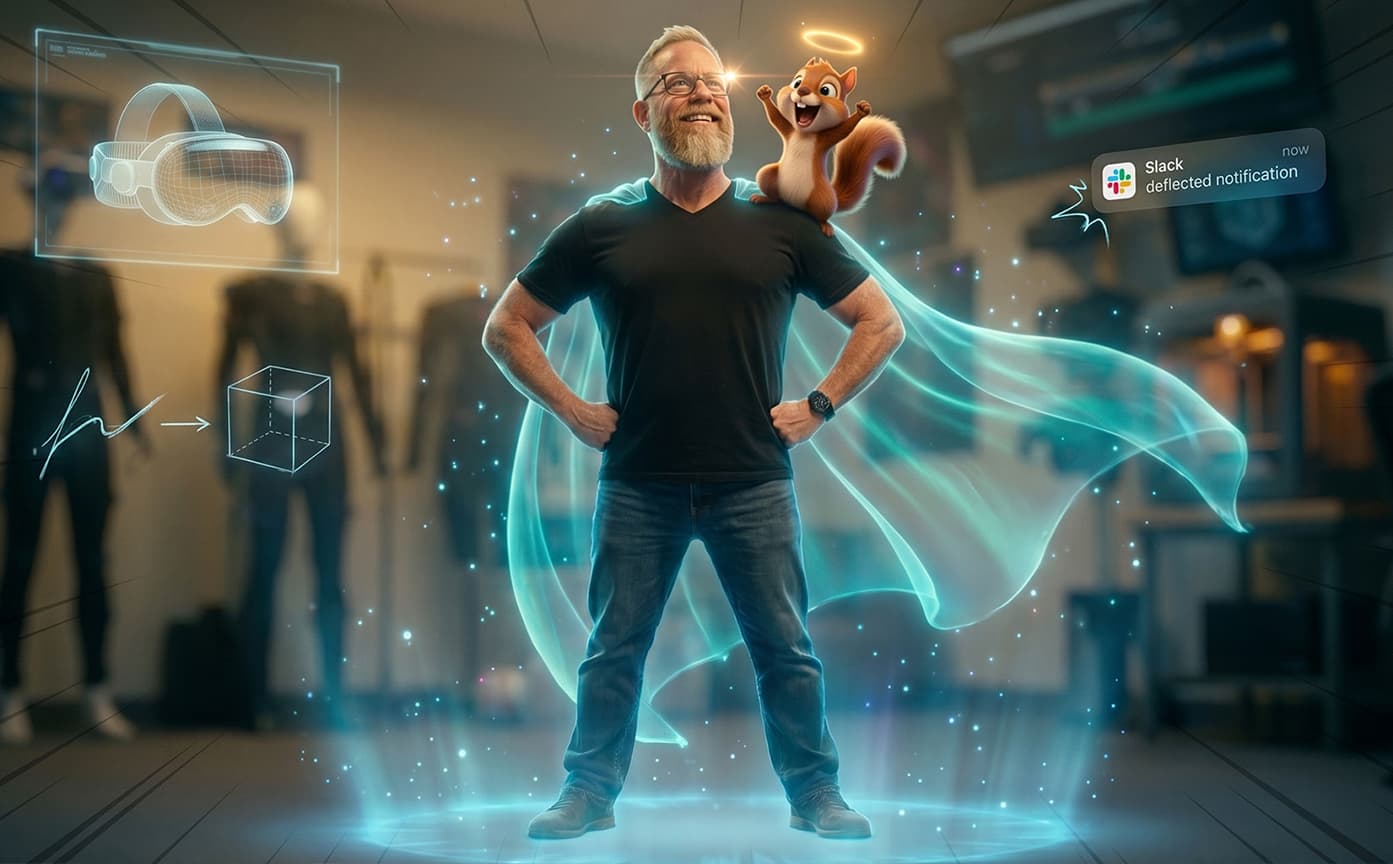
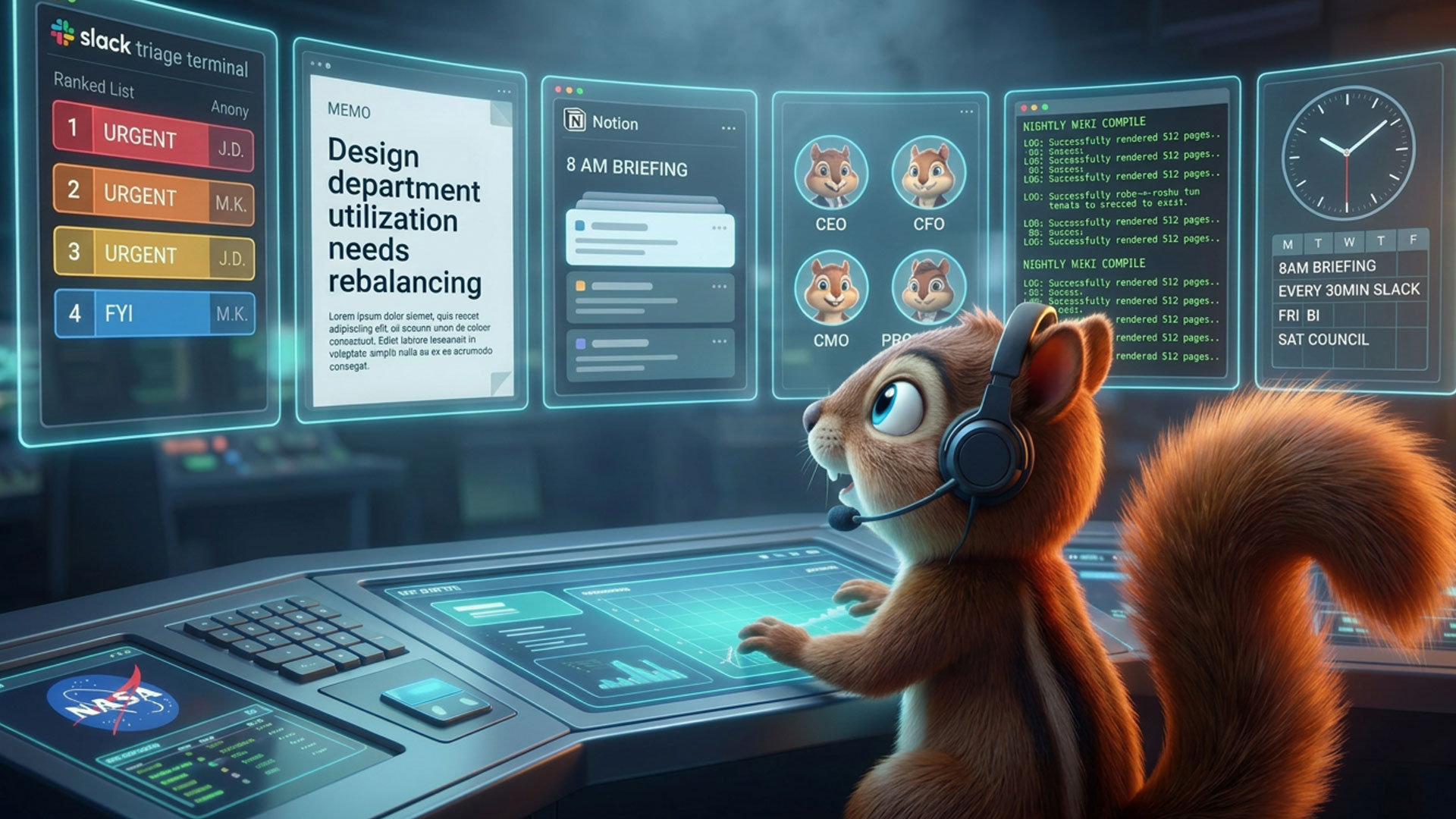
The less photogenic version of Chip may be the one that changes my work more. Chip is becoming an operating layer between me and the daily firehose. Slack is an obvious example. Our studio generates an enormous amount of context every day: project decisions, client questions, internal blockers, finance notes, sales updates, tiny commitments buried deep inside long threads.
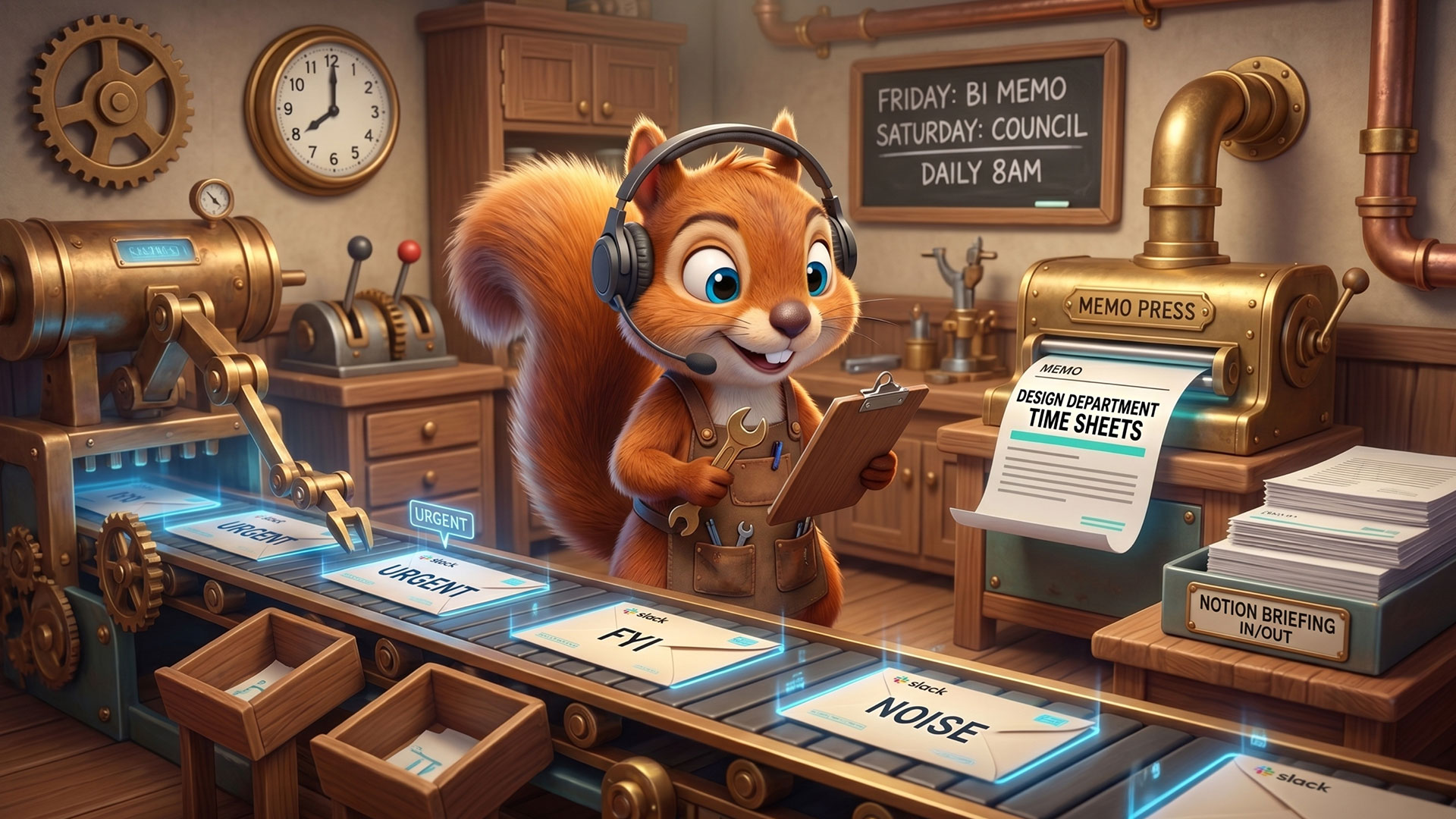
The old version of leadership was opening Slack and hoping I noticed the right thing. The better version asks sharper questions:
- What actually needs my decision?
- What has no owner?
- What changed since yesterday?
- What is urgent, but not loud?
That last question may be the most important one.
Creative companies are noisy by nature. The loud thing is not always the important thing. The person with the most messages is not always the person with the biggest blocker. The project that feels calm may be the one quietly drifting. The client issue that needs attention may be three layers down in a thread nobody has connected yet.
AI is useful to me when it helps surface that truth before the meeting starts.
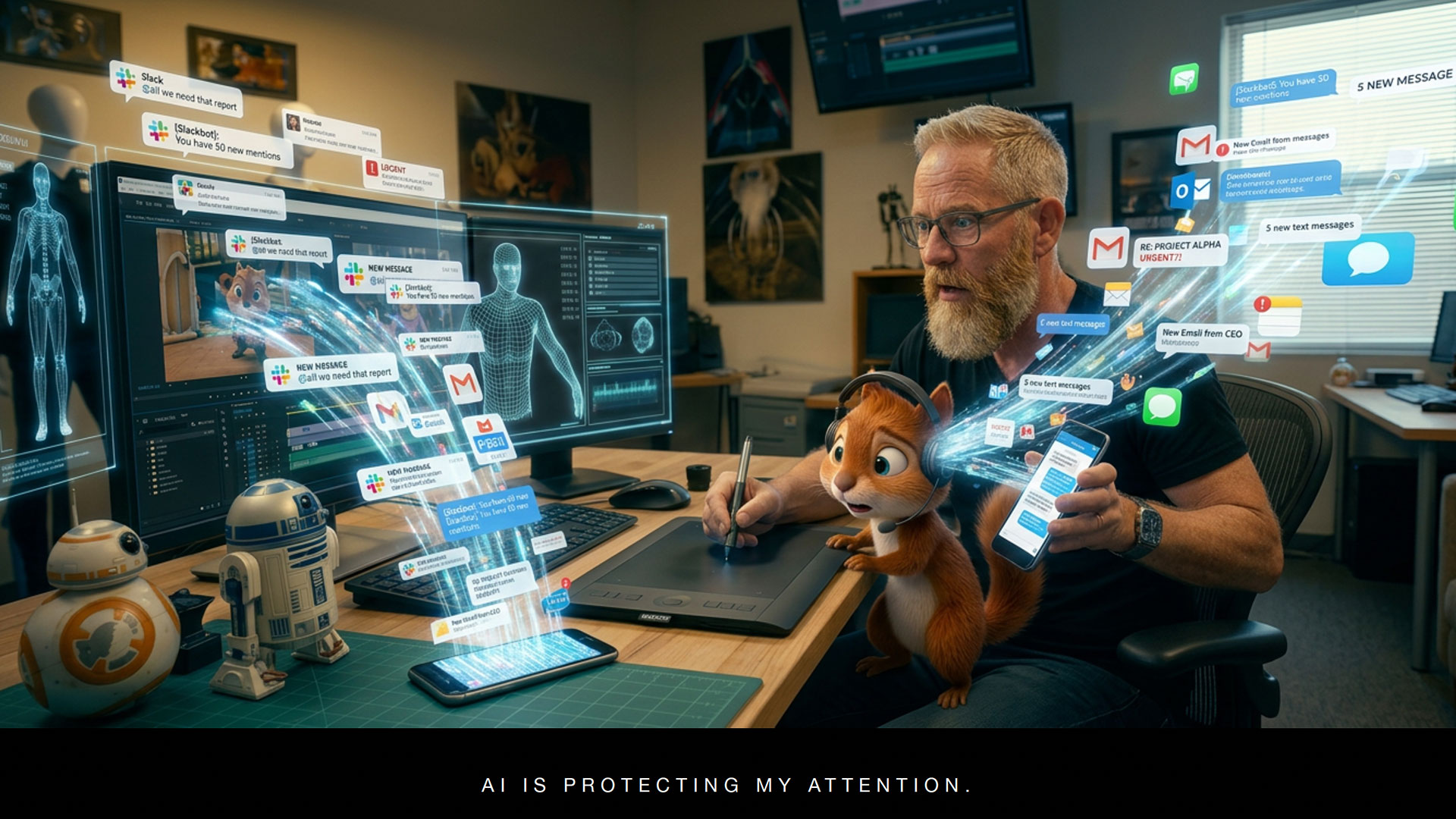
That is why I keep saying this: AI is not just making pretty pictures for me. AI is protecting my attention.
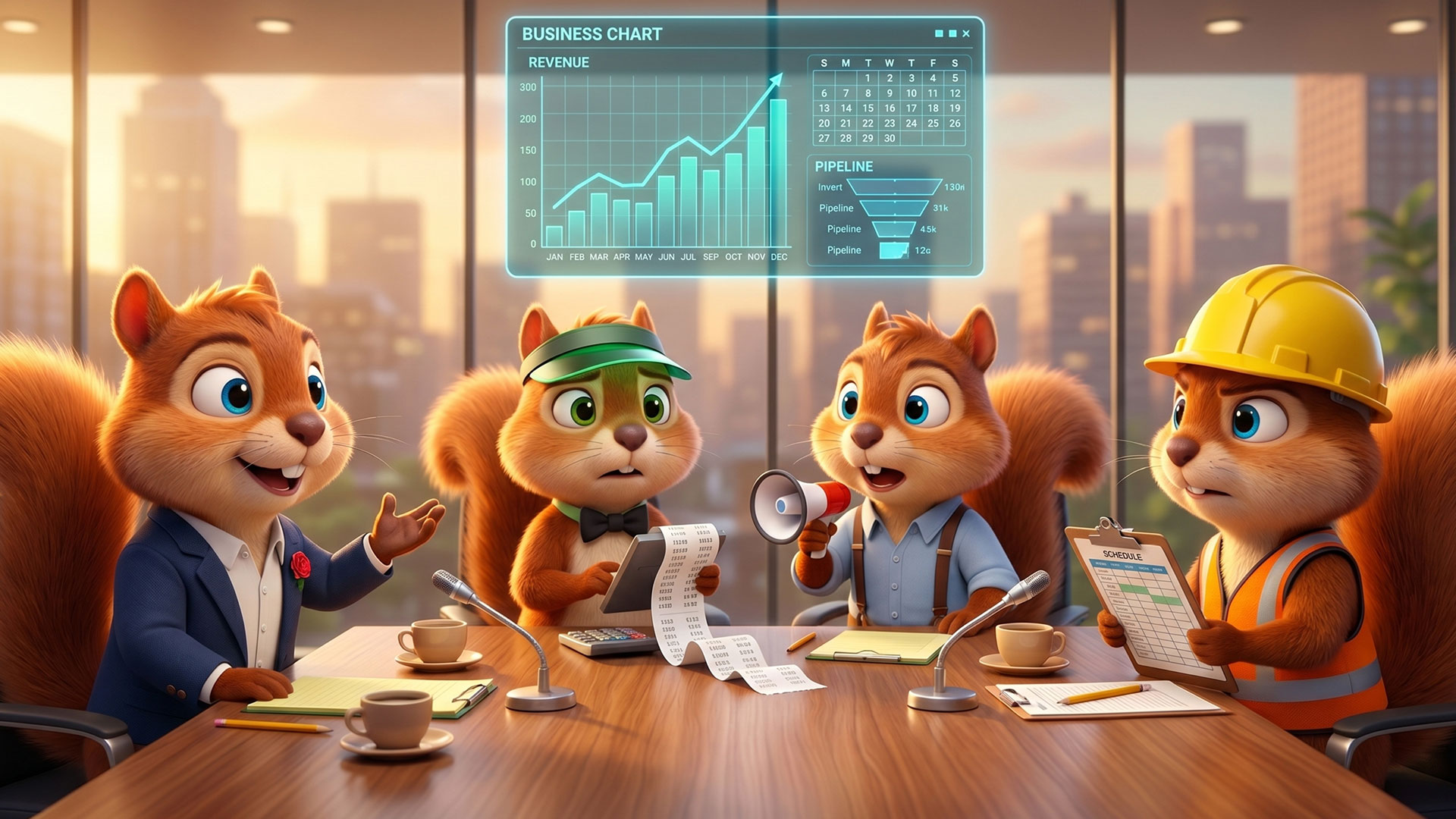
Every Friday, I have AI read across business inputs and give me a cleaner view of what is happening. Not as a replacement for leadership. As a way to see the business more clearly. One of the recent summaries looked at the team and found a pattern I had not seen cleanly enough: part of the team was running hot while other groups had much more capacity. The work was moving, but the load was not healthy enough.
That is the kind of insight that changes a week. Not because the AI made the decision. Because it made the decision visible.
That is the line I think a lot of people miss. I do not want AI to replace my judgment. I want it to protect the conditions that make judgment possible. There is a huge difference between those two ideas.
AI cannot tell you what is worth making. It cannot know which product belongs in a grandmother’s living room. It cannot know which form feels safe to a child, which experience earns trust, or which idea deserves to exist in the world.
It can generate options.
It can translate across mediums.
It can remove tedious steps.
It can summarize the pile.
It can help a creative director, designer, developer, strategist, or producer move from intent to prototype faster than before.
But it does not have taste.
It does not have judgment.
It does not have a point of view.
Those are still ours.
That is why I do not think the opportunity is to hand creativity to the machine. The opportunity is to hand the machine the friction. The boring work. The repeated work. The translation work. The “I know what I mean, but I need to get it into Blender, or Python, or a client memo, or a working prototype” work.
When that friction drops, the creative person is not less important. The creative person is more exposed.
Your taste shows up faster. Your judgment gets tested earlier. Your point of view has fewer places to hide. That is uncomfortable. It is also the opportunity.
I have watched versions of this movie before. Desktop publishing. Film to digital. New tools arrive, and the first reaction is often suspicion. Real designers do not use that. Real filmmakers do not shoot that way. Real artists do not need that shortcut.
Then the tool becomes normal, and nobody misses the old pain.
When I worked on Spy Kids 2, camera tracking and rotoscoping involved an enormous amount of manual effort. Today, much of that is automatic or close to it. Nobody who has done that work by hand is nostalgic for the pain. They are nostalgic for the feeling of making something good.
That is what matters.
The idea. The taste. The judgment. The point of view.
Chip is not interesting to me because he replaces those things. Chip is interesting because he gives me more chances to use them.
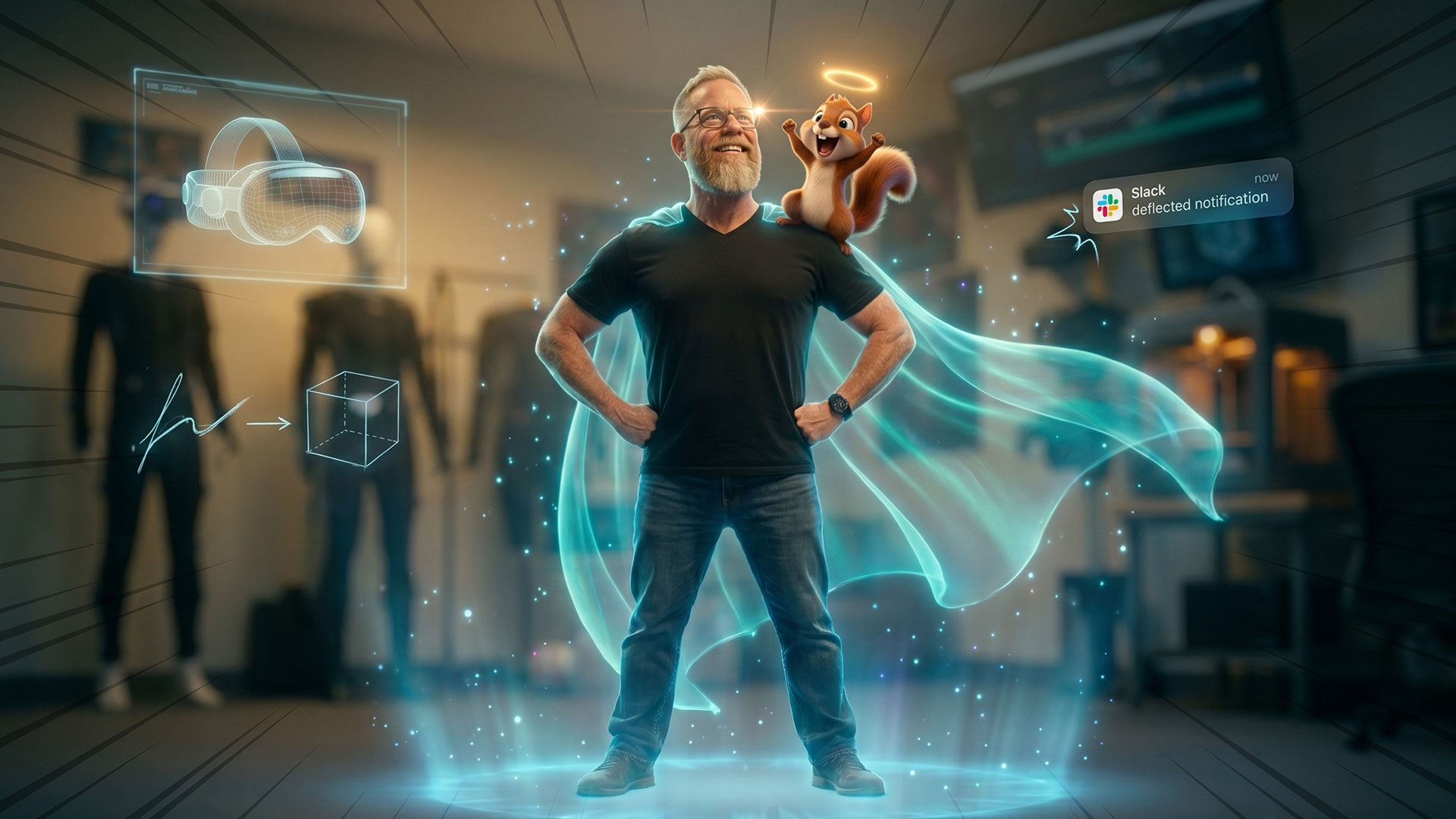
For creative leaders, that is the shift I would pay attention to. Not “Can AI make a thing?” It can. That question is already too small. The better question is: What would you make if the gap between the idea and the first prototype almost disappeared?
And the harder one: If your systems could surface the truth before the meeting started, what would you finally have the attention to build?
Dale Carman, co-founder and CEO of Groove Jones.