



The article is an opinion piece by Vinne Schifferstein Vidal of MC&V arguing that agencies are wrong to market their proprietary AI platforms as their competitive advantage, since everyone draws on the same frontier models. The real differentiator, the author argues, is the people, production knowledge, and workflow surrounding the technology. Within that argument, Groove Jones is used as a flagship example of exactly the kind of excellence the author is praising.
While the article’s overall stance is critical – WPP (WPP Open), Publicis (CoreAI), Omnicom (Omni), and Monks (Flow) and the AI-platform “arms race,” not at Groove Jones. Groove Jones sits firmly on the favorable side of the argument, positioned as an award-winning example of the talent and craft the author says truly matters. It gains an industry award mention, a visual feature, and an implicit endorsement as a specialist production partner delivering exceptional work. Below is an excerpt of the article that mentions Groove Jones.
The agency AI platform has become advertising’s latest arms race.
WPP has WPP Open, Publicis has CoreAI, Omnicom continues to expand Omni and Monks has Flow. Independent agencies are launching their own AI products, while production companies are building proprietary systems to accelerate content creation. New commercial models have emerged around AI-enabled production, from platform subscriptions to unlimited asset offerings. Every pitch deck now promises a smarter way to create.
The industry is behaving as though the technology itself is the answer. It isn’t.
These platforms may have different interfaces, agents, data layers and workflows, but they are largely built around access to the same rapidly improving frontier models. The holding companies are not each training the image, video and language models from scratch. They are integrating external models, proprietary data and internal capabilities into systems designed to make AI secure, accessible and useful across large organisations.
Clients do not ultimately want an AI platform. They want stronger ideas, better work, faster production, greater consistency and commercially useful scale. Those outcomes depend on the quality of the people using the technology, the production knowledge accumulated around it and the culture that determines how decisions are made.
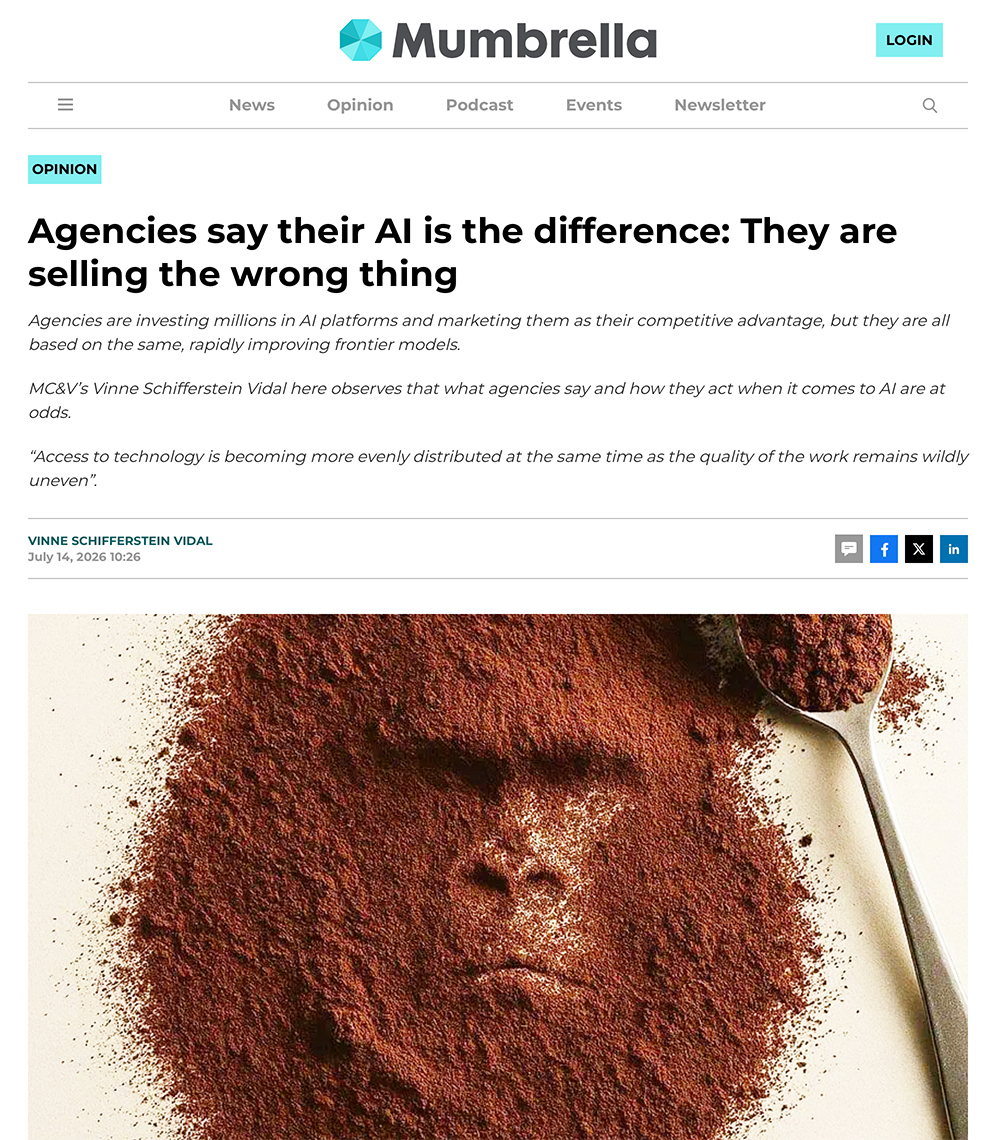 AI is not a differentiator
Infrastructure is quickly becoming table stakes. Every agency can access the latest models. Artists share workflows within hours of newly released work, while tutorials and techniques spread across the creative community almost immediately. Every major model release raises the technical capability of the entire industry, including agencies, production companies and independent artists working directly with the tools.
What proves considerably harder to replicate is everything surrounding the technology. The real capability lies in translating briefs into creative territories, making the right choices across models and disciplines, and protecting the integrity of the work from first concept to final delivery.
Those capabilities cannot simply be downloaded because they are not software. They are organisational knowledge. Howatson can sell an unlimited asset subscription, WPP can sell WPP Open, Publicis can sell CoreAI and Monks can sell Flow. These are all rational commercial responses to AI. Yet none of them fully explains why one agency consistently produces better creative work than another while drawing on many of the same underlying technologies.
For the past two years, much of the industry’s AI conversation has revolved around which image model is leading, which video model has overtaken the others, which platform an agency has built or which subscription a client should buy. Meanwhile, organisations using comparable technologies are producing remarkably different work.
Is the industry selling the wrong thing?
There is an interesting contradiction hiding in plain sight. Agencies are investing millions in AI platforms and marketing them as their competitive advantage. Yet when the creative ambition is highest, they continue searching for specialist AI artists and production partners to actually deliver the work.
If the platform were truly the moat, the market wouldn’t be chasing specialist talent with the same intensity. The industry’s behaviour suggests it already knows where the real value resides, and it’s not in the platforms.
We’ve seen this play out first-hand. Over the past few years we’ve worked both with and for several of the major holding companies, all of whom have invested heavily in their own AI platforms. That experience has reinforced the same observation: the platform provides the infrastructure, but exceptional creative work still depends on exceptional people.
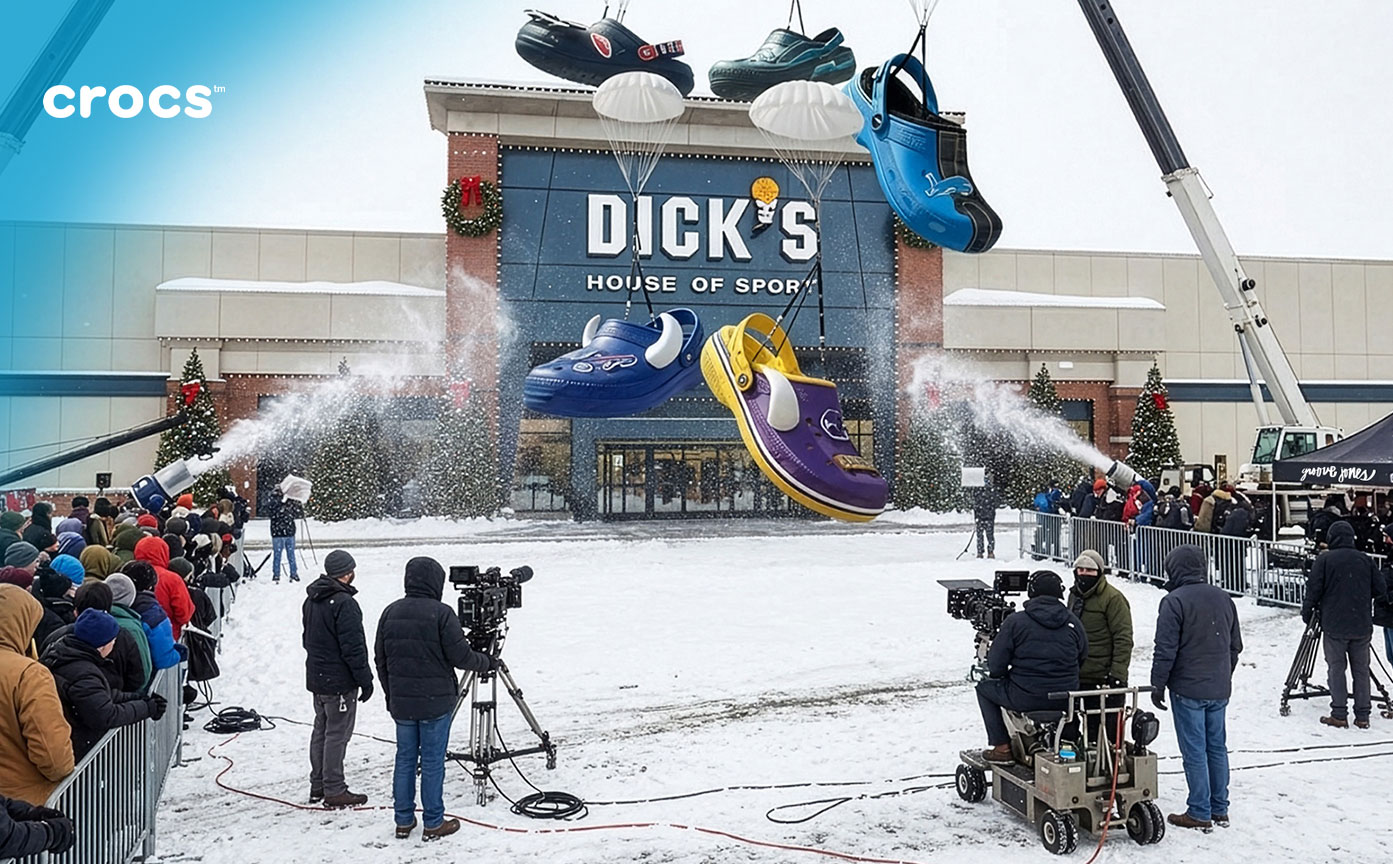
The clearest evidence came from the submissions of this year’s Aaron Awards. The winners of the two Workflow categories could hardly have been more different.
Nikolaj Viborg’s “The Hidden Cost” won Workflow for Creative Ideation because it demonstrated a system for exploring, testing and refining creative possibilities before committing to a direction.
Groove Jones’ “Dick’s Sporting Goods FOOH Holiday Campaign for Crocs NFL Collection” won Workflow for Production because it demonstrated a production workflow capable of delivering consistency, continuity and quality across a complex commercial execution.
Be sure to read the whole original article appears on Mumbrella.com on July 15, 2025 – https://mumbrella.com.au/agencies-say-their-ai-is-the-difference-they-are-selling-the-wrong-thing-929427