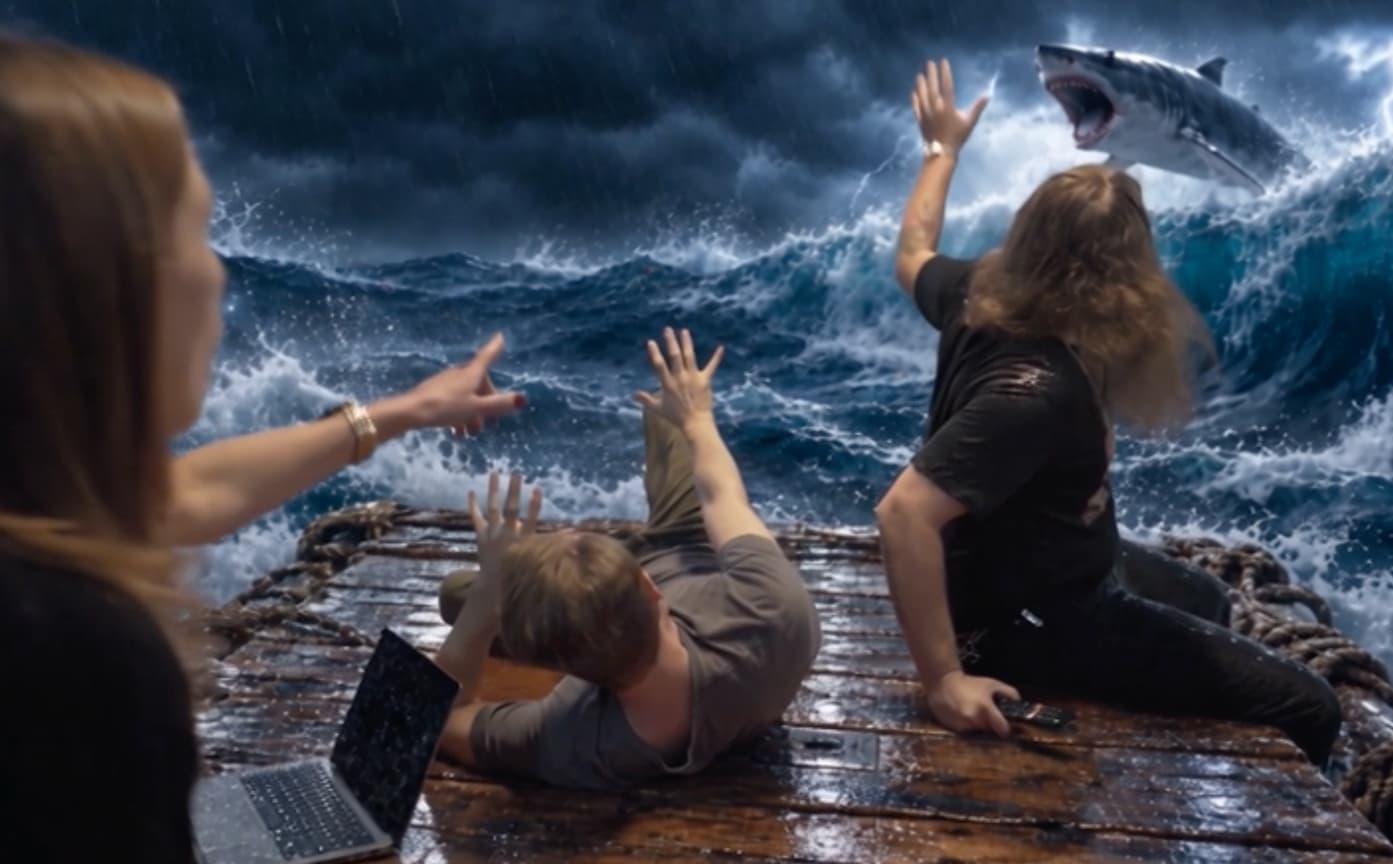


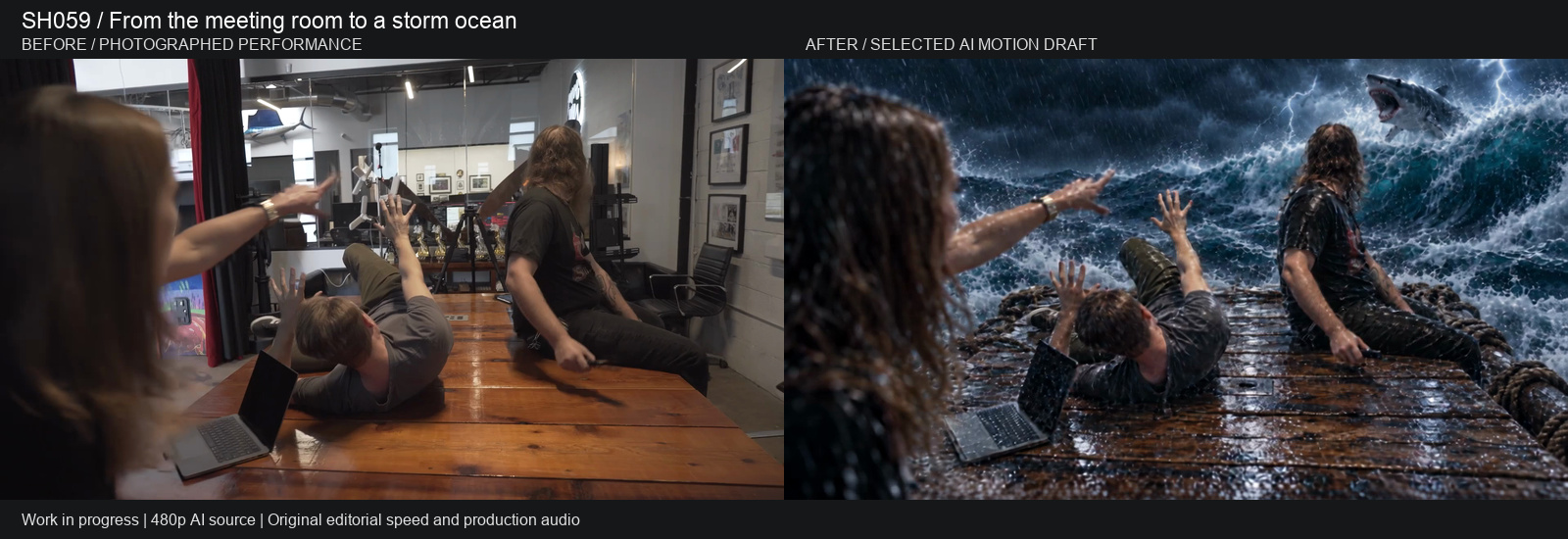
A television remote turns an ordinary office meeting into a trip through pizza, ice, lava, and an ocean world. That is the premise of an experimental short film taking shape in the Groove Jones Sandbox, where we’re exploring how AI visual effects can transform filmed footage while keeping the actors’ performances central to the story.
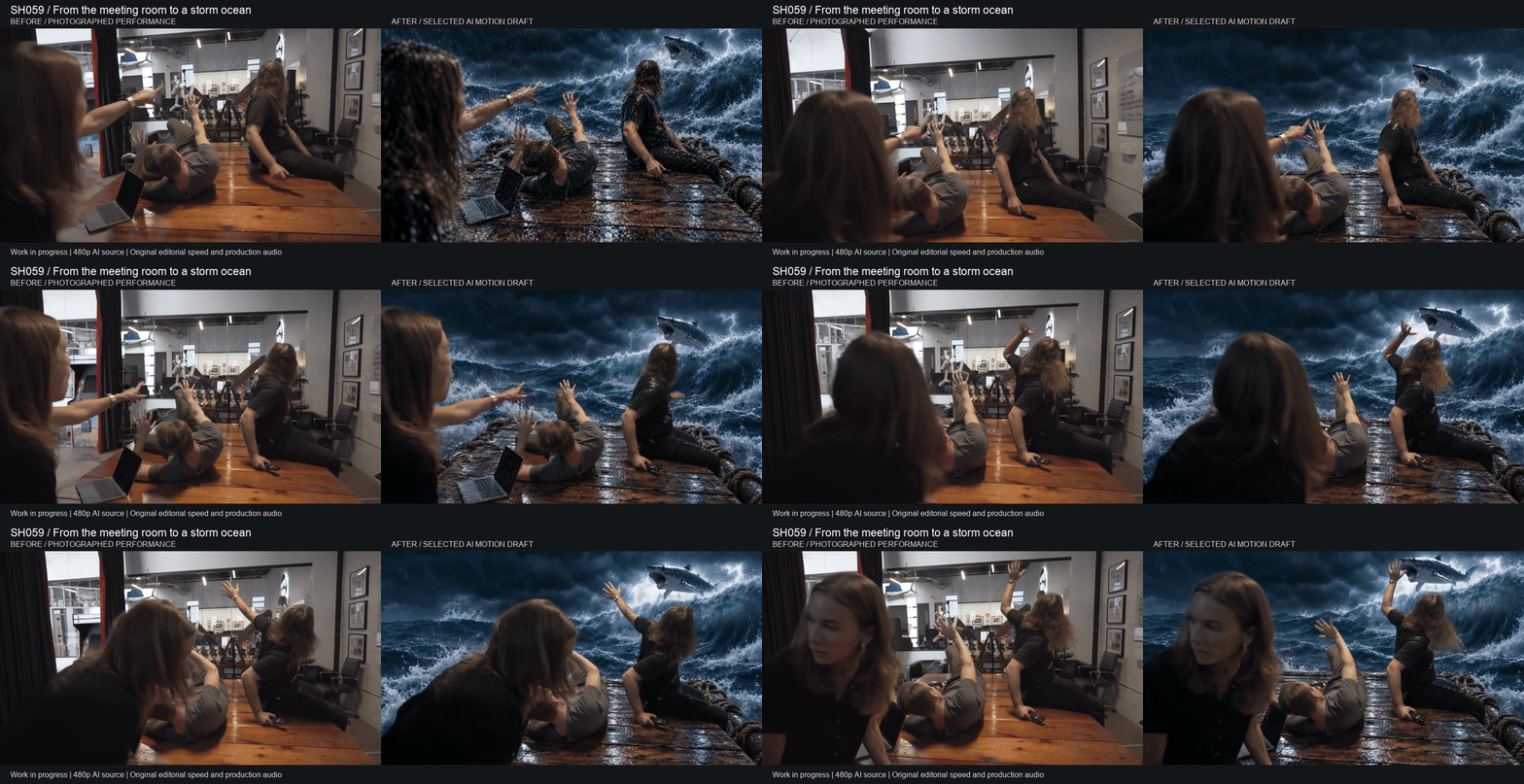
Groove Jones Executive Creative Director Karim Youssef shared the work in progress during a recent project share. The film features team members Ethan, Andrew, and Emily in our meeting room, reacting as each press of the remote changes their surroundings.
 The production starts with a real shoot. Wrong Button explores AI as a companion to the traditional VFX pipeline. The shoot gives us the performances and comic timing; AI helps us try different worlds around them. The aim is to give the team more useful options to take into compositing and finishing, while the artists keep control of the shot.
Building the scene before the shoot
Karim began with a short script built around a location we could use right away: the Groove Jones office. An existing Gaussian splat scan of the meeting room provided a reference he could revisit from different angles while planning the scene.
Storyboards, character references, and a rough camera plan helped establish how the actors would move and interact within that space. Keeping the room recognizable gives the audience something to follow as the worlds change. The table can become pizza or ice, but the actors still need to reach, look, and react in ways we understand. That familiar layout helps the joke survive the transformation.
On set, the team also made room for improvisation, with performances and visual jokes developing as the shoot progressed.
That footage became the foundation for the edit. This workflow uses two kinds of AI assistance: Codex helps with assembly and the tools around the production, while generative image and video tools help explore the look of a shot. Karim used Codex to assemble an initial rough cut from the script and footage, then shaped the sequence around the performances, including the improvised moments, transitions, and the pause that makes a joke land.
The aim is to spend less attention on repetitive setup and more on the creative decisions that make the scene work.
Giving each world a consistent design
Turning a meeting room into a pizza landscape involves more than changing the background. The room still needs to make visual sense as the story moves between shots.
Karim created reference sheets for the characters, environments, and key objects, including the television and remote. Each world went through iterations to work toward a coherent design while retaining recognizable elements of the original room.
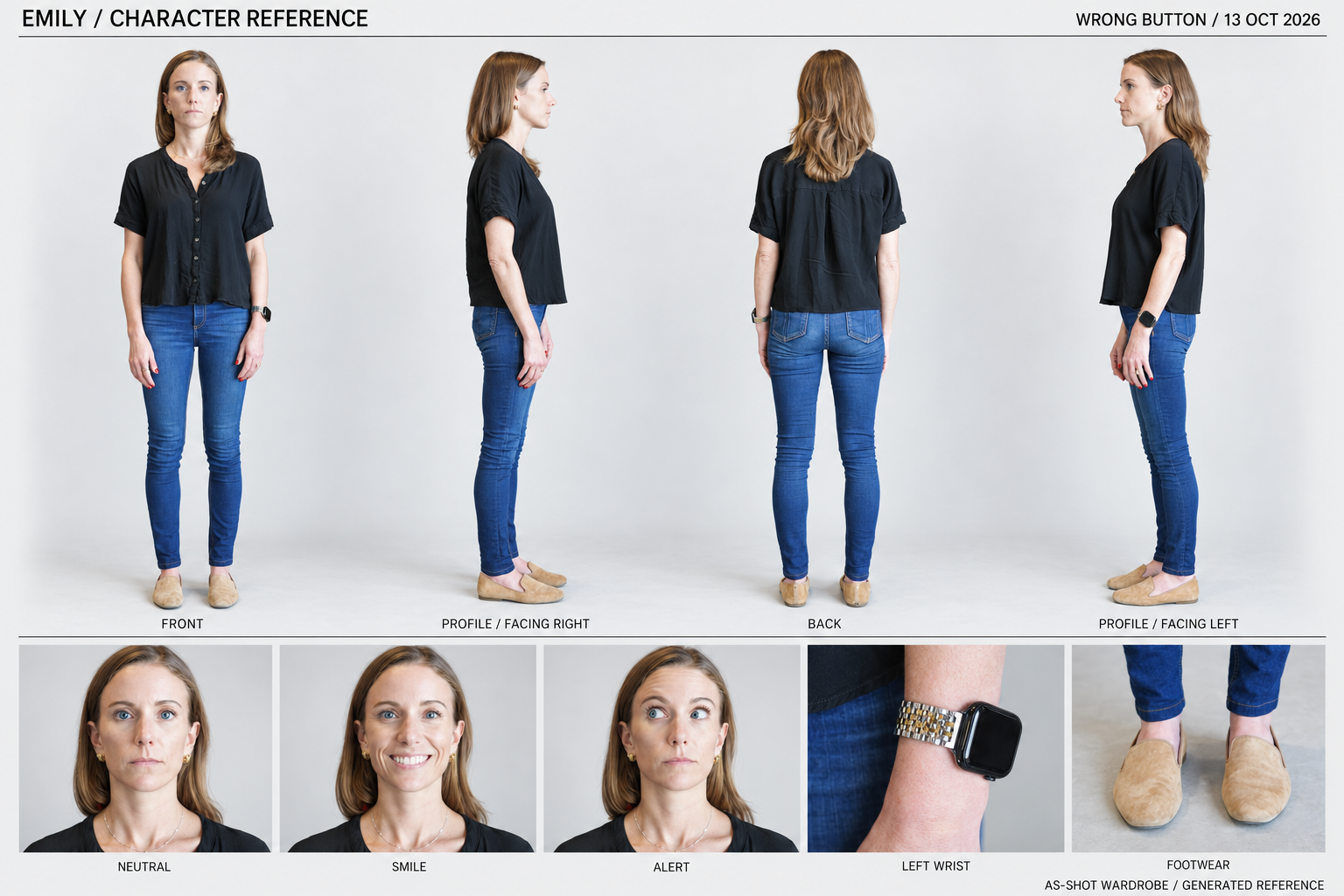
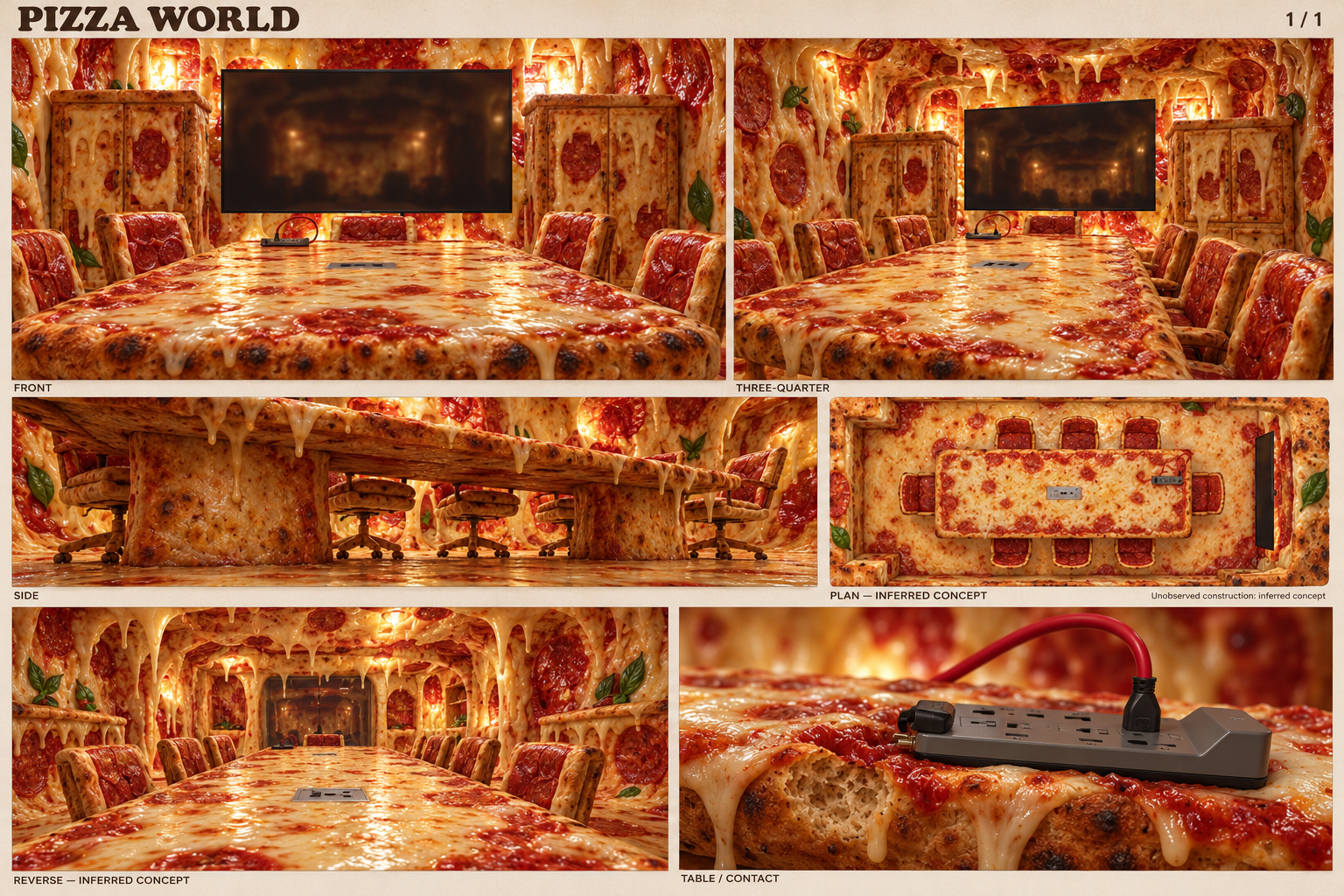
The pizza environment, for example, needed to preserve the relationship between the table, chairs, and television. Without that structure, a transformation could become confusing: an object might disappear, a person might move, or the room might no longer support the action.
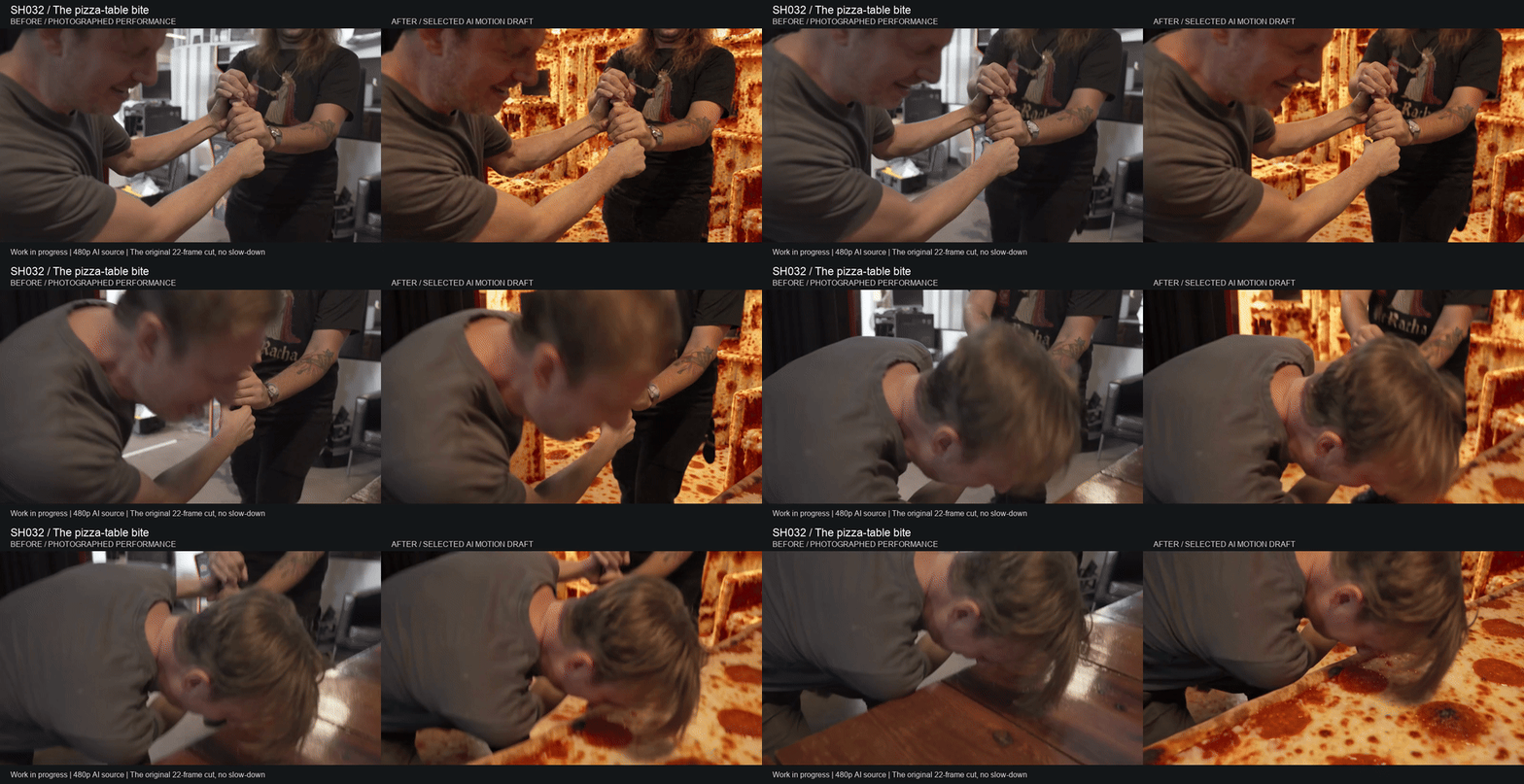
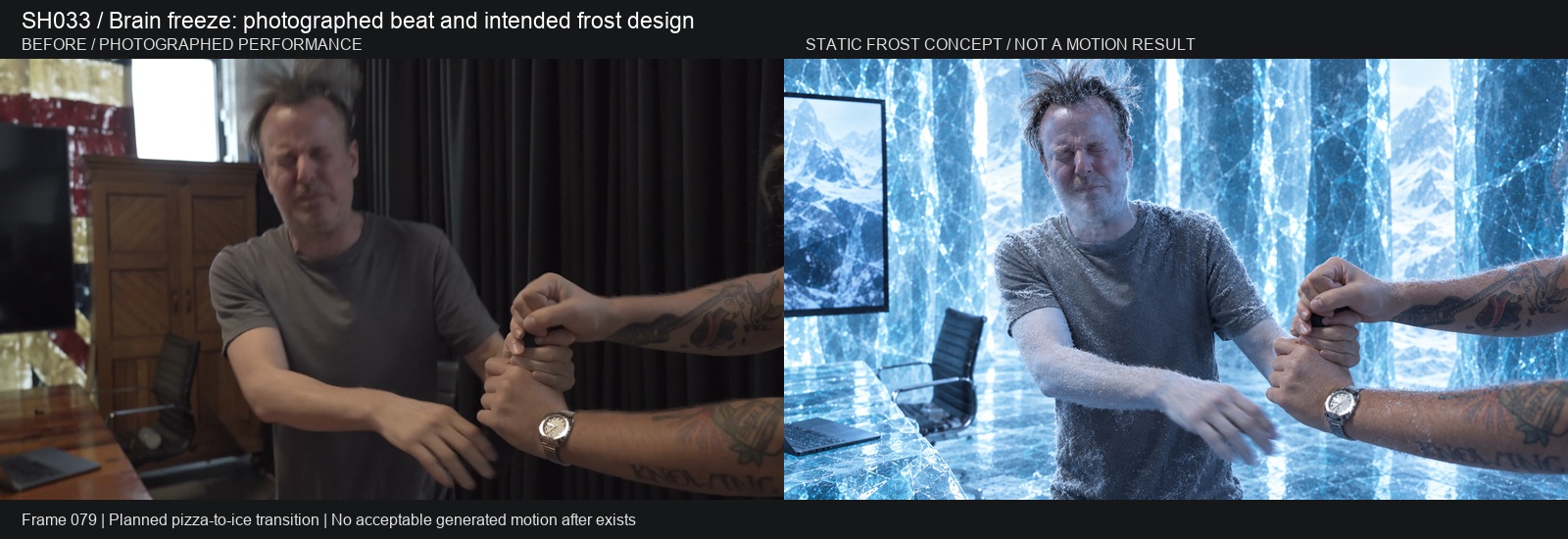
One planned transition follows Ethan as he nibbles the pizza table. The intended effect is for the room to snap to ice just before his next, deeper bite, with frost building through his existing “Brain freeze!” reaction. The VFX timing needs to follow what he actually did on camera so the transformation supports the joke.
A shared set of references helps carry those design decisions from one shot to the next. The television, remote, and room layout need to remain recognizable from different angles, even as their materials change. Reusing those decisions gives each new test a consistent starting point and gives Karim something concrete to compare against when deciding which results to keep and which to revisit.
Making the people belong in the picture
Lighting emerged as a key creative challenge. In some tests, the environment changed dramatically while the people retained the lighting of the original office footage. The result separated the performers visually from the world around them.
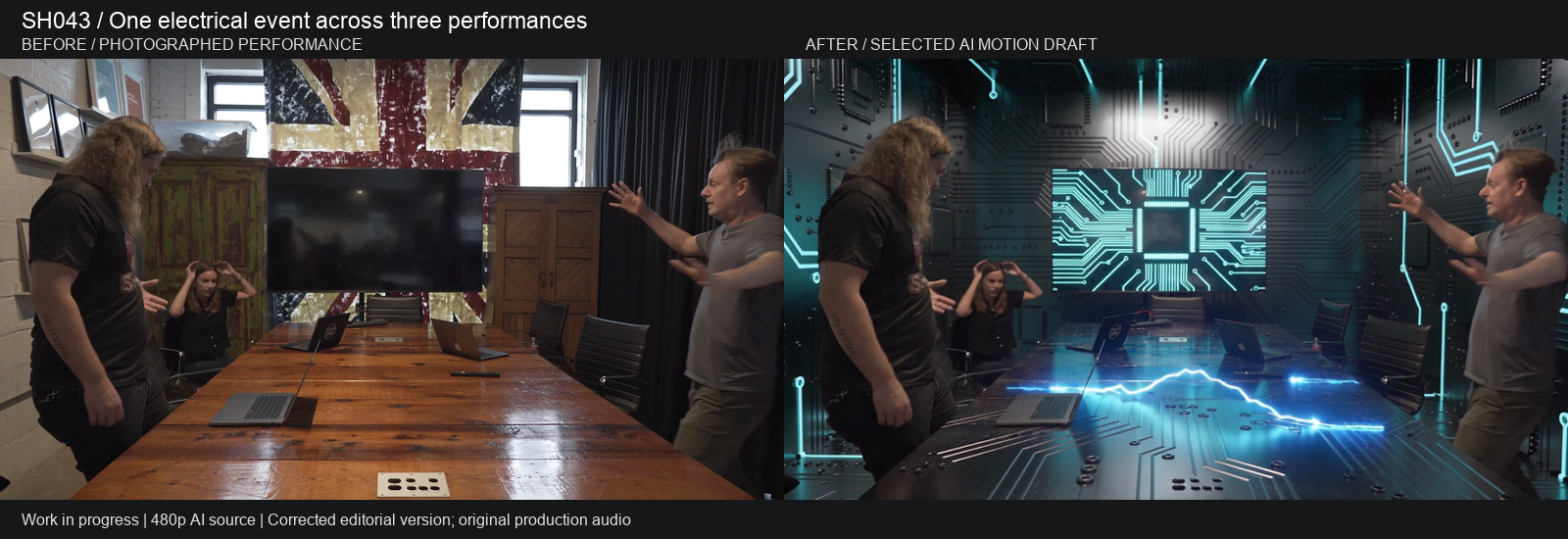
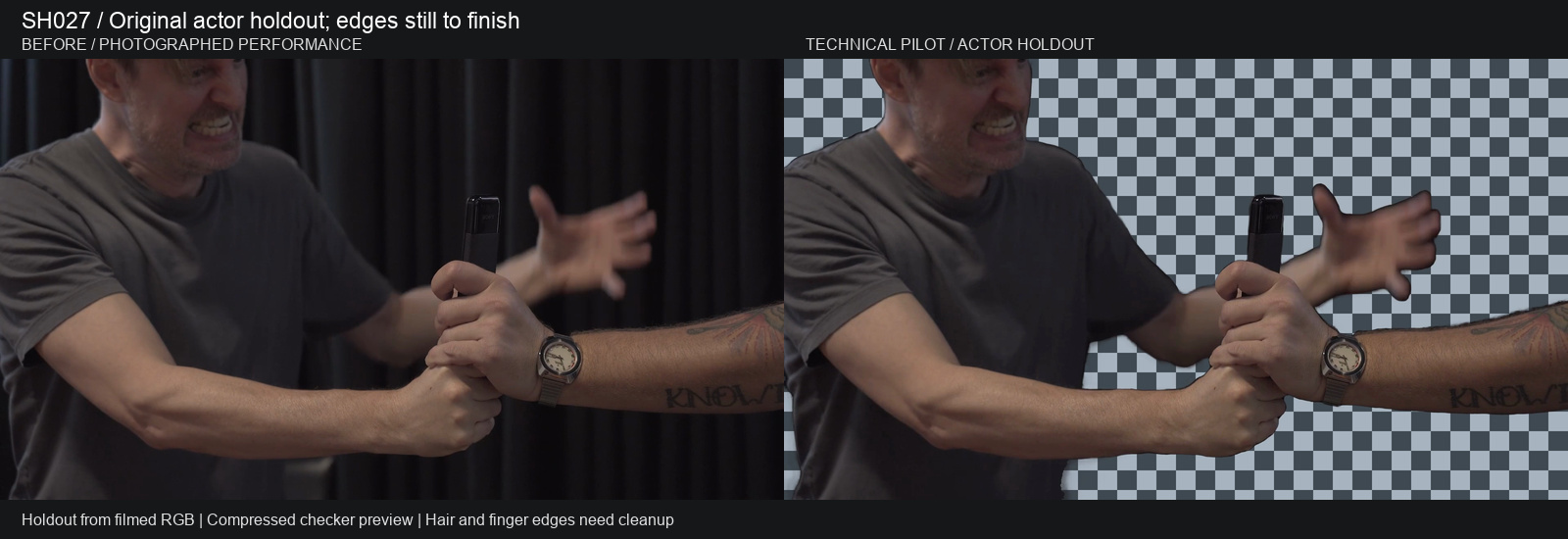
One finishing approach we’re testing combines generated environments with traditional compositing. A matte can isolate the original performer, while tracking, edge cleanup, contact shadows, and color work help join the layers. Warm spill from lava or cold light from ice needs to reach the people too. Actor-matte experiments are underway, but they have not yet established a finished composite. Small props such as the remote also need separate attention when a person mask misses them.
Karim also demonstrated tests using depth maps alongside the original footage and character references. A depth map estimates which parts of a scene are nearer or farther from the camera, giving a guided generation more information about its structure. Video depth models also address consistency in those estimates between frames. Video Depth Anything.
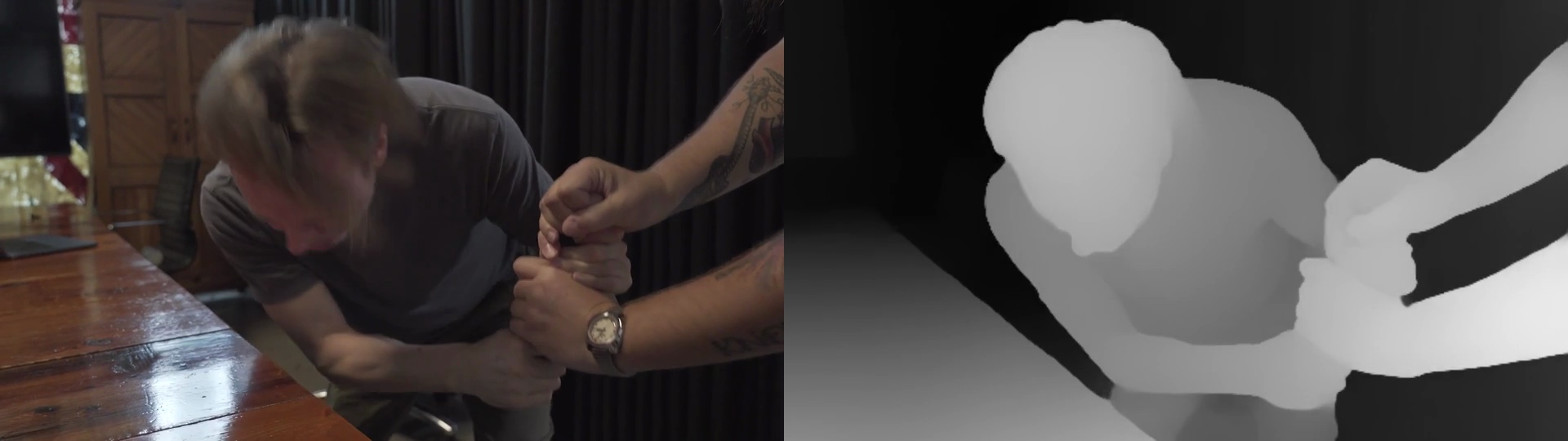
In Karim’s tests, this combination produced promising relighting candidates. Depth alone does not describe surface color or light direction, and it does not solve character identity or camera movement. Larger camera moves can reveal areas the original camera never saw, so those experiments still need careful review.
A convincing world is only part of a successful shot. In recent candidate tests, ice and material changes worked while mouth timing or hand positions drifted. We still judge the result against the photographed performance: does the reaction land at the same moment, is the remote in the right hand, and does the action connect to the next cut?
That review guides what we keep. Traditional compositing offers a way to preserve a good filmed performance while artists use the useful parts of a generated result. The film remains a work in progress, with each candidate assessed for both its visual effect and its fidelity to the action on camera.
A workspace built around the production
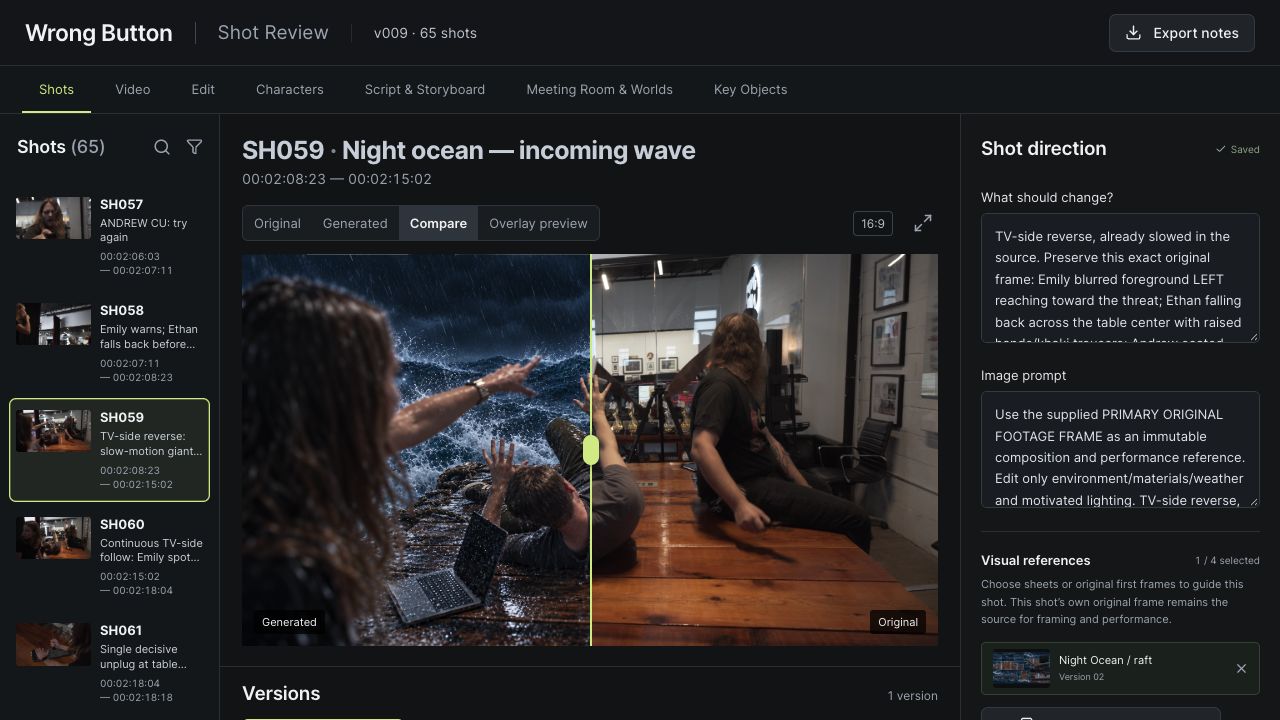
To manage the experiment, Karim utilized our GrooveTech custom dashboard that brings together shots, references, prompts, and generated clips. He can review a result against the edit, regenerate a shot, and move selected material back into Premiere for further editing.
For an early review, generated candidates went onto a separate video track above a duplicate of the original edit, with the original audio preserved. These were review drafts, allowing the team to compare a treatment in context and return to the photographed shot as needed. Shot IDs, source ranges, references, prompts, and versions stay connected through that handoff.
The dashboard also lets Karim add features as production needs emerge, such as creating another world or organizing the references for a particular shot. Keeping those materials connected opens up more visual directions to compare using the same photographed performance. It can help the team decide earlier which treatment is worth finishing, reuse references and approved design choices across shots, and reduce repetitive preparation when organizing versions and moving candidates into the edit. Visible examples also give artists and directors something specific to discuss.
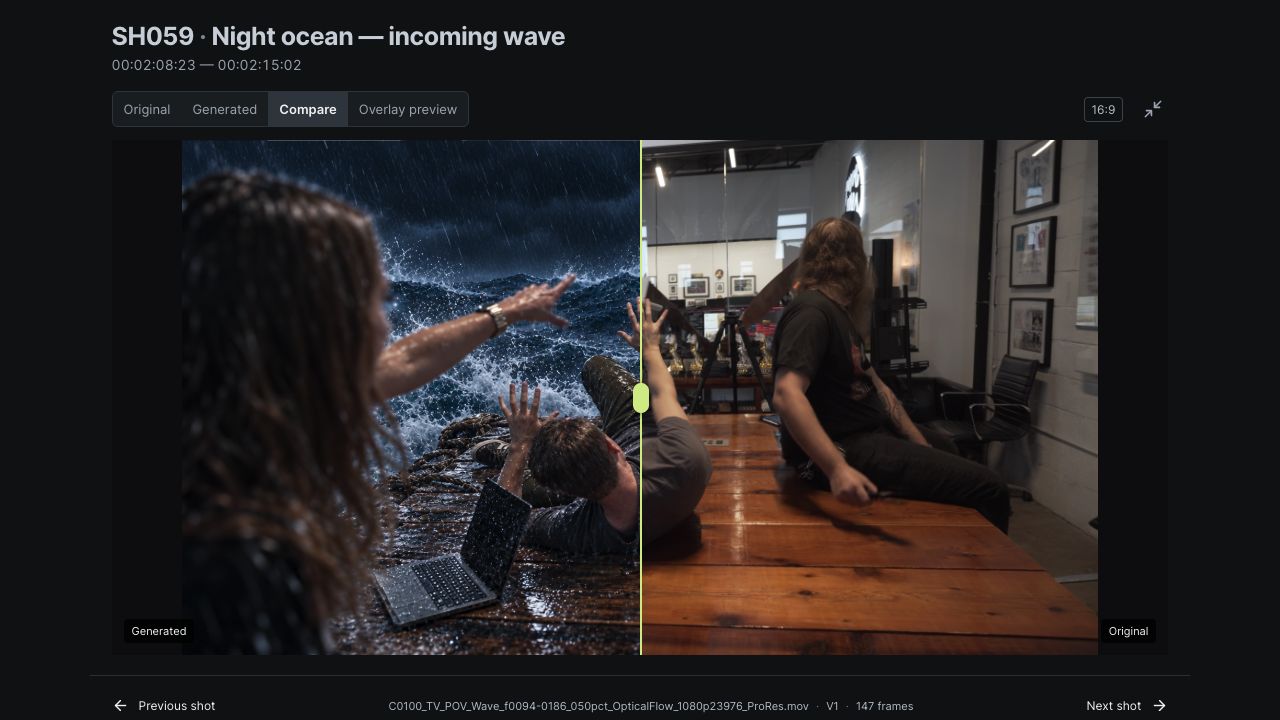
The film pairs playful subject matter with a practical production question: how much can we transform a filmed scene while retaining the performance that makes it work? The next step is to take the strongest environment ideas into more controlled composites, preserving the filmed performances while refining the light, edges, and prop interactions. Wrong Button gives us a practical way to test where AI helps exploration and where precise VFX work makes the shot hold together.