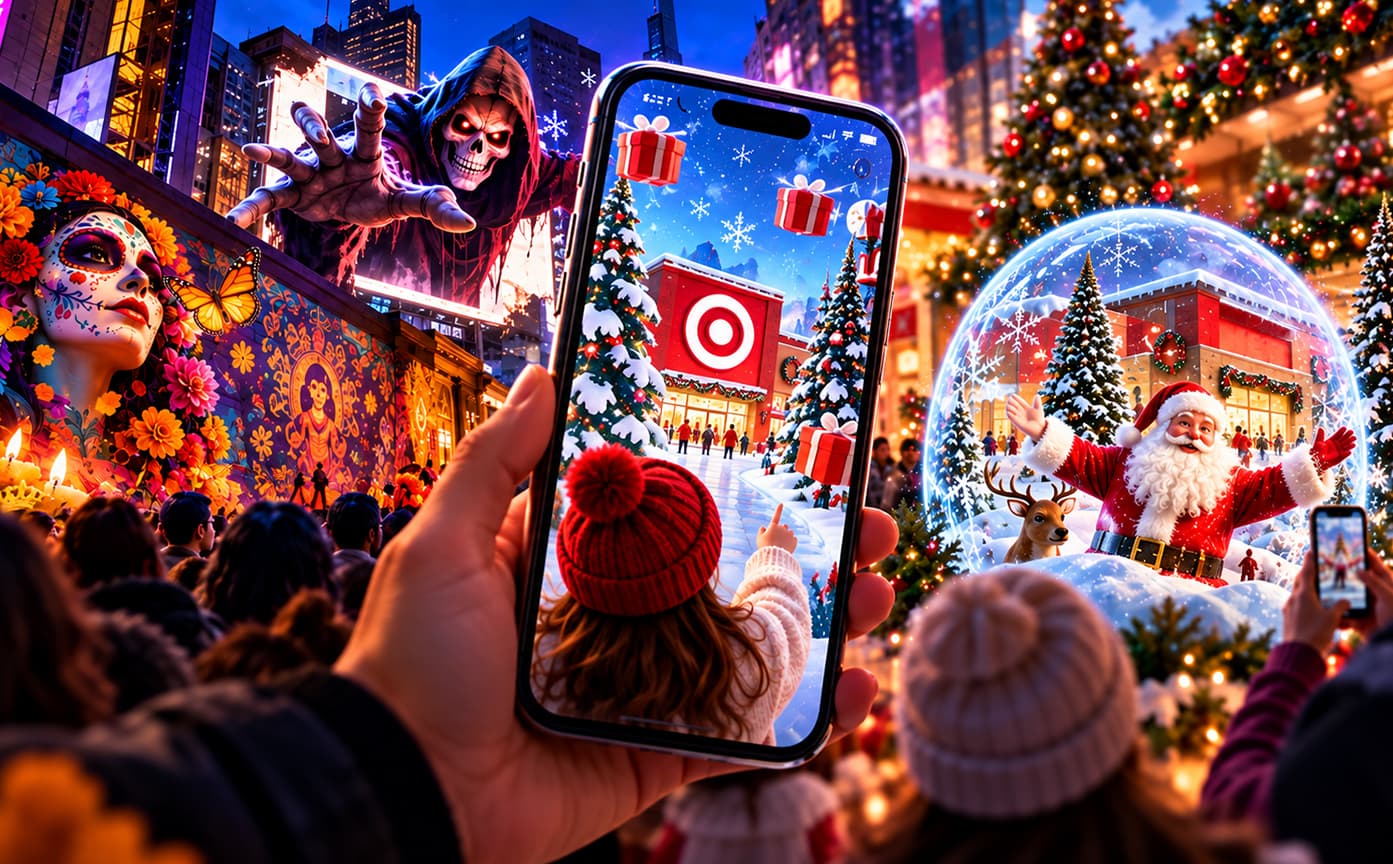




Halloween. Día de los Muertos. Christmas. Valentine’s Day. The Fourth of July. Back to School. The calendar is filled with moments that consumers already recognize, anticipate, and celebrate. For marketers, these occasions offer something incredibly valuable: a built in emotional connection with an audience. The opportunity is not simply to create another seasonal ad. It is to give people something seasonal to do.
Interactive experiences can transform familiar holiday traditions into opportunities for consumers to play, explore, create, compete, share, and connect with a brand. Augmented reality can bring a Halloween character to life in someone’s living room. An ordinary holiday shopping trip can become an AR scavenger hunt. A digital billboard can turn Times Square into a giant Halloween spectacle. AI can create a personalized holiday keepsake in seconds.
Instead of interrupting the celebration with another advertisement, brands can become part of the celebration. And increasingly, consumers are responding to experiences that invite participation. EventTrack 2026 reports that 61% of consumers are more inclined to purchase after attending a live event. Recent research from the Out of Home Advertising Association of America and The Harris Poll also found that 73% of adults ages 18 to 64 prefer products or retailers that engage them through in person experiences or local outdoor events.
Why Seasonal Moments Are So Powerful
Great interactive marketing usually begins with context. A Halloween activation does not have to explain why something is creepy. A Christmas experience does not need to introduce the idea of giving. An Easter scavenger hunt does not need to teach people that they should search for hidden things. The cultural framework already exists. That gives creative teams an enormous head start.
Seasonal moments come with recognizable colors, characters, music, traditions, emotions, behaviors, and expectations. Technology gives brands an opportunity to take those familiar elements and do something unexpected with them. There is also significant commercial activity surrounding these moments. Giving customers something TO DO really moves the needle and breaks through the noise.
For the 2025 winter holiday season, the National Retail Federation reported that 91% of consumers planned to celebrate the winter holidays, with consumers budgeting an average of approximately $890 per person for gifts, food, decorations, and other seasonal purchases. Holiday sales were forecast to exceed $1 trillion for the first time.
The Thanksgiving through Cyber Monday period alone attracted a record 202.9 million shoppers in 2025. For brands, the audience is already there. The challenge is finding a way to stand out.
Halloween: When Brands Get Permission to Be Weird
Few holidays provide marketers with as much creative freedom as Halloween.
Consumers expect transformations, surprises, monsters, costumes, games, and spectacle. That makes Halloween an ideal environment for technologies such as AR, AI, computer vision, interactive games, immersive OOH, and 3D animation.
At Groove Jones, we have had the opportunity to bring that idea to life in several very different ways.
Spirit Halloween Lets Jack the Reaper Loose in Times Square

For Spirit Halloween, Groove Jones created a massive forced perspective digital OOH experience featuring Jack the Reaper. The animation appeared on an oversized digital billboard in New York’s Times Square. Jack seemed to punch through the structure before smashing his way out and reaching toward pedestrians below. What appeared to be a three dimensional structure was actually a carefully designed forced perspective illusion.
To create it, our team recreated the Times Square environment virtually so our artists could evaluate the animation from the same viewing positions pedestrians would experience on the street. The physical billboard was only part of the media opportunity.
People began capturing the spectacle and posting it to TikTok and Instagram, allowing the physical experience to become social content and extending the activation far beyond Times Square.
That is one of the most interesting opportunities with experiential OOH. The location becomes the stage, but the audience does not have to stop at the location. A great physical experience can become content.
Día de los Muertos: Turning a Mural Into a Digital Experience

Seasonal marketing can also create opportunities for brands to celebrate culturally meaningful moments. Groove Jones partnered with Modelo to create an augmented reality experience celebrating Día de los Muertos.
The campaign began with large scale murals featuring traditional imagery associated with the celebration. Consumers could use their phones to activate the artwork and watch the static mural transform into a three-dimensional digital experience. The combination of traditional artwork, outdoor media, and augmented reality created an experience that people could discover rather than simply view.

More importantly, it produced measurable results.
The two month campaign generated:
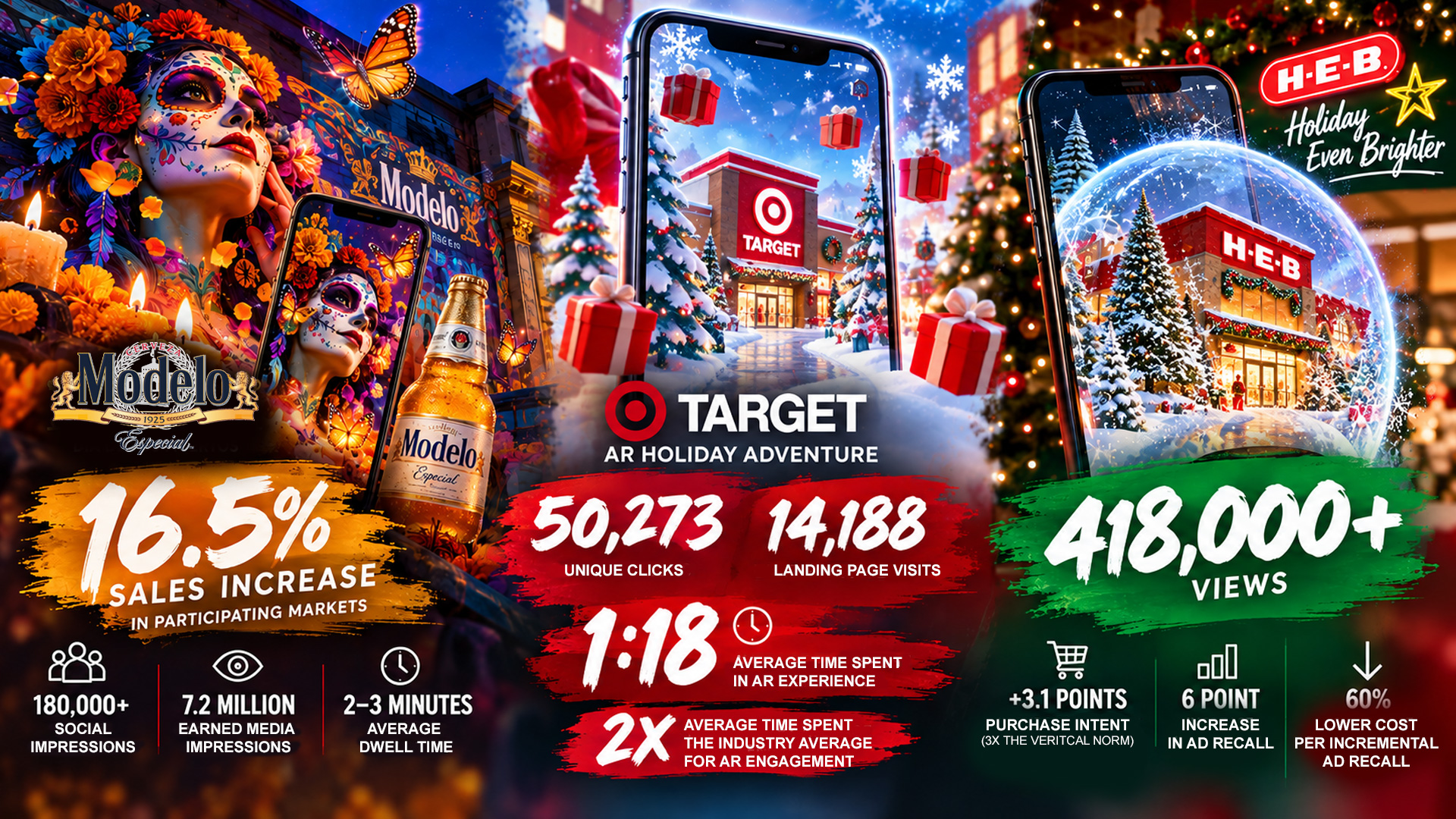
- A 16.5% increase in sales in markets where the campaign ran
- More than 180,000 social media impressions
- 7.2 million earned media impressions
- Average dwell times between two and three minutes
Those numbers illustrate an important distinction between interactive media and traditional advertising. A consumer might look at an advertisement for a few seconds. An experience can keep them engaged for minutes.
And when that experience gives them something worth capturing or sharing, the audience can expand far beyond the people who encountered the original activation.
Carmella Creeper Turns Halloween Shopping Into a Game
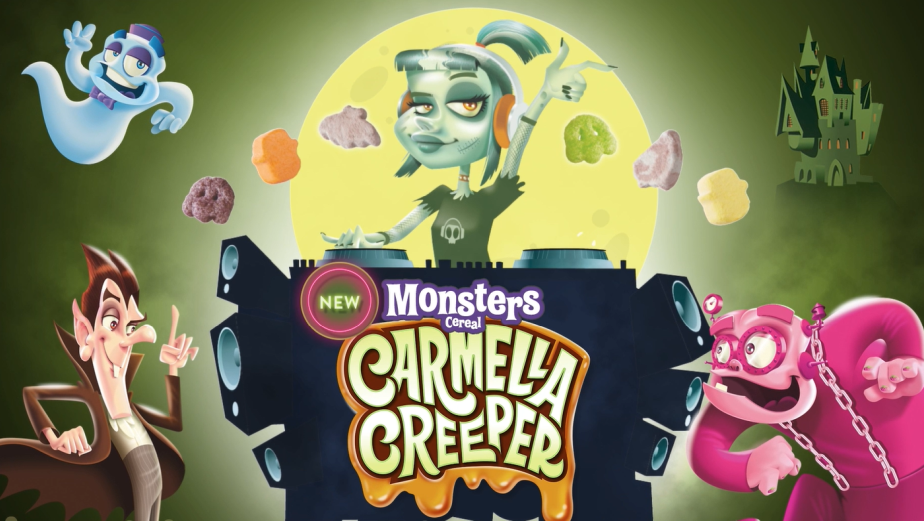
Another way to approach a seasonal moment is through gamification. For General Mills, Groove Jones worked with VMLY&R Commerce on the Creep to a New Beat experience featuring Carmella Creeper, the first female character added to the iconic Monster Cereals lineup.
Carmella was introduced as an undead DJ, providing the perfect setup for an interactive Halloween experience. Consumers could scan a QR code and place Carmella’s DJ booth into the world around them through augmented reality. The experience supported General Mills’ Halloween campaign and connected the digital interaction directly to the Monster Cereals product lineup and retail environment.
It is a good example of how a seasonal product promotion can become something much more engaging than signage or packaging alone.
The package gets attention. The QR code creates the invitation. The interactive experience gives people a reason to stay.
The Holiday Shopping Season: Turning Retail Into an Experience
If Halloween gives brands permission to be weird, the winter holidays give brands permission to create a little magic. They also represent one of the most important periods on the retail calendar. NRF reports that November and December holiday sales have accounted for approximately **19% of annual retail sales on average over the past five years**, with the percentage even higher for some retailers.
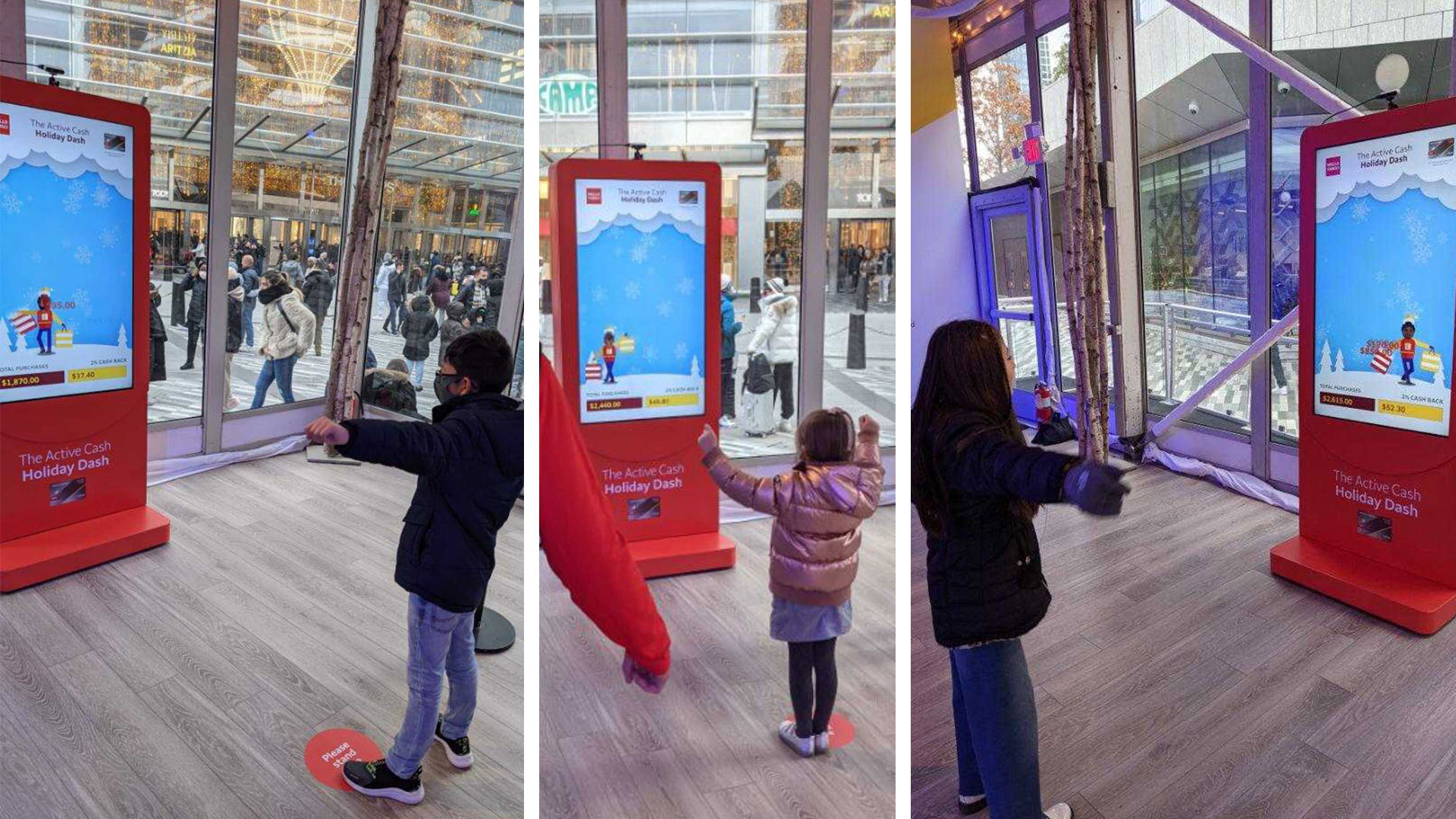
That means retailers are competing intensely for the same consumers at the same time. Interactive technology can help transform the physical store from a place where someone simply buys something into a place where something happens.
Target Turns Holiday Shopping Into an AR Adventure

Groove Jones worked with Target and X FCTR to create **Bullseye’s AR Holiday Adventure**, transforming Target stores into gateways to a digital holiday world. Guests could scan QR codes located on floor decals and displays throughout the store and enter an augmented reality winter wonderland featuring Target’s Bullseye character.
Inside the experience, families could explore interactive environments and play games built around toys from Bullseye’s Top Toys list. The campaign demonstrated how physical retail media can become the entry point into a much deeper digital experience.
The results were impressive:
- 50,273 unique clicks
- 14,188 unique visits to the linked landing page
- 1 minute and 18 seconds average time spent inside the AR experience
According to the campaign results, that engagement time was twice the industry average for AR engagement. Instead of asking shoppers to look at another holiday display, Target invited them inside one.
H-E-B Makes the Holidays Even Brighter With AR
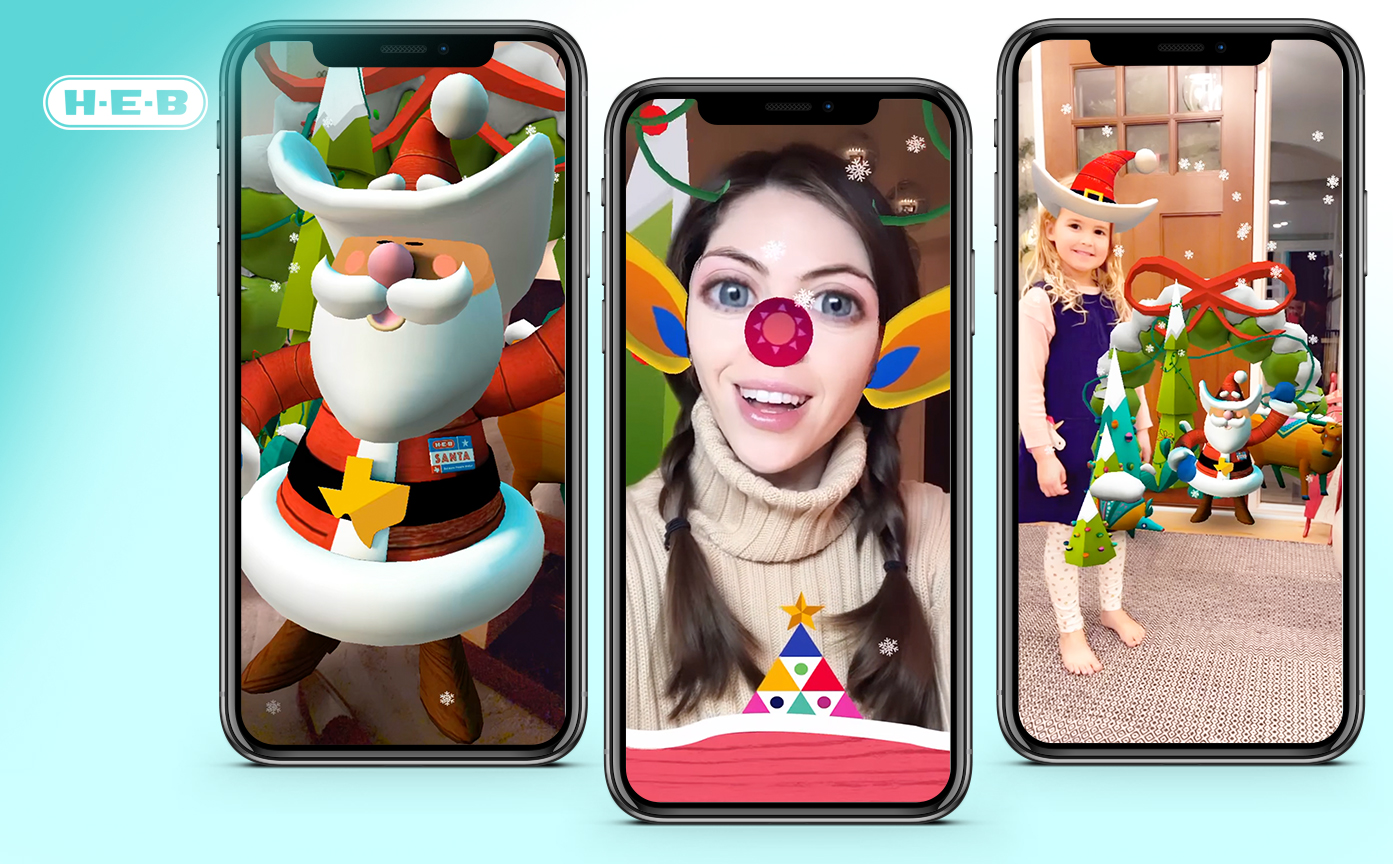
H-E-B took a different approach to holiday AR. Working with Groove Jones and Facebook Creative Shop, H-E-Bcreated three augmented reality experiences as part of its Holiday Even Brighter campaign. The experiences were designed to recreate some of the holiday traditions that families could not participate in normally during 2020.
One experience reimagined the traditional Santa photo through AR. Another created a winter wonderland. The experiences could be accessed both in stores and at home, extending the campaign beyond the physical retail environment.
Together, the AR experiences generated more than 418,000 views. But the most interesting results were around brand impact.
The campaign increased H-E-B purchase intent by 3.1 points, which was reported as three times the vertical norm. The AR campaign also drove purchase intent at more than three times the level generated by H-E-B’s holiday promotional ads during the same period.
Ad recall increased six points over the control group, while the campaign produced a 60% decrease in cost per incremental ad recall compared with H-E-B’s previous holiday campaign. The campaign went on to win a Gold Shorty Award for Creative Use of Technology.
The important takeaway is not simply that AR was entertaining. It moved marketing metrics.
The Holiday Calendar Is Much Bigger Than Halloween and Christmas
Halloween and Christmas are obvious opportunities, but they represent only part of the seasonal marketing calendar. Nearly every major cultural or seasonal moment creates a different opportunity for interaction.
- Valentine’s Day: Valentine’s Day naturally lends itself to personalization. AI generated couples portraits, personalized digital Valentines, compatibility games, AR photo experiences, custom love songs, or AI generated videos could give consumers something they can create and share with someone else. The brand does not have to be the center of the experience. It can simply make the experience possible.
- Easter: Easter already has one of the world’s most recognizable interactive traditions: the Easter egg hunt. Imagine transforming a retail store, entertainment district, campus, resort, or shopping center into an AR Easter egg hunt. Guests could discover virtual objects, collect points, unlock offers, find hidden characters, and compete for prizes. No instruction manual is necessary. Everyone already understands the game.
- Mother’s Day and Father’s Day: These holidays are ideal opportunities for personalized content. Generative AI can transform family photos into artwork, movie posters, animated greeting cards, personalized videos, or other digital keepsakes. Instead of asking someone to share branded advertising, give them something personal they actually want to share.
- Fourth of July: The Fourth of July creates an opportunity for spectacle. Projection mapping, drone integrations, AR fireworks, interactive LED installations, computer vision games, and large scale digital OOH can extend the celebration into branded physical spaces. Imagine pointing your phone toward a city skyline and triggering an AR fireworks display, or seeing a giant three dimensional object burst through a digital billboard as part of a holiday celebration.
- Back to School: Back to School may not technically be a holiday, but from a marketing perspective it is absolutely a seasonal moment. Retailers, universities, technology brands, CPG companies, apparel companies, and telecom brands all have opportunities to turn the beginning of the school year into an experience. AR scavenger hunts can introduce students to a campus. AI can create personalized yearbook style portraits. Interactive games can turn product discovery into competition. Digital rewards can connect physical retail activity with loyalty programs.
- Super Bowl, March Madness, World Cup and Other Cultural Moments: Some of the most powerful seasonal opportunities are not holidays at all. They are moments when millions of people are paying attention to the same thing at the same time. The Super Bowl, March Madness, World Cup, major music festivals, movie premieres, and championship events create the same conditions that make holidays attractive to marketers. The audience already understands the context. That means the brand can get straight to the fun.
One Seasonal Moment. Lots of Technology.
The creative idea should always come first. But today’s interactive toolbox gives brands more ways than ever to bring those ideas to life.
- Augmented Reality can make packaging, murals, signage, displays, products, and physical environments come alive.
- Artificial Intelligence can generate personalized portraits, characters, videos, messages, and digital keepsakes.
- Computer Vision can turn a person’s movements into the controller for an interactive game.
- Interactive Games can turn passive audiences into players and create opportunities for scoring, competition, prizes, and leaderboards.
- Anamorphic and Forced Perspective OOH can transform a digital billboard into a massive seasonal spectacle.
- Scavenger Hunts can move consumers through stores, venues, entertainment districts, resorts, campuses, and events.
- Interactive Mirrors and AI Photo Experiences can turn a quick interaction into personalized content people want to share.
- Web Based Experiences can extend a physical activation to consumers anywhere without requiring them to download an app.
The technology is not the idea. It is the tool that allows the idea to become something people can participate in.
Make the Consumer Part of the Celebration
The best seasonal campaigns do more than put a pumpkin in an advertisement in October or add snowflakes to a logo in December. They understand why people care about the moment in the first place. At Groove Jones, we are constantly exploring how AR, AI, VR, computer vision, interactive games, immersive OOH, and emerging technologies can turn familiar moments into something unexpected.
So as you look at your next marketing calendar, do not just ask what your brand is going to say during the next holiday. Ask what you can give your customers to do. Because your customers already have these moments circled on their calendars. The opportunity is to create an experience worth remembering when they get there.