
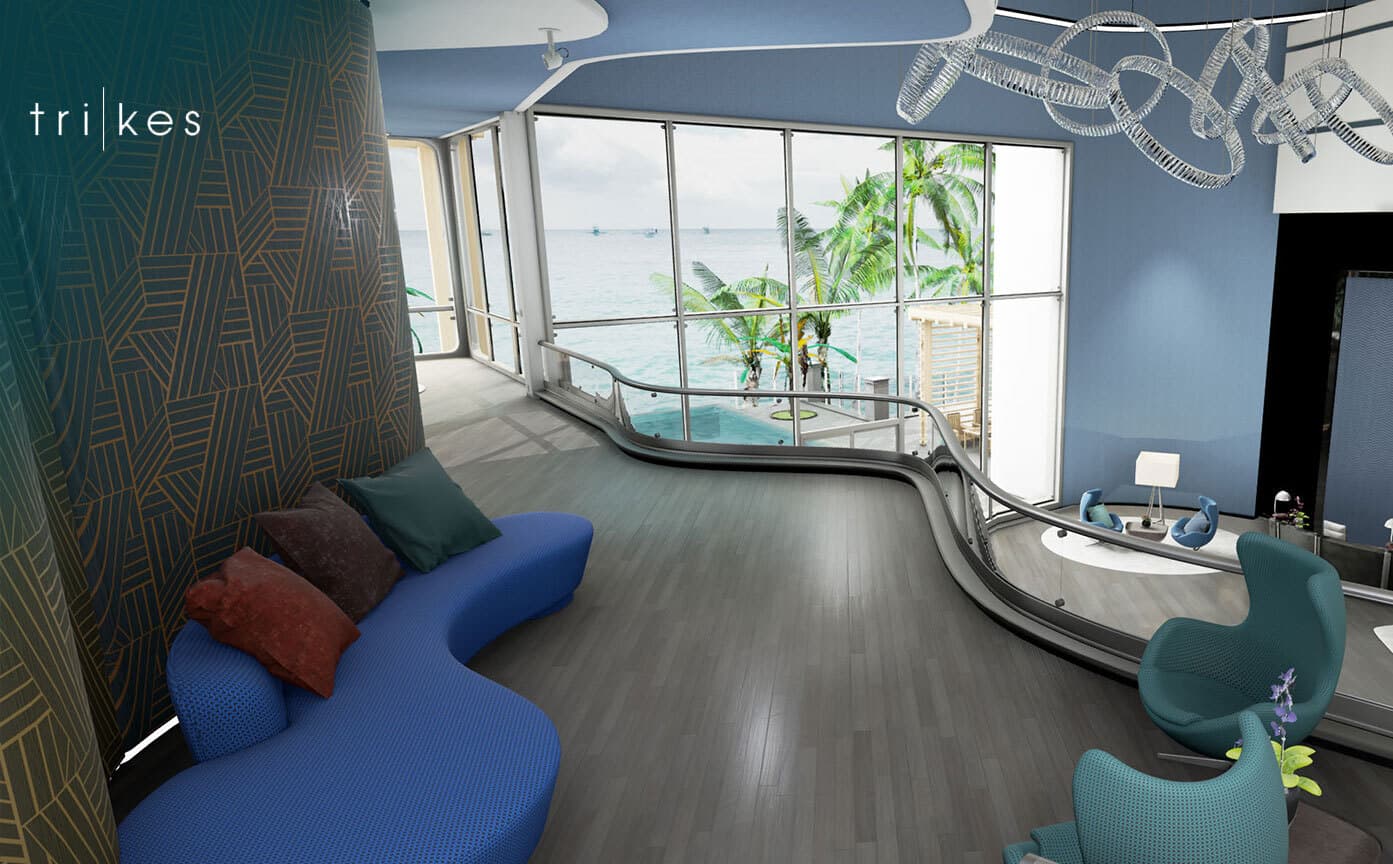




TRI-KES architectural and interior products have been utilized in Starbucks corporate and commercial building projects, such as providing specialized acoustical wall coverings (like Acousticord) and surface finishes during major support center expansions. For the HD Expo, where hospitality architects, developers, owners, and purchasers go to source the materials that will end up in the hotels they build and run, TRI-KES need a interactive experience to highlight their laters materials and wallcoverings. For a materials company like TRI-KES, that means walking buyers through a catalog of fabric and wall covering options and asking them to imagine those choices covering the walls and seating of a real lobby.

That is a hard sell to make from a swatch book. A buyer can hold a square of fabric in their hand, but picturing that same pattern scaled across a hotel lobby, under real lighting, next to the rest of the room, takes a leap most people cannot make standing at a trade show booth. TRI-KES needed a way to close that gap between sample and space, on a trade show floor, in the time it takes a buyer to walk past a booth. TRI-KES needed a way to close that gap between sample and space, on a trade show floor, in the time it takes a buyer to walk past a booth.
The Solution – Digitizing 300 Material Swatches for Designers
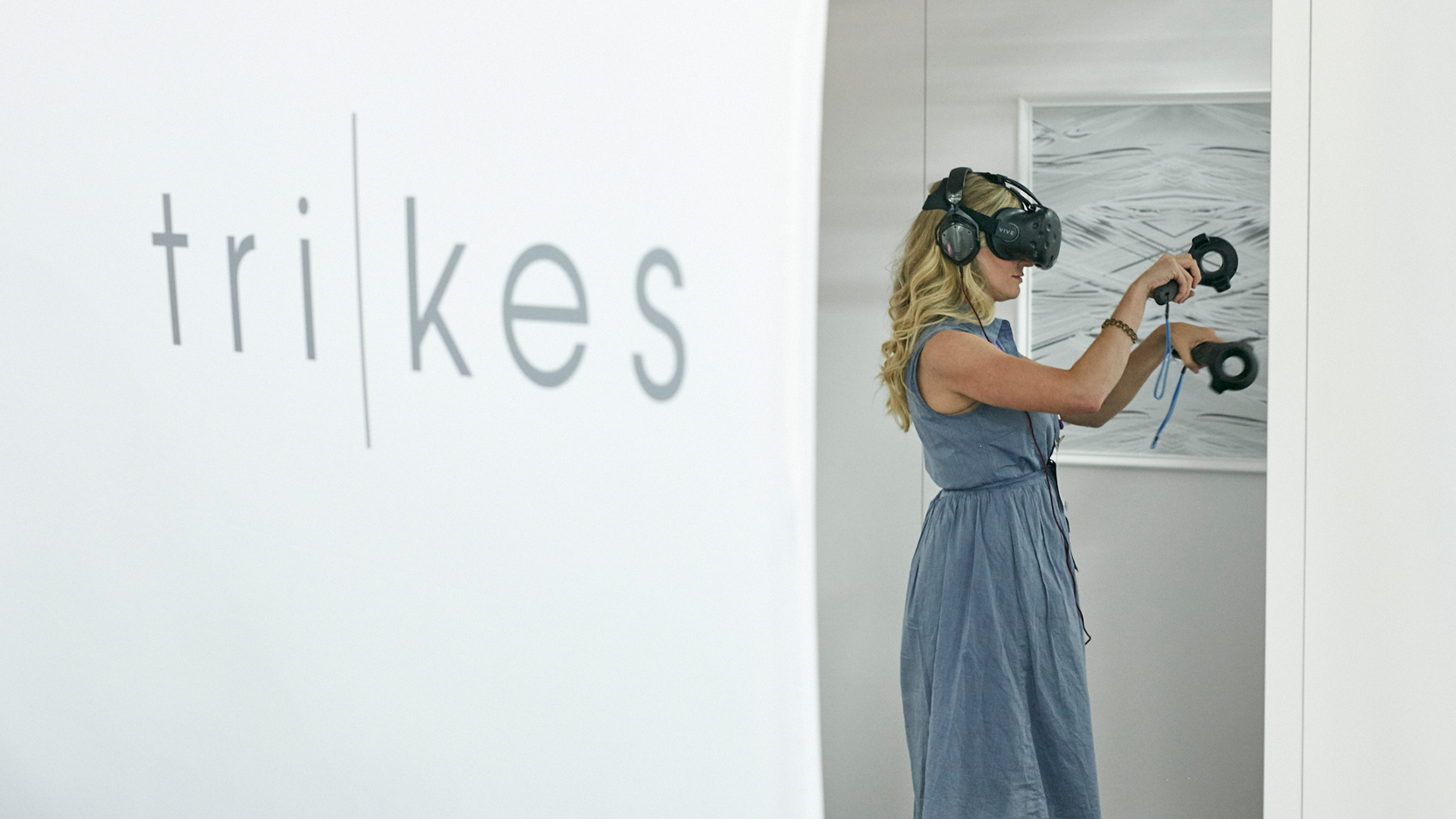
Groove Jones built a VR experience that put the decision directly in the buyer’s hands. Designers, architects, and other attendees registered to take part at the booth, then put on an HTC Vive headset and controllers and were transported into a high-end hotel lobby, rendered in full room-scale VR. From there, they could browse and apply real materials pulled directly from TRI-KES’s own wallcovering and textile swatch library, swapping finishes on furniture and walls until the room matched what they had in mind. Every one of the 300+ swatches available in the experience was a real, sellable item from TRI-KES’s actual inventory, not a stand-in or a placeholder texture.
That distinction mattered because the experience was not a standalone demo. It was wired directly into TRI-KES’s inventory management system and CMS, so every material a participant applied inside the headset was tied back to the real swatch record behind it. When a guest finished designing their space, the system had already logged exactly which patterns and materials they had chosen.

That connection is what turned a few minutes in VR into a real follow-up. After the event, TRI-KES used the tracked selections to ship each participant the physical swatches of the exact materials they had chosen in their design, unprompted and personalized to what they had actually picked. The virtual session did not end at the booth; it became the start of a direct line back to a specific, warm prospect.


What the Experience Did
- Required participants (largely designers and architects) to register, giving TRI-KES a qualified attendee list tied to each session
- Placed the buyer inside a full room-scale VR hotel lobby rather than a static rendering
- Gave access to a live catalog of 300+ real TRI-KES materials, pulled from the company’s actual swatch library and applied to the space in real time
- Integrated directly with TRI-KES’s inventory management system and CMS, so every material selection made in VR was captured against real inventory records
- Used those tracked selections to trigger a personalized physical follow-up: matching swatches mailed to each participant after the show, based on exactly what they designed


The Build: Getting Materials to Look Real in VR
The environment itself was built to a specific brief: a hotel lobby incorporating Zaha Hadid’s architectural design language, built in Unreal Engine 4. Groove Jones designed and blocked out the space, then handled modeling, materials, and lighting to meet the client’s exacting standards, with the walls and furniture in the final environment intentionally left blank so that every surface a visitor saw was one they had chosen themselves in VR, not a preset finish.

Making that swap-in-real-time system work meant solving a materials problem underneath the experience. Groove Jones artist Chris Holden built more than 200 Material Instances from 20 master materials and 80 textures, each one based on a real-world TRI-KES wallpaper or upholstery sample rather than a generic stand-in.
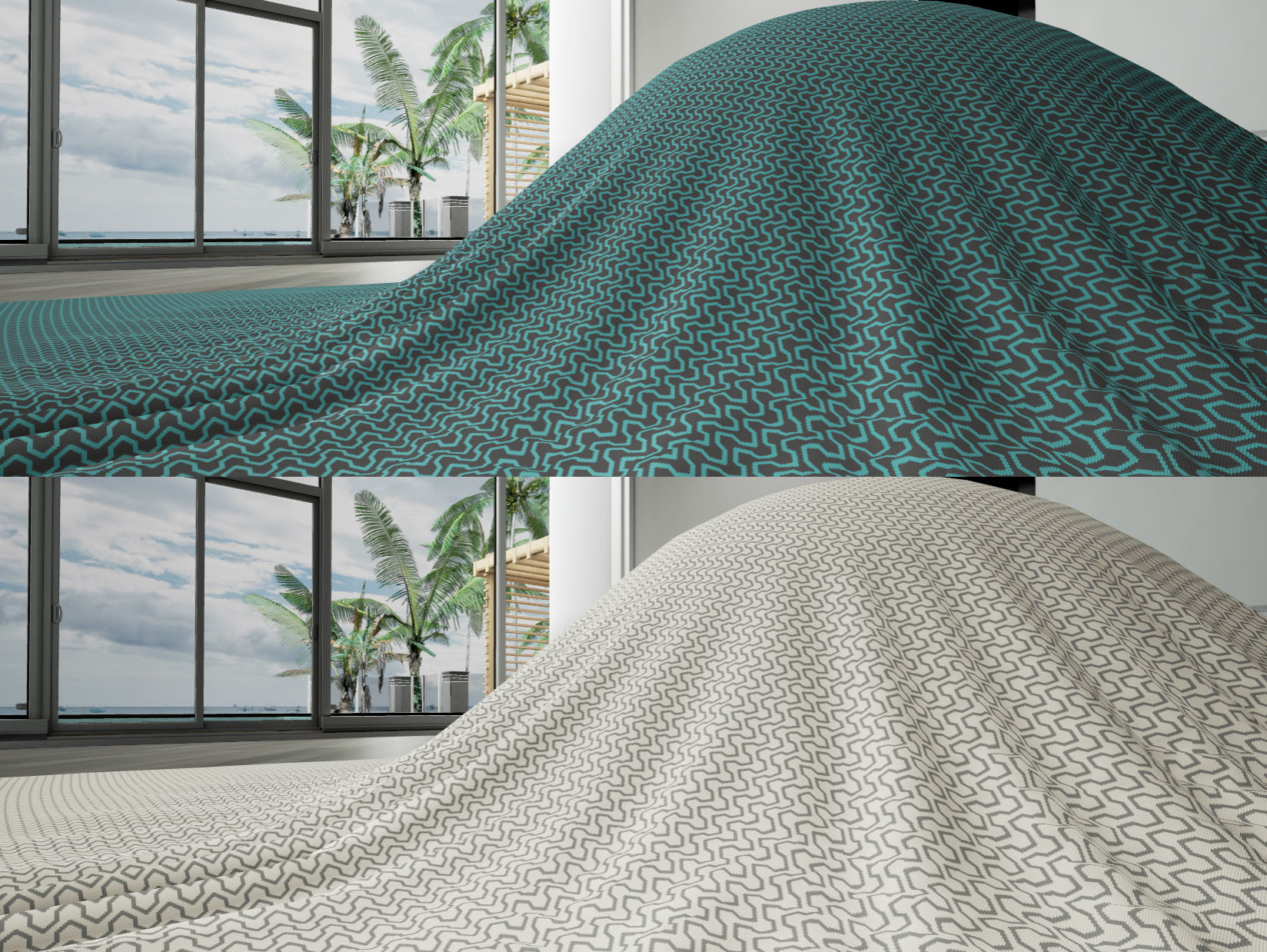
Every wallpaper and upholstery pattern carried its own custom parameters, built using a mix of photo-sourcing from the actual physical samples, hand-painted detail work, and procedural generation inside UE4’s material editor.

The master materials were built with controllable UV scale, rotation, color, and roughness per layer, along with two-tone and four-mask base color selector variants, all wired to the UI controls that let a Vive controller pick a new material and see it applied to the room instantly.
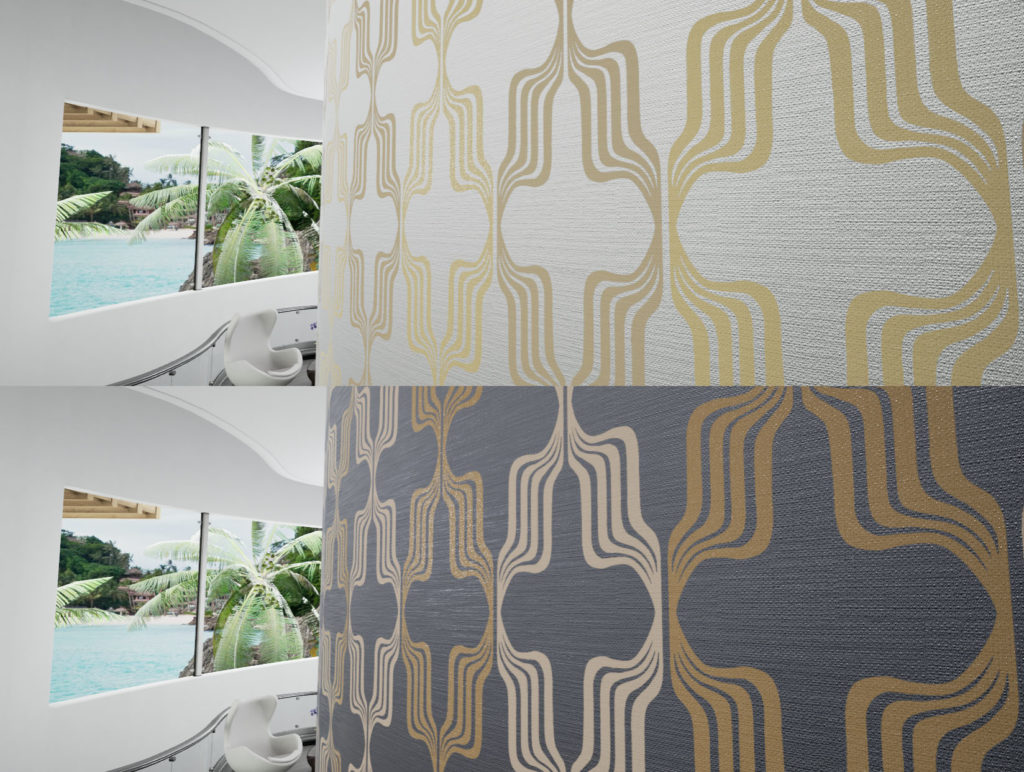
That layered, parameter-driven approach is what let more than 300 real materials swap in and out of the scene in real time without the experience looking like a set of flat, repeated textures.


The Outcome: Over 300 Materials = Hours of Engagement
The booth’s VR experience became one of the most talked-about elements at TRI-KES’s HD Expo activation, drawing steady registered participation from the designers and architects the brand most wanted in front of. But the more significant result was structural: because the experience lived inside TRI-KES’s own inventory and CMS systems rather than as a disconnected activation, every design choice made in the headset became usable sales data. The physical swatch mailer that followed was not a generic leave-behind; it was built from what each specific person had already told TRI-KES they wanted, closing a 360-degree loop from virtual selection to physical sample to sales conversation.

Over 300 materials were available in the VR experience to customize the look and feel of the interior. The experience was updated for seasonal color upgrades and used at a variety of conferences throughout the following years.


