
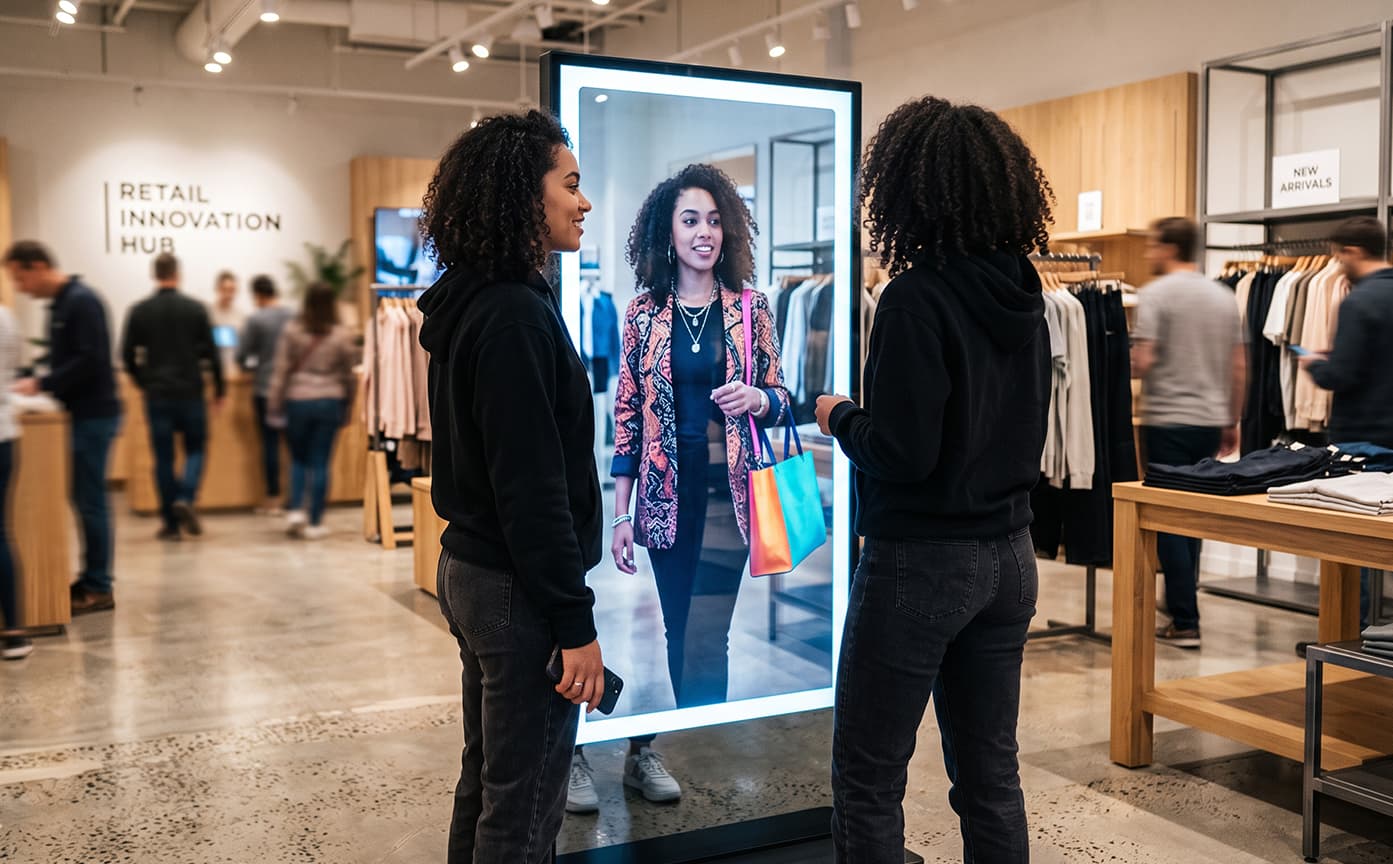




Stand in front of a screen. Choose a look. A moment later, you are wearing a new outfit, stepping into a character, or appearing inside a completely different world. That basic interaction is showing up in stores, pop-ups, sporting events, conferences, product launches, and entertainment experiences. It is usually described with one simple term: AI mirror.
But that term can be misleading. Not every AI mirror works the same way, creates the same kind of content, or solves the same marketing problem. Some behave like a live mirror, changing a participant’s appearance as they move. Others capture a photograph and generate a polished image several seconds later. Some create short videos. Others place the participant inside a stylized campaign environment.
For marketers, the important question is not whether to use an AI mirror. It is what kind of transformation will best serve the audience, setting, and campaign objective.
One Category, Several Different Experiences
AI mirror has become a useful umbrella term for interactive experiences that combine cameras, displays, computer vision, augmented reality, generative AI, and branded content. The exact combination varies widely. Understanding those differences is important because the technology changes the participant experience.
Live AR and Body-Tracked Transformation
The experience most closely associated with a traditional mirror is a live, body-tracked transformation. A participant sees themselves on a large display while digital clothing, accessories, effects, or character elements respond to their movement. This is particularly effective when the reaction is part of the attraction. Fans can try on a uniform. Guests can enter a period costume. Shoppers can explore a collection. Because the experience is visible nearby, watching someone transform becomes an invitation to participate.
Capture-Then-Generate Experiences
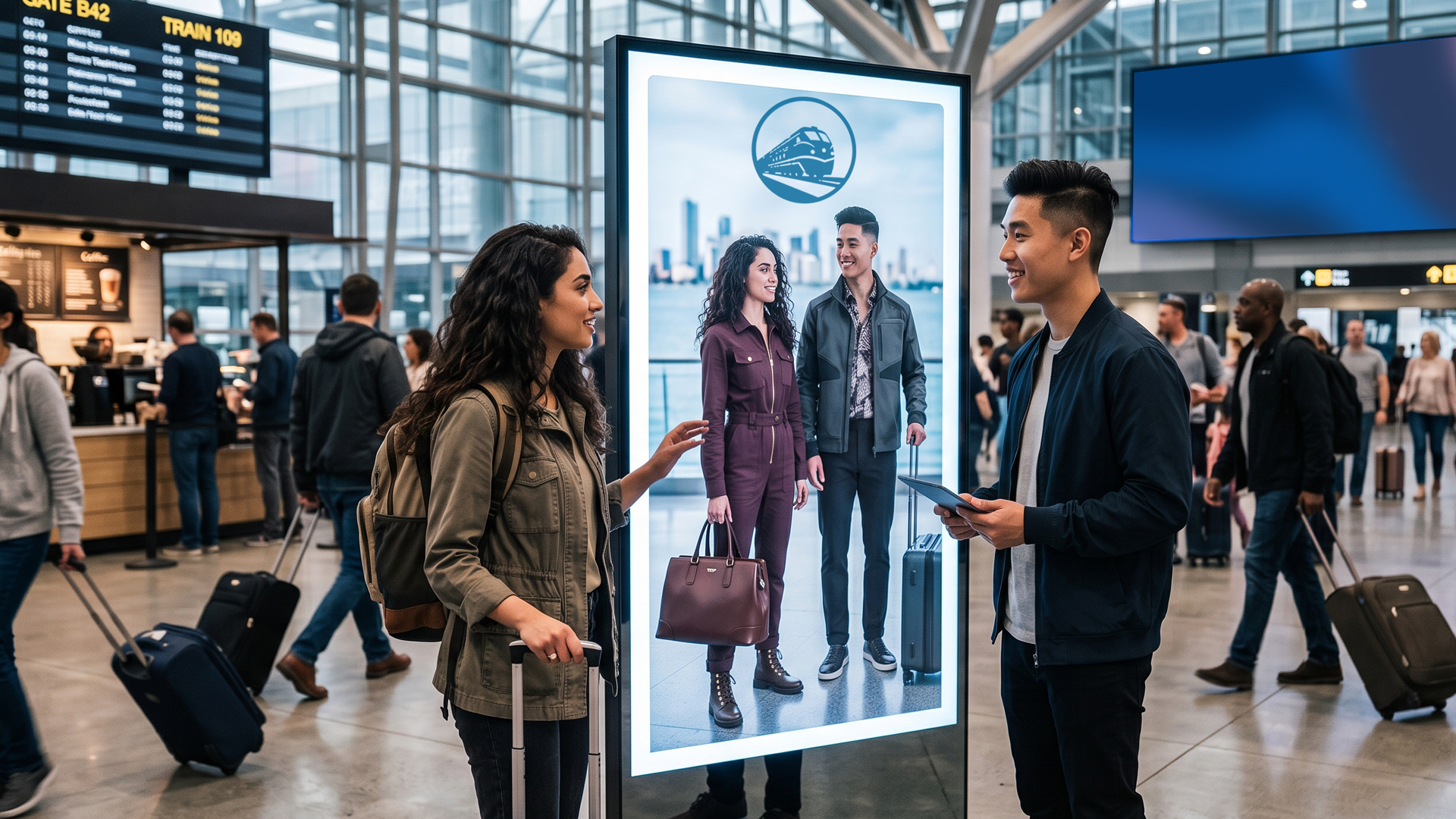
Other AI mirrors operate more like a personalized content studio. The participant poses for a photograph, selects a style, and waits while generative AI creates a finished image. This approach can produce detailed, highly stylized results without maintaining a continuously moving virtual garment. It works well for fashion portraits, campaign artwork, fantasy environments, or transformations that would be difficult to render interactively. The moment of delight happens when the finished result appears rather than while the participant is moving.
Generated Video and Animated Takeaways
A third approach takes a captured or generated image and turns it into a short video. The participant might appear to walk a runway, enter a branded environment, perform an action, or become part of a campaign scene. These mini-movies can give participants something more dynamic to share than a still image. Marketers should still distinguish between a video generated after capture and an interactive transformation that responds while the participant is in front of the screen. Both can be valuable, but they create different experiences.
Complete Brand-World Transformations
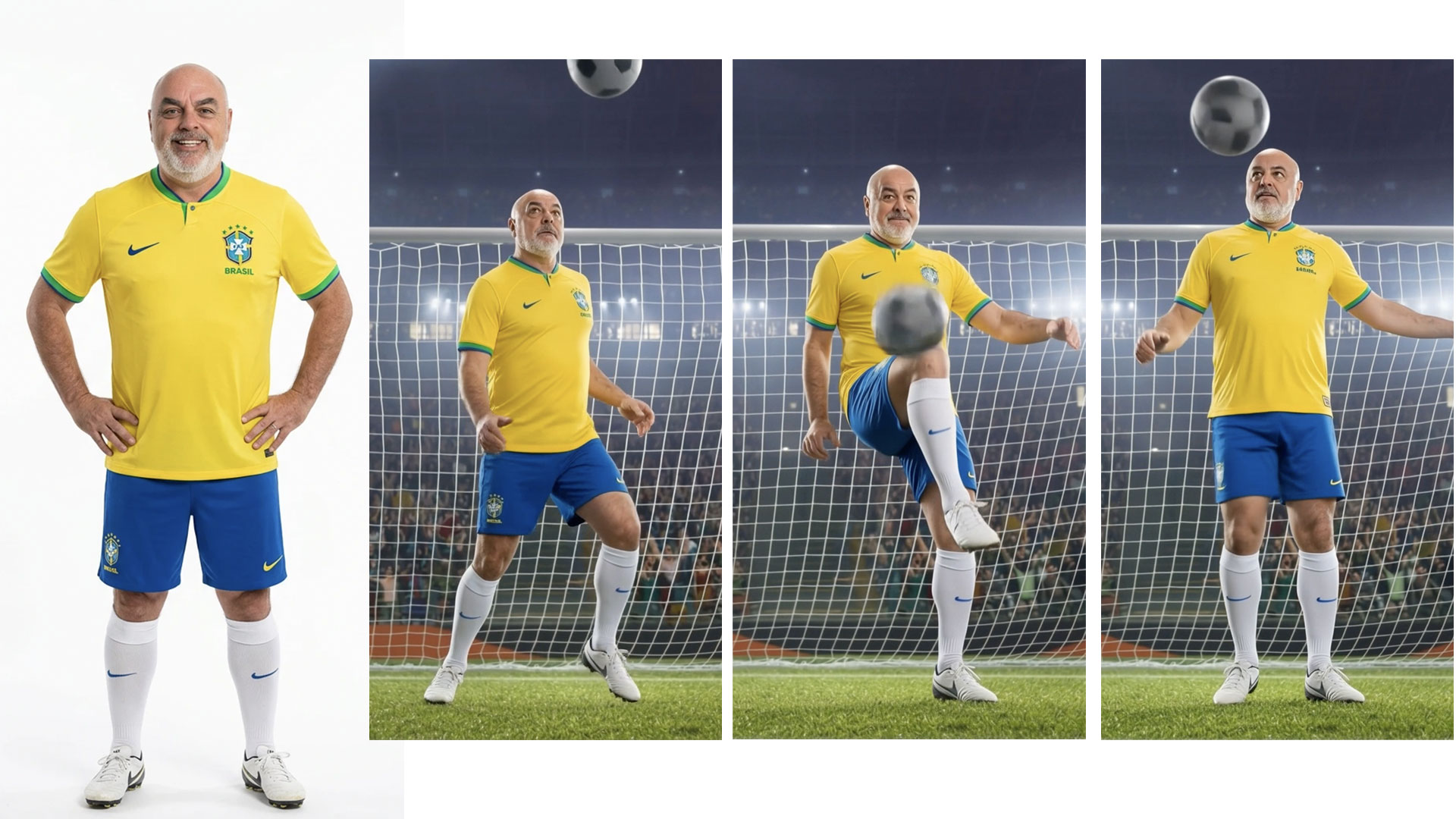
AI mirrors are also moving beyond virtual clothing. A participant can become part of an entertainment property, enter a sports environment, travel into another era, or appear inside an imaginative brand universe.
This creates opportunities beyond apparel. Entertainment studios, destinations, healthcare companies, consumer brands, and corporate event teams can use the interaction to make an audience member part of the story. The mirror becomes a portal into the campaign.
Start With the Marketing Objective
The best AI mirror concept does not begin with a model or a screen. It begins with what the brand wants the audience to do, feel, and remember. If the objective is to stop traffic, the transformation must be understandable from several feet away. For product exploration, the interface should make comparisons easy. For social sharing, the output must feel worth posting and be easy to retrieve. If lead generation matters, the data exchange should be transparent and proportional to the value received.
Different objectives may lead to very different executions:
- A sports activation might let fans wear current, alternate, and heritage uniforms.
- A retail launch might help shoppers explore a collection without every item being physically present.
- A themed event might transform groups into another era and deliver a branded video.
- An entertainment activation might place guests inside a film, game, or character world.
The technology should support the idea. It should not become the idea by itself.
Design for the Physical Experience
An AI mirror is still a live experience in a real space. That means physical and operational decisions matter just as much as the AI. Screen size, camera position, lighting, background activity, and viewing distance all affect the illusion. The interface must be understandable without a long explanation, and the footprint must give participants room to move. Throughput is equally important. Teams should consider how many selections are offered, how long each interaction lasts, whether groups can participate, how quickly content is processed, and what happens if connectivity fails.
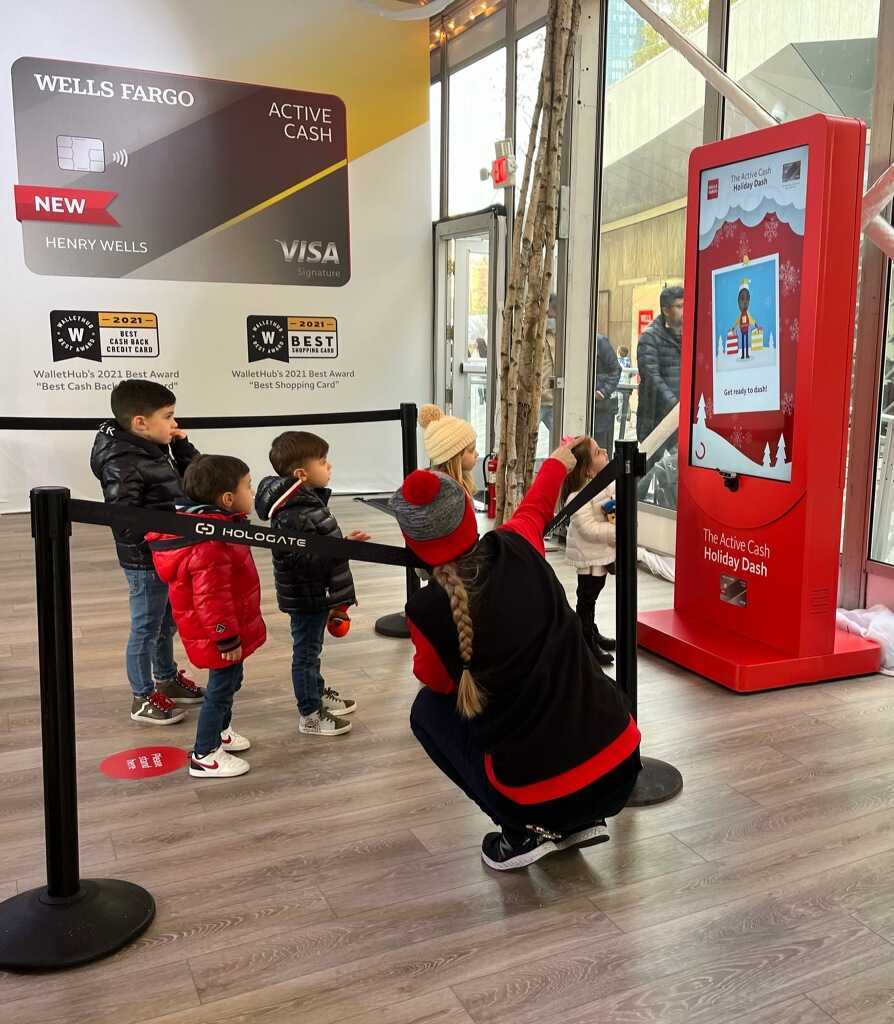
Accessibility should be considered early. Touch targets, screen height, language, mobility needs, and alternatives to specific gestures influence who feels invited to participate. These details determine whether the installation feels magical or frustrating.
Make the Takeaway Part of the Concept
The experience does not have to end when a participant walks away from the screen. The takeaway might be a photograph, live-action video, animated clip, print, or personalized page. A QR code can provide a direct path without forcing guests to type information into a public display.
Music, motion graphics, framing, and campaign treatments can turn a simple capture into something participants want to keep and share. With appropriate consent, the experience may lead to additional looks, product information, or follow-up content. Participants should understand what is collected, why, and how their images or contact information will be used.
Decide How Success Will Be Measured
AI mirrors are naturally attention-grabbing, but attention alone is not a measurement strategy. Before launch, teams should decide which actions matter: approaches, starts, completions, session time, looks selected, content created, downloads, shares, opt-ins, or resulting product and loyalty actions.
A storefront may prioritize stopping power and visits. A conference may value qualified participation. A fan experience may focus on throughput and sponsor engagement. Clear objectives make it easier to evaluate what the technology contributed.
Build Trust Into the Transformation
Any experience involving cameras, AI, and personal images needs thoughtful safeguards. Participants should know when they are being captured. Consent and retention language should be understandable. Outputs should be tested across different bodies, skin tones, clothing, mobility aids, and group configurations. Brands should review logos, uniforms, licensed characters, and products before launch.
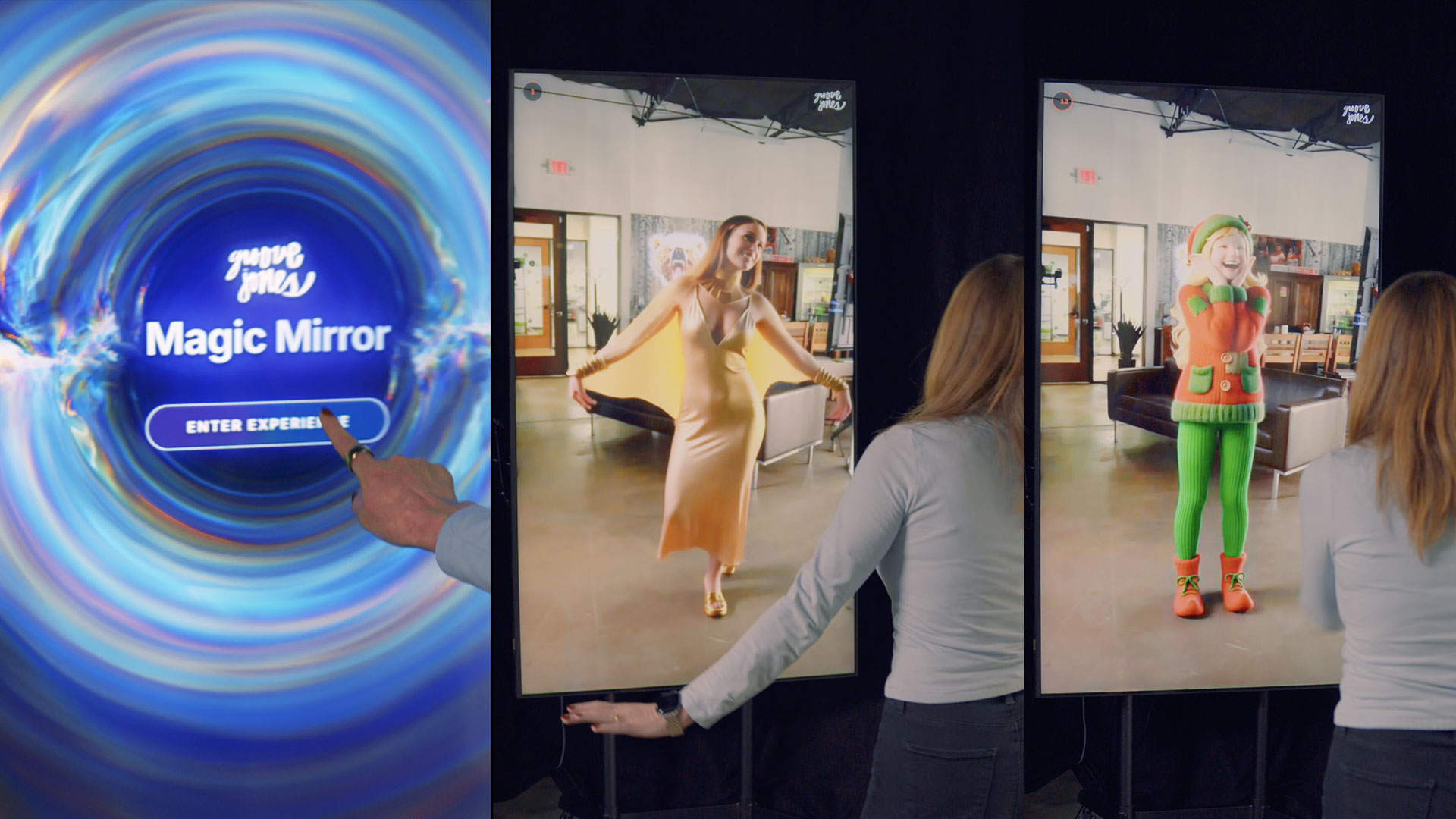
A playful visualization is not automatically an accurate predictor of garment size, physical fit, or inventory availability. Those functions require their own data, integrations, and testing. Trust does not reduce the magic. It gives people the confidence to participate in it.
How Groove Jones Approaches the Magic Mirror
Groove Jones developed the FitCheck™ Magic Mirror as a flexible platform for live events, fan experiences, retail environments, product launches, and themed brand activations.
Guests can step in front of an oversized display, select a look, and see themselves transformed in near real time. The digital wardrobe follows body movement so participants can pose, react, and perform rather than waiting only for a finished image. Experiences can support individuals or groups and can be designed around apparel, uniforms, period costumes, characters, or an original campaign world.
Photo and video capture can turn the interaction into personalized content, with digital delivery giving participants an easy way to retrieve and share the result. The platform can also be integrated into a broader branded installation with custom interfaces, motion graphics, music, attract content, and optional data capture.
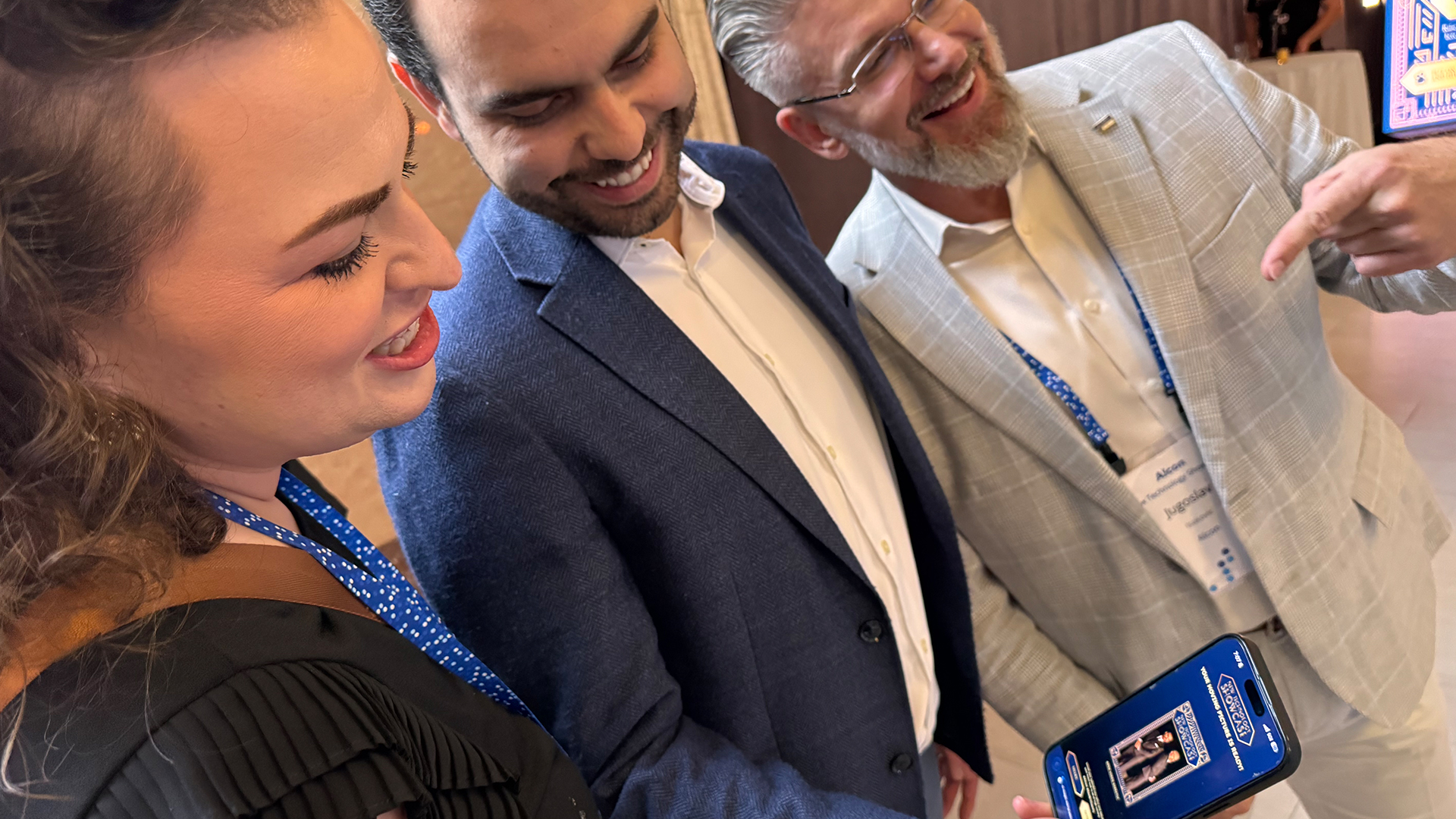
For Alcon’s New Technology Showcase, Groove Jones transformed guests into 1920s characters that matched the Art Deco setting of the event. Participants could move, pose together, record a short video, and download the finished piece through a unique QR code. The technology supported the moment, but the experience worked because the creative belonged to that specific audience and setting.
That is the real opportunity behind AI mirrors. The screen may be what people first notice, but the lasting value comes from putting them inside a story that was designed for them.
Whether the goal is virtual try-on, fan engagement, retail discovery, themed entertainment, or personalized content, the right question is not simply, “Can we add an AI mirror?” It is, “What should people become when they step in front of it?”
Learn more about the FitCheck™ Magic Mirror, explore the Alcon Magic Mirror case study, or contact Groove Jones to discuss an experience for your next event, campaign, or retail environment.


