
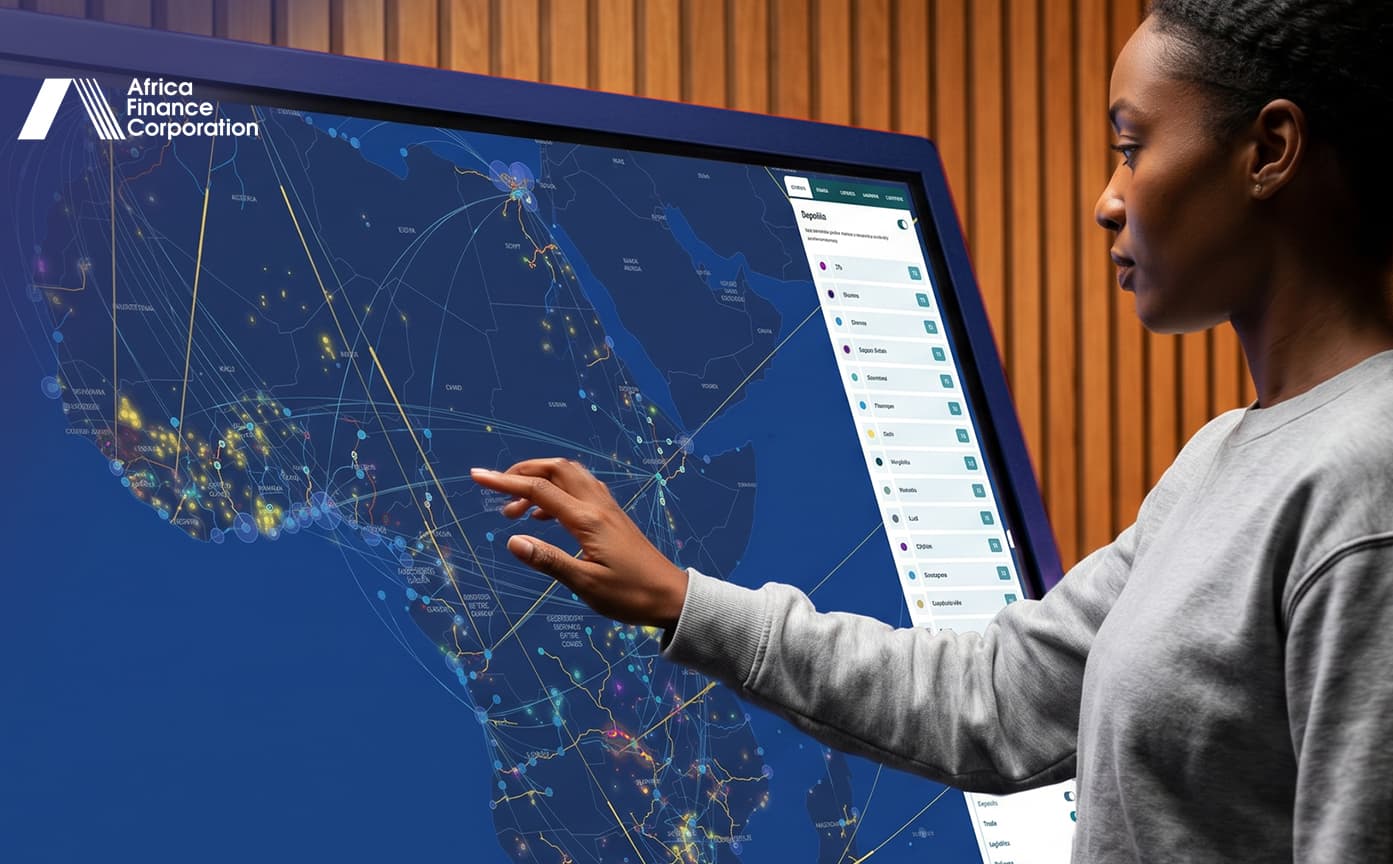




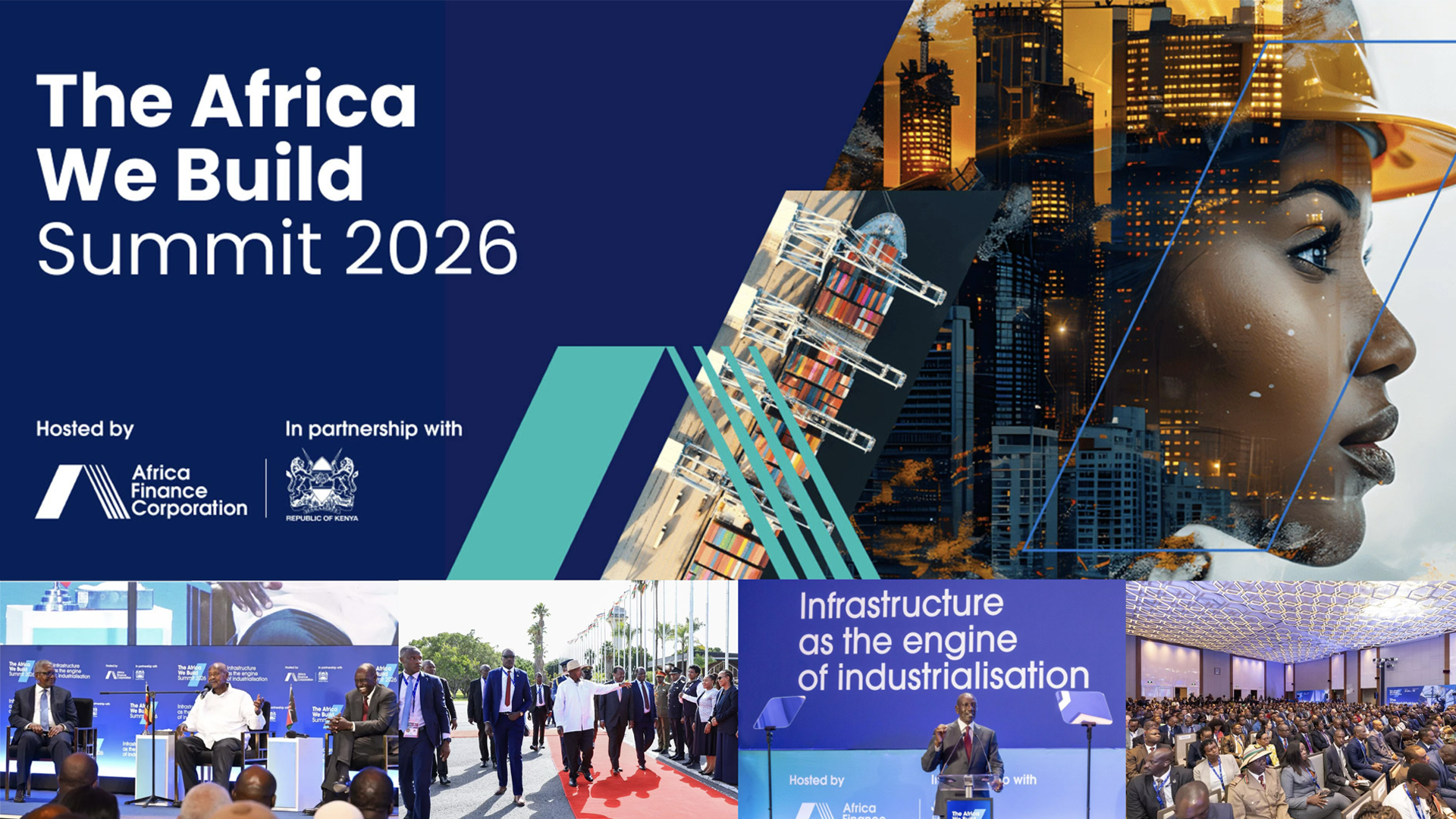
Africa Finance Corporation partnered with Groove Jones to design and develop an interactive digital experience for The Africa We Build Summit 2026 in Nairobi, Kenya. The primary purpose of The Africa We Build Summit 2026 is to accelerate Africa’s industrial transformation by shifting the focus of infrastructure development from planning to active execution, It was hosted by the Africa Finance Corporation (AFC) in partnership with the Government of Kenya, the summit aims to bridge the continent’s infrastructure deficit through innovative financing and regional integration.
The AFC wanted an interactive experience that allowed them to demonstrate their complex infrastructure and investment data into a visually compelling, easy-to-navigate experience that could connect with stakeholders in a live event environment.
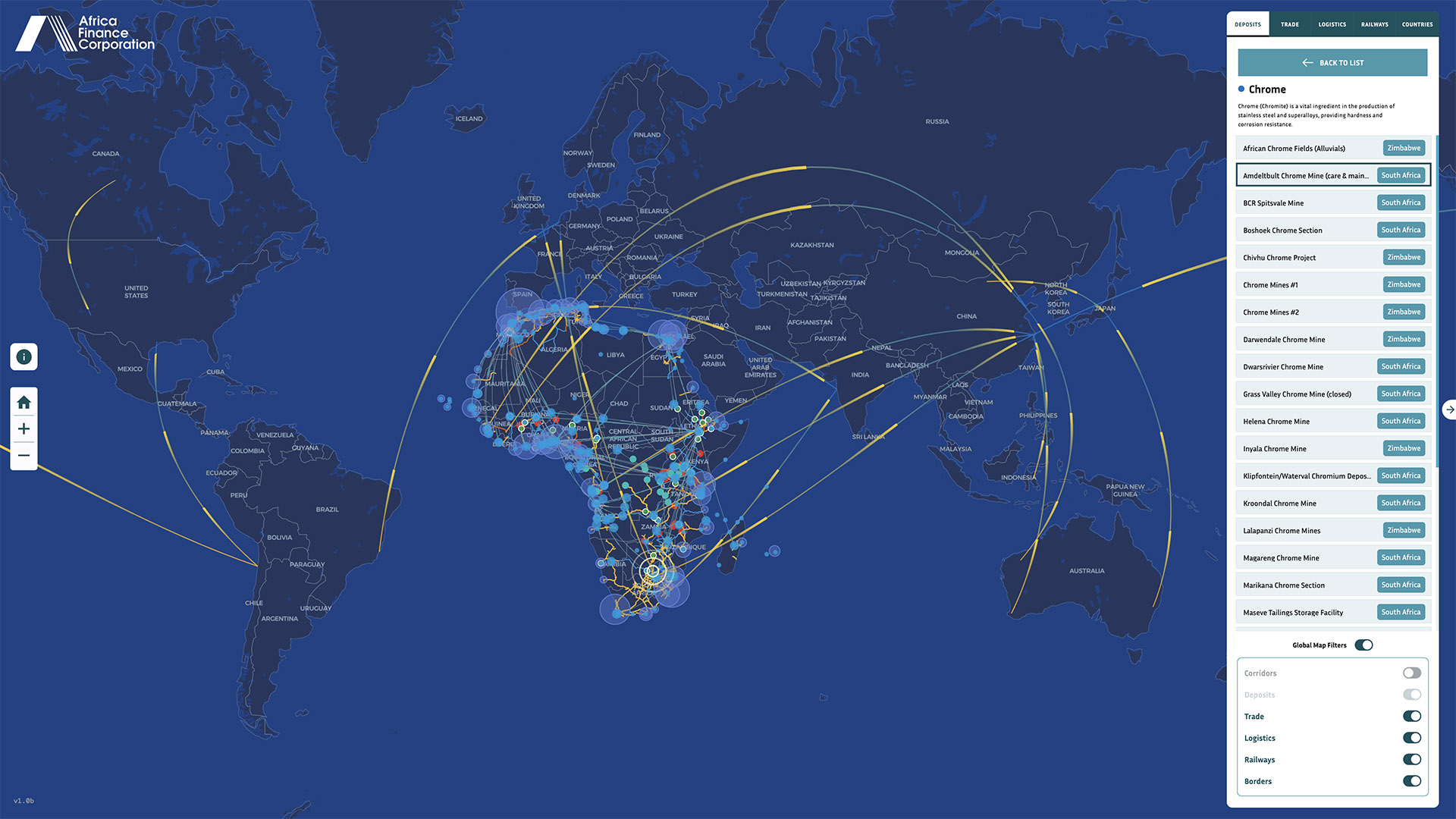
The experience needed to communicate the scale and connectivity of Africa’s railway networks alongside key mineral and trade data, while remaining intuitive for a broad audience. It also had to perform seamlessly in a conference setting, supporting continuous interaction without friction.

The Challenge
Africa Finance Corporation manages large, data-rich datasets that are critical to understanding regional infrastructure and investment opportunities. Presenting this information in a static format would limit its impact.
The challenge was to create an experience that could:
- Visualize multiple complex datasets in a clear and engaging way
- Allow users to explore information dynamically at their own pace
- Operate smoothly across modern browsers in a live event setting
- Deliver a polished, high-performance experience without requiring specialized software
The Solution
Groove Jones designed and developed a WebGL-powered interactive map application that transforms infrastructure and resource data into an immersive storytelling tool. The experience was built as a single-page web application accessible via a standard browser, making it easy to deploy and operate on-site. Using a GPU-accelerated mapping framework, the application renders large datasets efficiently while maintaining smooth performance.
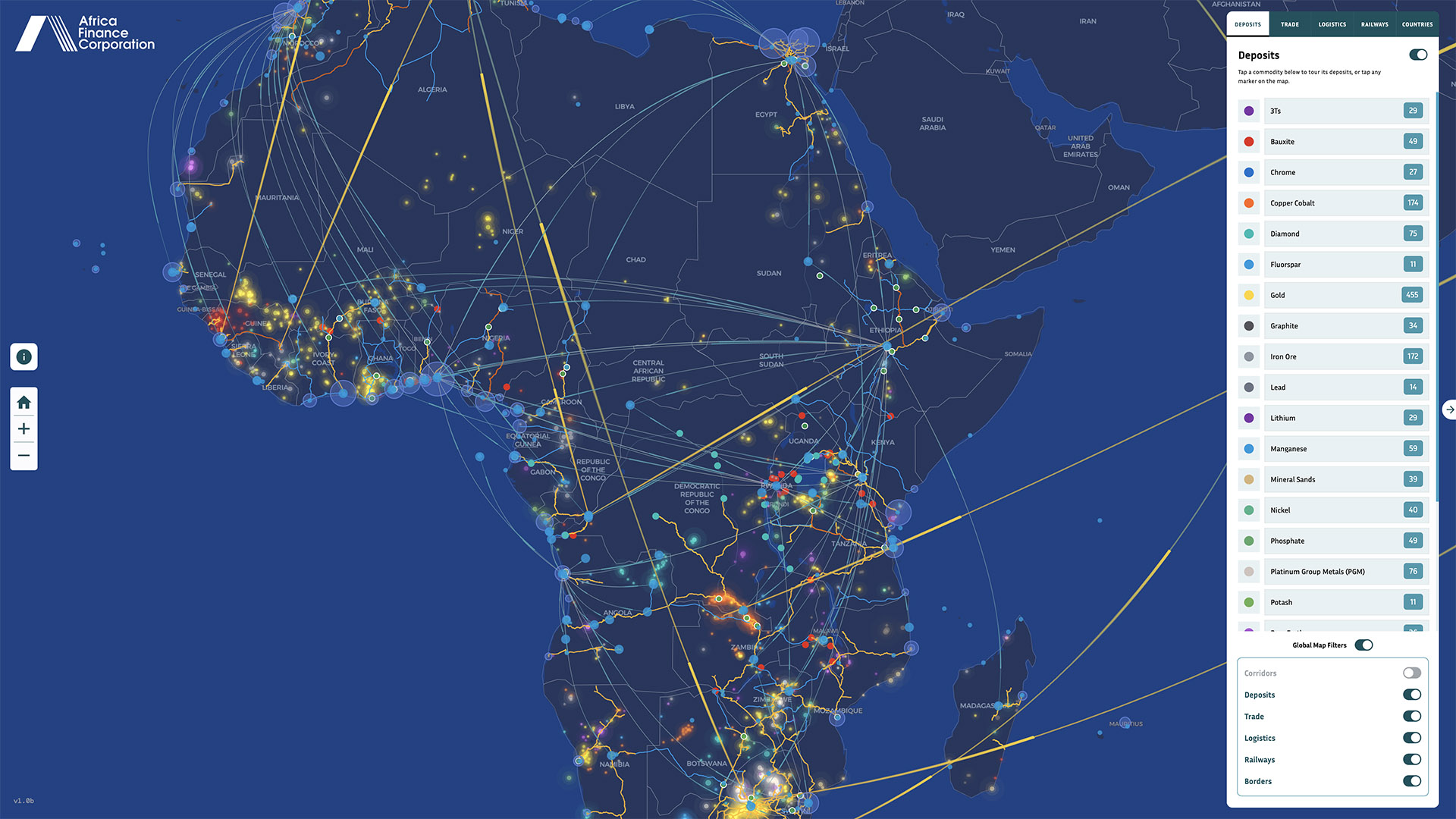
At its core, the experience is anchored by a highly detailed, interactive map of Africa that visualizes the continent’s strategic infrastructure. Users can toggle or combine multiple data layers. From mineral deposits and geopolitical borders to railways and global trade flows, to uncover how natural resources and supply chains intersect.
To elevate the experience, we transformed static logistical data into a living system. Animated corridor flows, powered by complex particle systems, create a dynamic visualization of trade movement and logistical connectivity. Combined with a sleek, responsive interface, this approach allows users to intuitively explore complex economic data, seamlessly navigating from high-level continental trends down to specific country profiles and seaport metrics
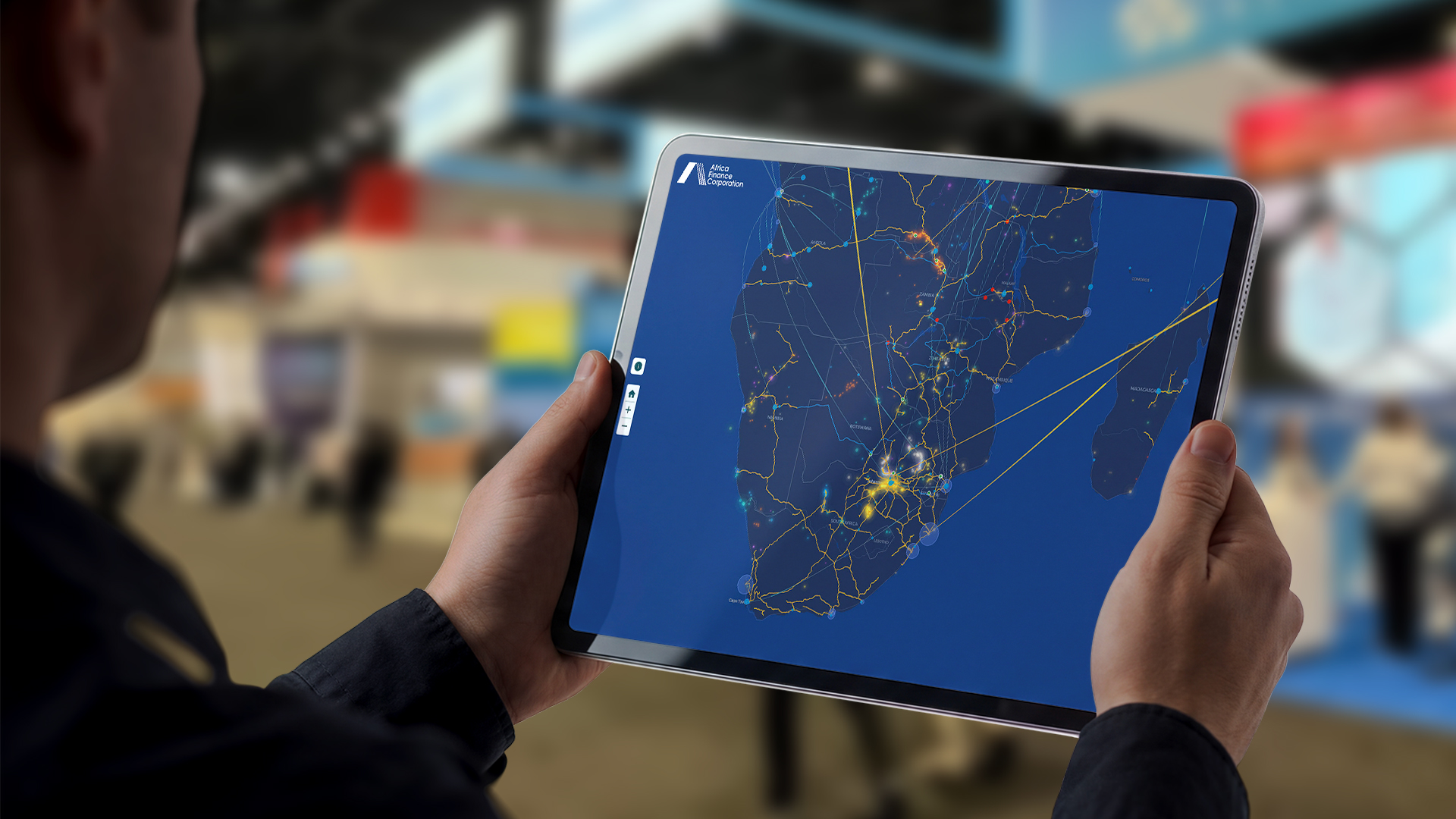
Design and User Experience
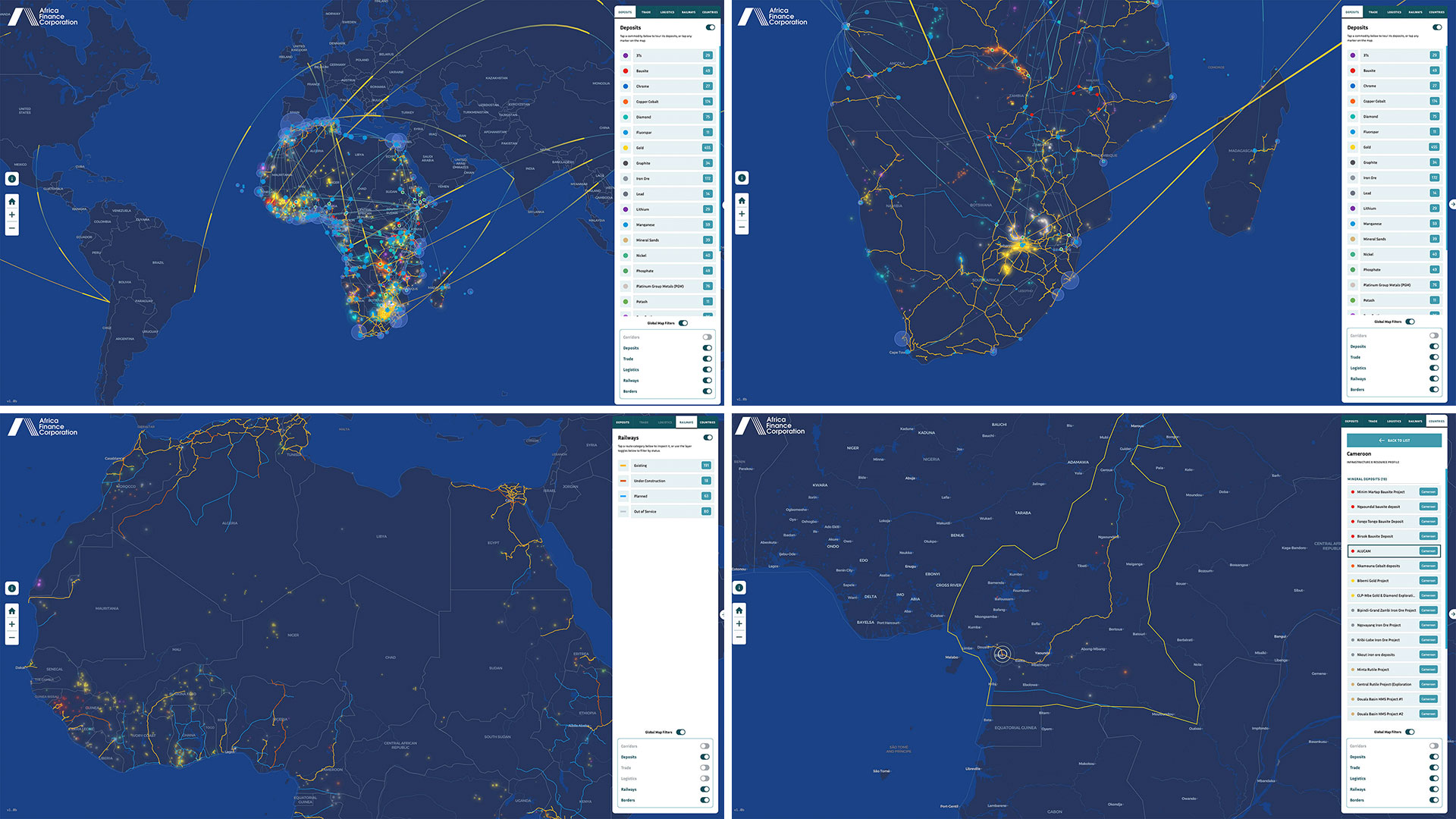
Groove Jones worked closely with Africa Finance Corporation to craft a visually engaging interface that supports clarity and exploration. The experience focused on 5 individual categories with control systems for each one – Deposits, Trade, Logistics, Railways, and Countries. Each category also had a set of filters to turn on and off including Corridors, Deposits, Trade, Logistics, Railways, and Borders.
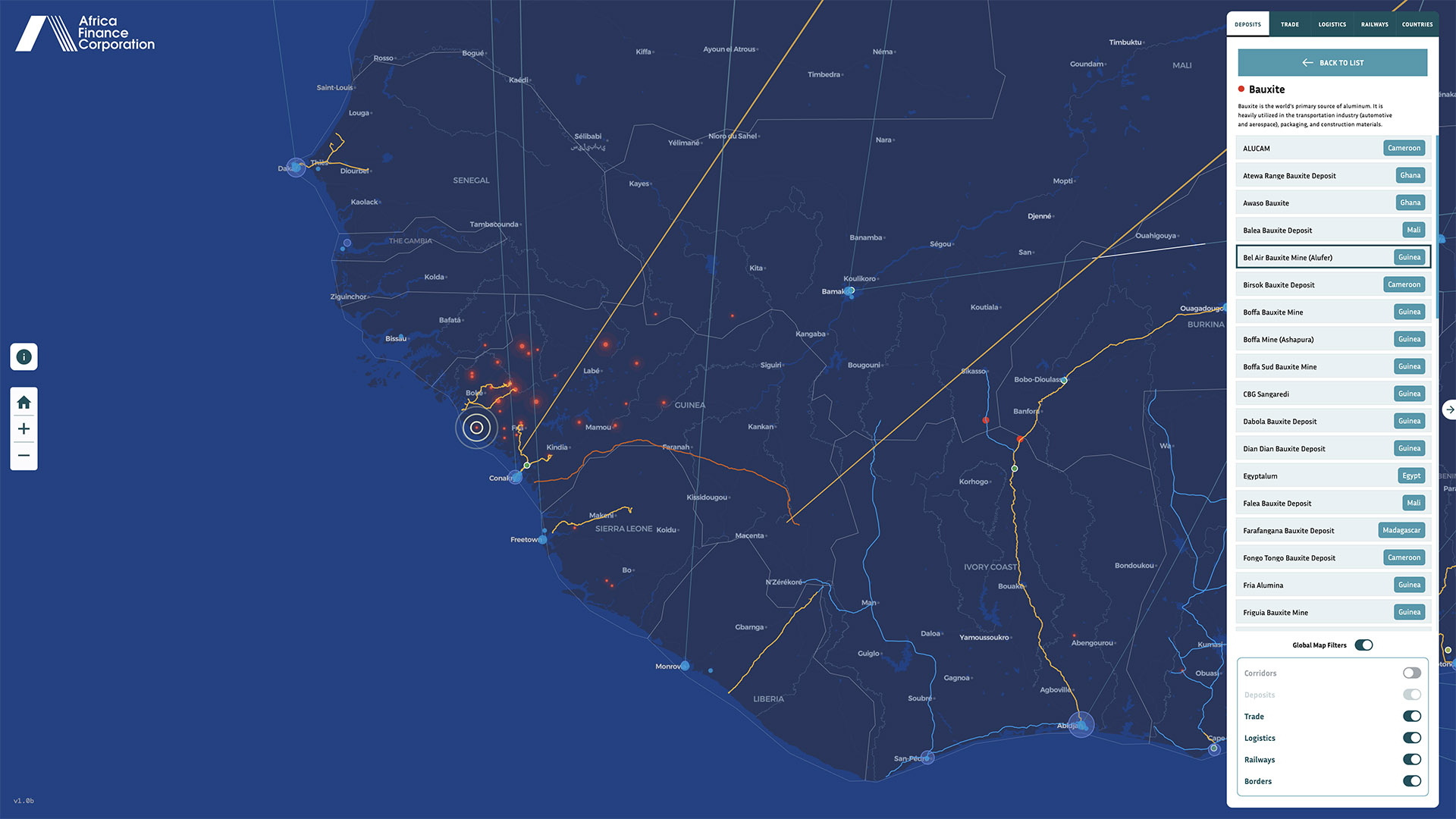
Deposits (Minerals & Mines) – This layer visualizes Africa’s mineral resources by mapping deposits like copper, gold, bauxite, and rare earths. Users can browse commodities in the “Deposits” tab, triggering a camera fly-through to relevant locations or tapping markers for details like country and material. Technically, it uses a Deck.gl 3D point layer with glowing markers, currently powered by a prototype dataset that will be swapped with final GeoJSON or KML data.
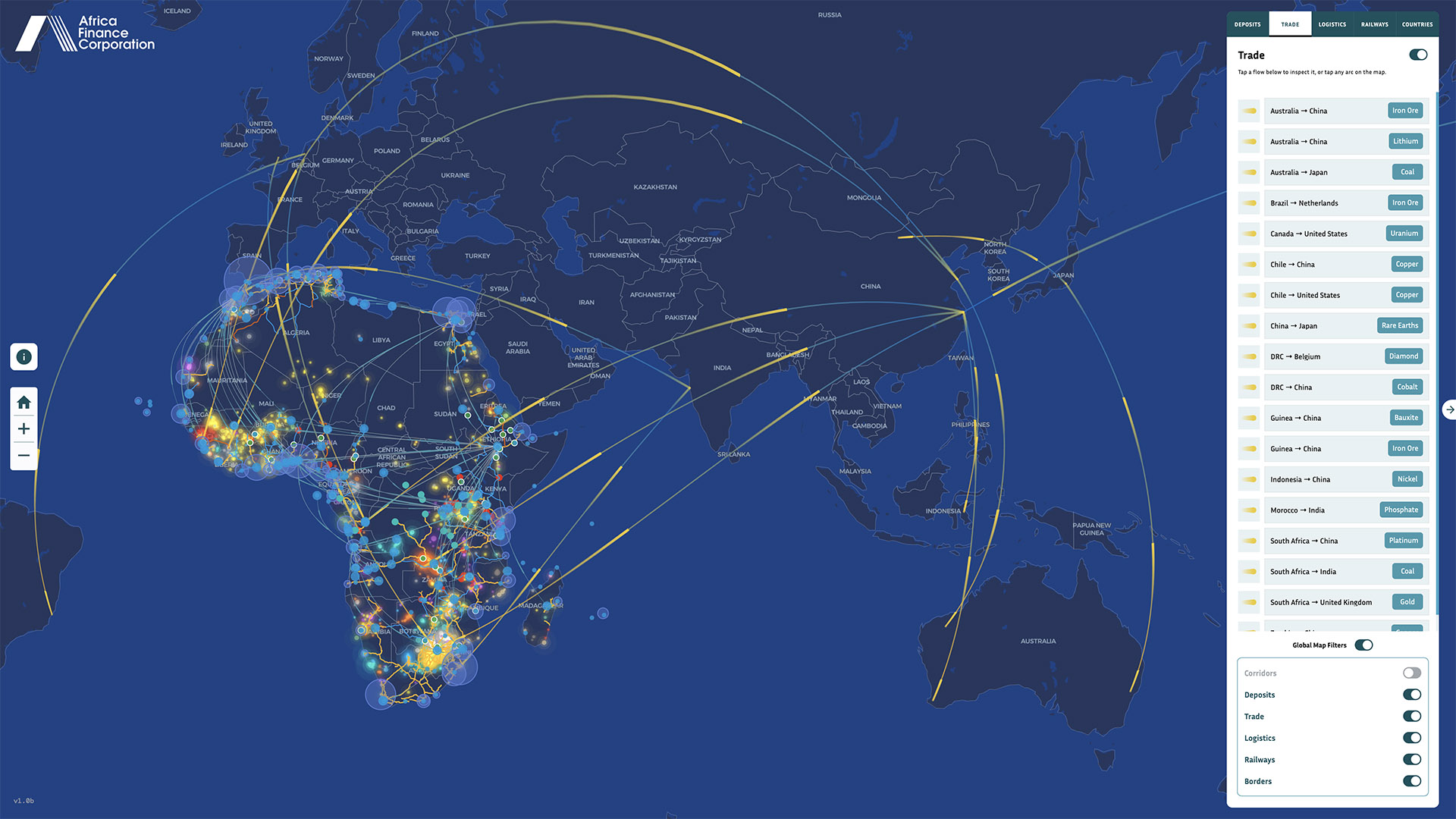
Trade (Trade Flows / Commodity Flows) – This layer shows the movement of commodities between countries, such as copper exports from Zambia to China. In the “Trade” tab, users select routes and the camera flies to highlight the connection. Built with Deck.gl TripsLayer and PathLayer, it renders animated 3D arcs whose height and thickness reflect trade value, with flowing gold-to-blue gradients indicating direction.
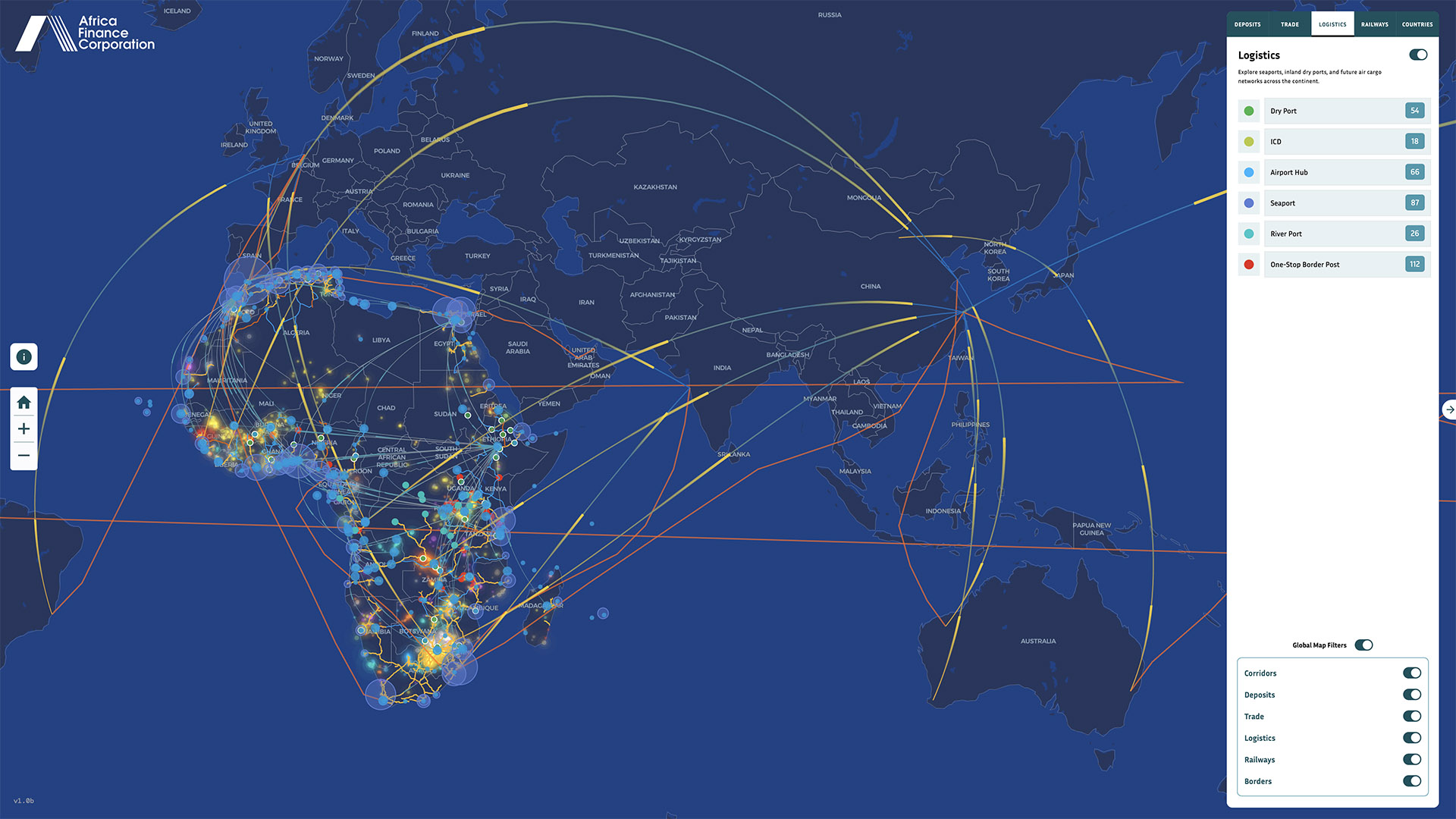
Logistics (Transportation & Hubs) – This layer visualizes Africa’s transportation infrastructure beyond rail, including seaports, dry ports, air cargo routes, and border crossings. Users can toggle each category in the “Logistics” tab and select specific hubs to fly the camera to that location and reveal its connections, like flight paths from an airport. It’s built with multiple Deck.gl layers, using glowing scatterplots and icons for hubs, and animated “comet” trails for air routes, scaled by throughput and activity.
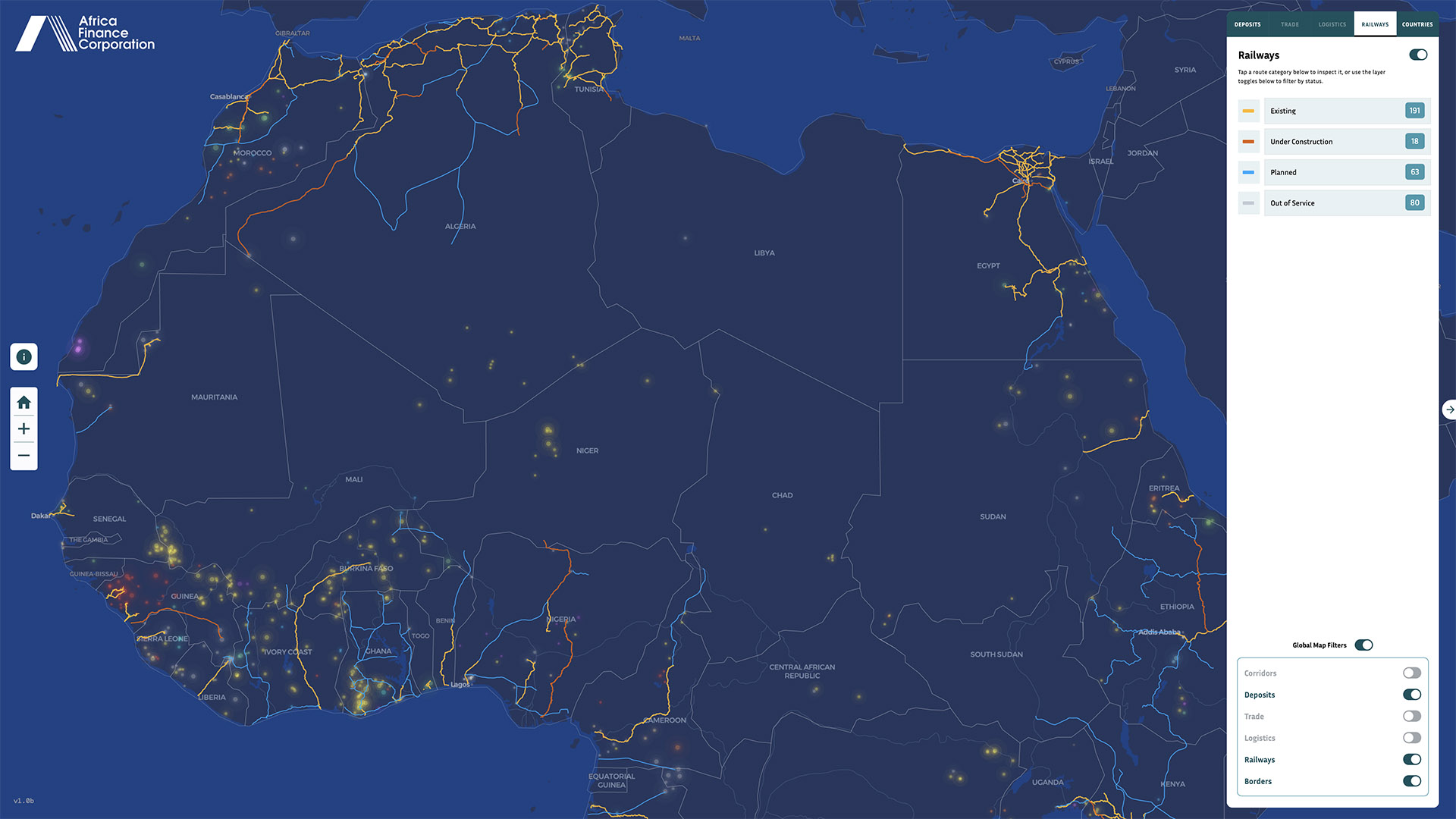
Railways – This layer maps railway networks across 38 African countries, categorized by status such as operational, under construction, planned, or out of service. In the “Railways” tab, users can filter by these categories and select routes to zoom in on full corridors. Technically, it uses Deck.gl PathLayer with GeoJSON data, styled by status, and includes animated dashed overlays to highlight selected routes.
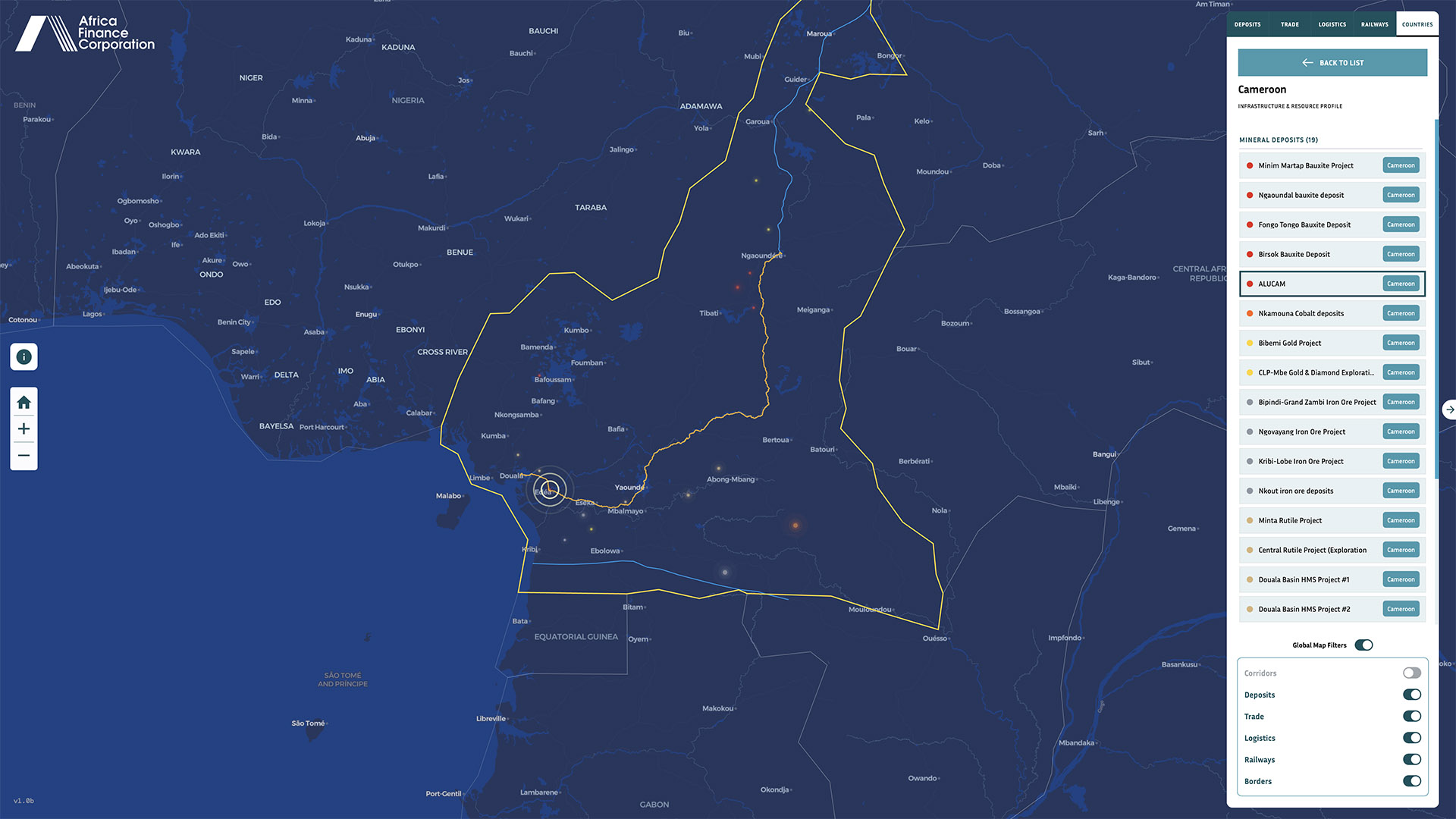
Countries (National Profiles) – This layer lets users focus on a single country, showing a combined view of its resources and infrastructure. Selecting a country zooms the map to its borders.
The Outcome
The Africa Finance Corporation (AFC) is a multilateral financial institution established in 2007 to bridge Africa’s infrastructure gap through private-sector-led investment. It develops and finances projects in power, transport, natural resources, telecommunications, and heavy industry. The Interactive Railway and Minerals Map allowed the AFC to showcase complex infrastructure and resource data into a compelling digital experience that invites exploration.
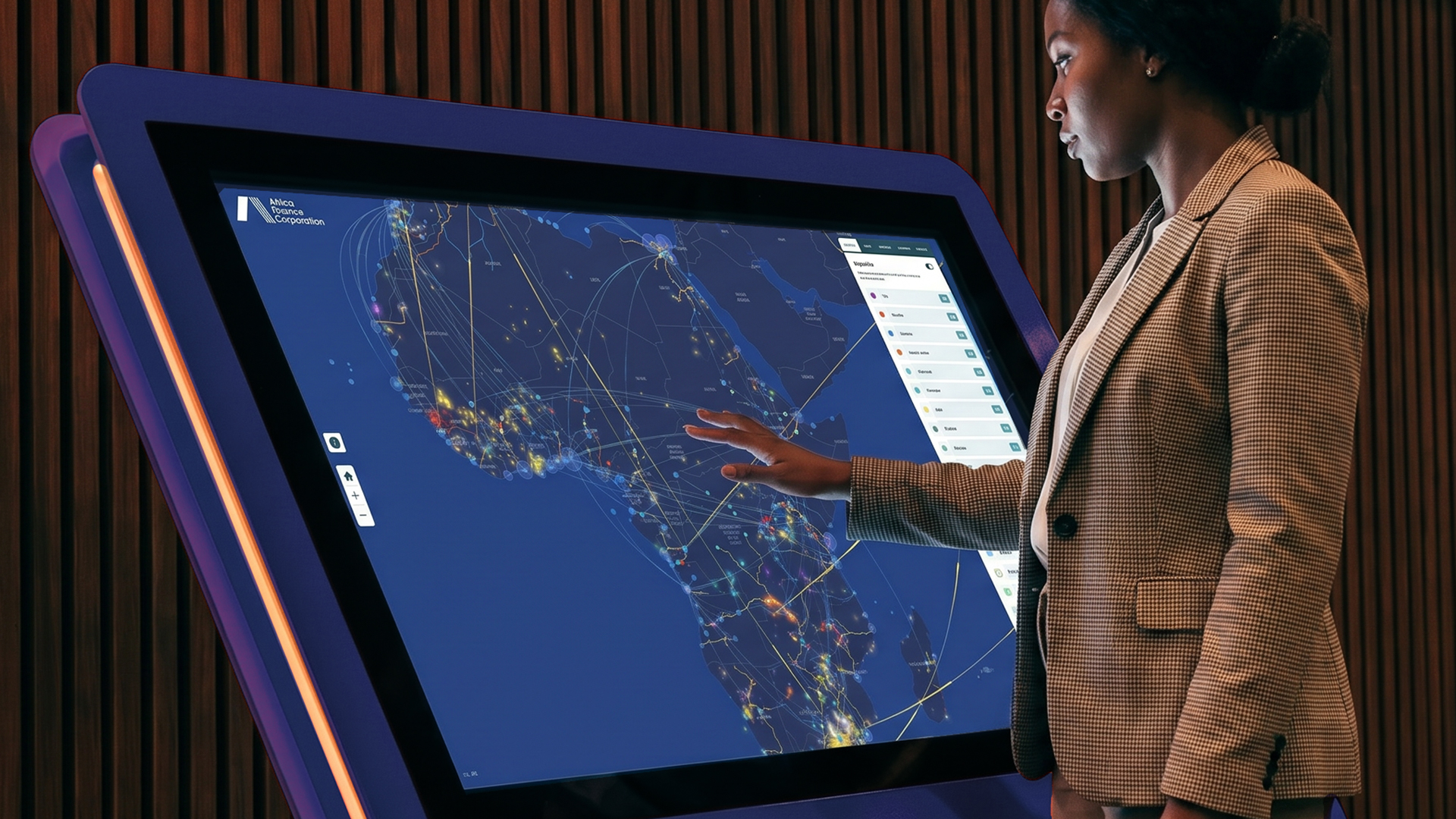
By combining real-time rendering, intuitive controls, and dynamic data visualization, the application provides a powerful tool for storytelling and stakeholder engagement. It demonstrates how emerging web technologies can elevate traditional data presentations into immersive, interactive experiences that resonate with modern audiences.
The Africa Finance Corporation (AFC) is a multilateral financial institution established in 2007 to bridge Africa’s infrastructure gap through private sector-led investment. Learn more about the Africa Finance Corporation – https://www.africafc.org/


