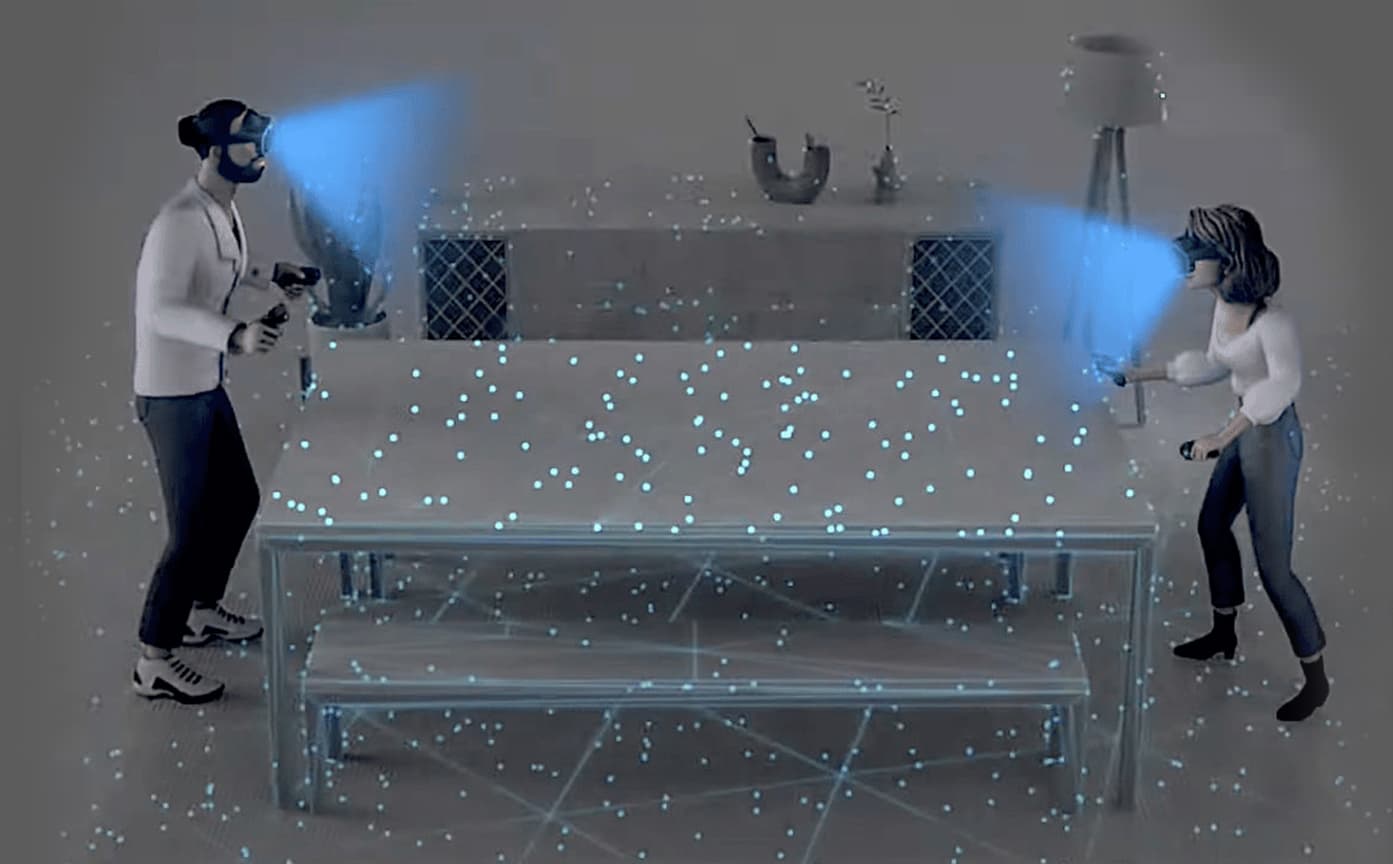




For years, truly shared roomscale VR experiences came with a long list of compromises. Fixed infrastructure. External tracking systems. Permanent installs. Heavy calibration. Limited portability. For experiential marketing teams and enterprise trainers, that usually meant longer setup time and choosing between ambition and practicality. At Groove Jones, we decided to challenge that tradeoff.

What we developed as part of our GrooveTech system is called Share Space and it is what we launched with Dissasterville for the U.S. Army National Guard. A co-location roomscale multiuser VR foundation designed specifically for live experiences and training environments where reliability, safety, and speed matter as much as immersion. This platform was developed to solve a simple but stubborn problem. How do you put one or multiple people into the same physical space, moving freely, seeing each other accurately, without relying on lighthouses, external trackers, or permanent buildouts?

Why Co-Location Still Matters
Remote multiplayer VR is everywhere. Co-location is not. And there is a reason. When people share the same physical space, everything changes. Communication becomes natural. Awareness becomes instinctive. Body language matters. For training, this means better situational learning. For experiential marketing, it means moments that feel social, not solitary. The challenge is that co-location roomscale VR has historically required specialized hardware and complex installs. That friction limits where and how it can be deployed.

The Share Space Platform was built to remove that friction. A shared space without external tracking. At the core of the platform is a simple idea. Every headset needs to agree on the same physical world.
Traditionally, that agreement came from external reference systems like lighthouse trackers. Instead, this platform leverages the inside out tracking capabilities of modern standalone headsets and extends them with a custom calibration workflow.
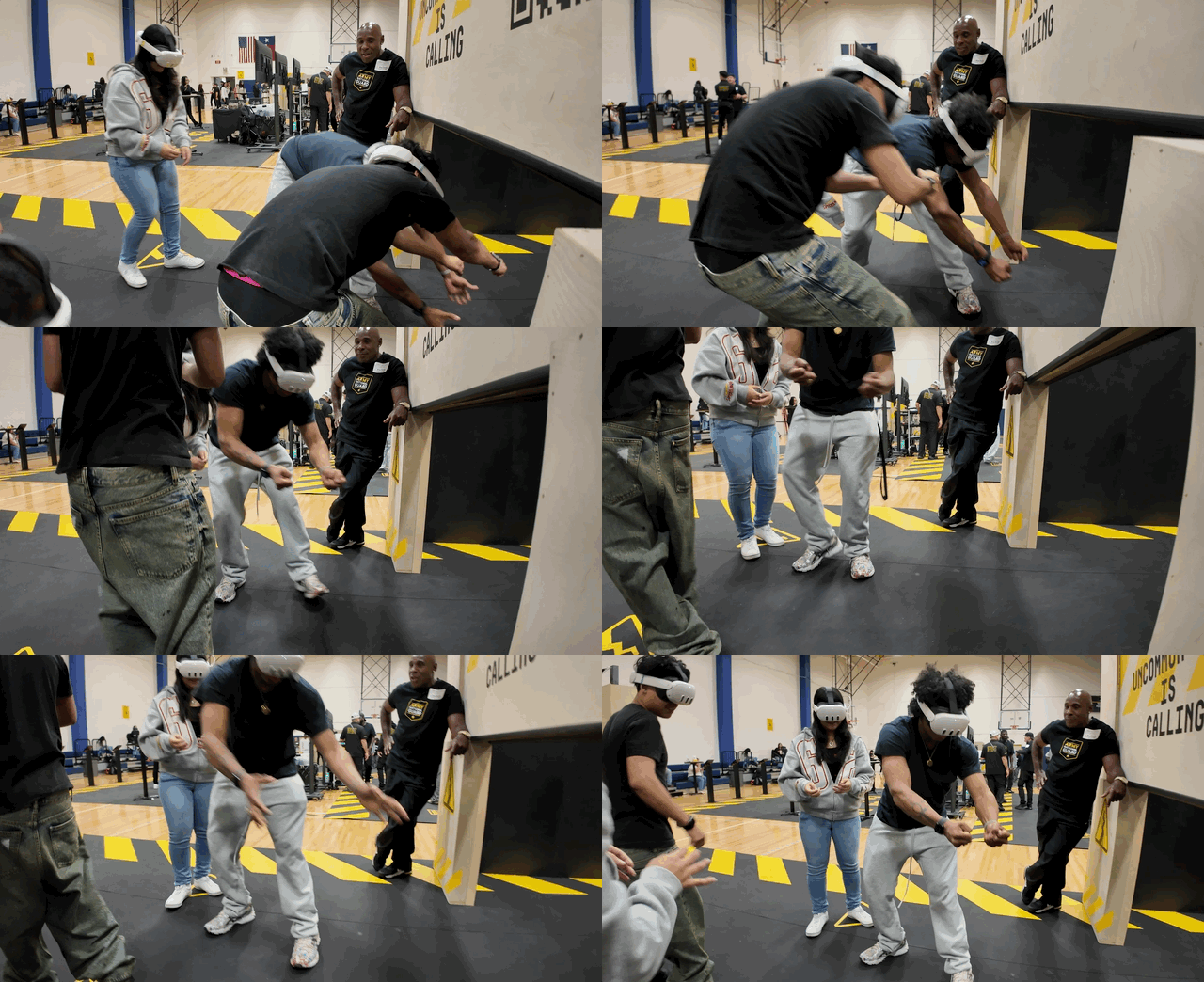
Using spatial anchors, each headset establishes a shared point of reference in the real world. During setup, operators place a small number of physical markers in predefined positions. From those markers, the system calculates position and rotation for the entire play space. Once aligned, every player sees the same virtual environment mapped precisely to the same physical footprint.
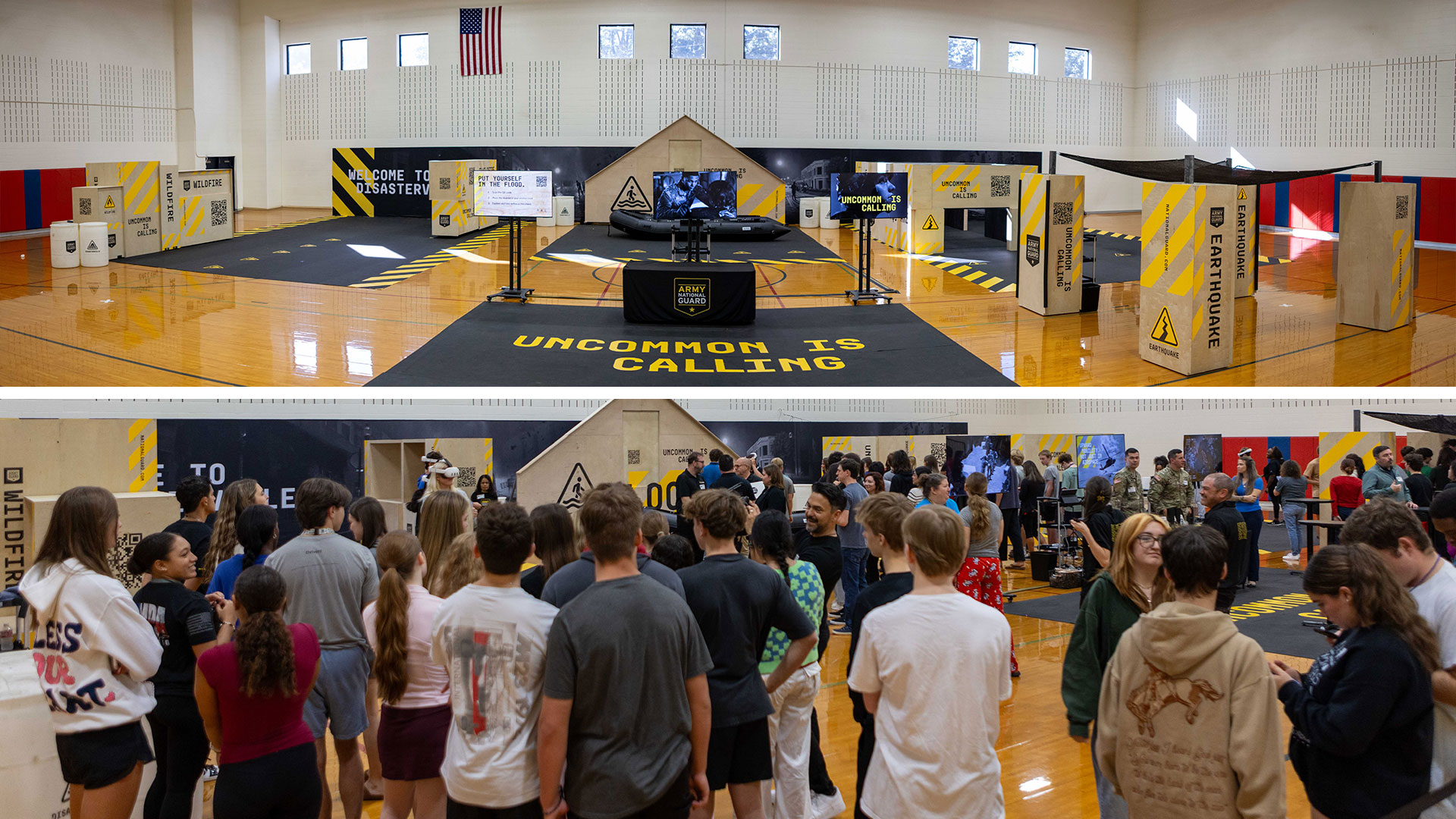
The result is a one to one relationship between the real room and the virtual world. If there is a wall, boundary, or object in the physical space, it exists in the same place in VR. No external sensors. No ceiling installs. No permanent infrastructure. Learn more about the U.S. Army National Guard production – https://www.groovejones.com/disasterville-mixed-reality-experience-army-national-guard
Multiuser Presence that Feels Natural
Alignment alone is not enough. Players also need to see and understand each other in motion. The platform uses a local multiplayer architecture where each headset runs its own instance of the experience while synchronizing body position, head movement, and hand tracking through a shared server. One client acts as the session authority, resolving conflicts and keeping everyone in sync. Because everything is anchored to the same spatial reference, avatars move exactly where people expect them to be. When someone reaches out, steps forward, or turns around, it feels predictable and safe.

That predictability is critical. In tight co-location spaces, even small latency or drift issues become safety risks. Designing around those constraints was a core priority from day one.
Designed for Real World Deployment
This platform was not built in a lab. It was built for pop ups, training rooms, and live events. That reality shaped every decision. Setups are designed to be mobile and fast. A typical deployment can establish a 25 by 35 foot shared play space in a few hours using only headsets and a small kit of physical markers. There is no dependency on venue infrastructure beyond power and basic networking.
The system can operate offline using a local server, which is critical for locations with unreliable connectivity. Operator tools allow staff to control sessions, reset experiences, and monitor state without interrupting players.
Key Components
- Meta Quest 3 Headsets (Currently Supported)
- Show Controller iPad App
- PC Nuc for Multiplayer Server
- Local Wifi Network Router
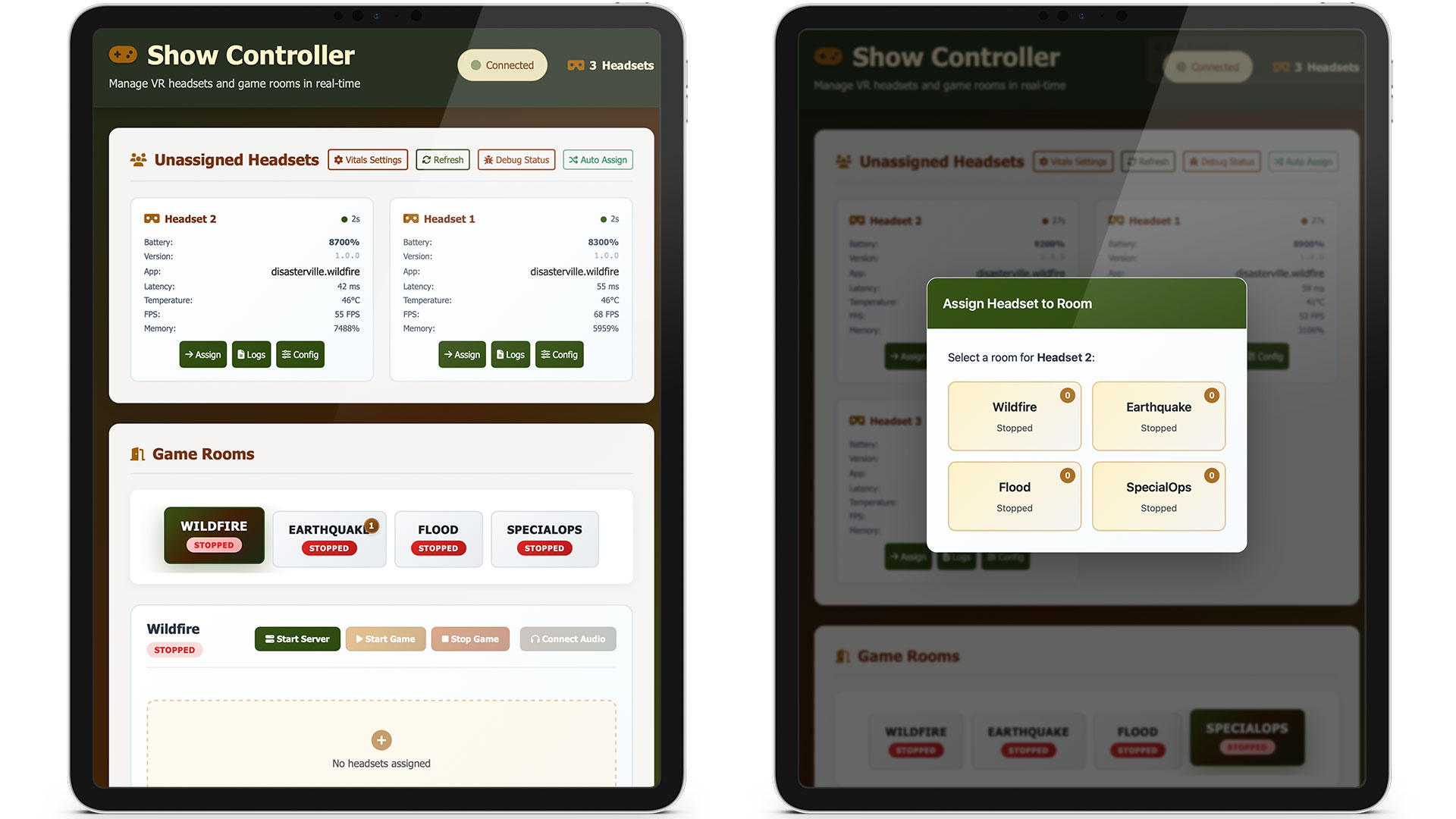
This makes the platform viable for everything from touring activations to enterprise training programs rolled out across multiple locations.
Built for flexibility, not a single use case
While the platform was proven in a large-scale experiential project like Disasterville, it was never designed to be tied to a single narrative or environment. The same foundation supports multiple configurations. Players can share the same physical space. Trainers or facilitators can join remotely as observers or guides. A game master can interact with participants from outside the room. Sessions can even connect multiple locations together, allowing teams in different cities to participate in the same experience simultaneously.

This flexibility opens doors for enterprise training scenarios where instructors remain centralized while trainees engage locally, as well as experiential concepts that blend physical presence with remote participation.
A Foundation, Not a Finish Line
The GrooveTech Platform is not a packaged product sitting on a shelf. It is an evolving foundation that allows Groove Jones to move faster, safer, and smarter when designing co-location VR experiences. By removing external tracking dependencies and focusing on shared spatial alignment, we have unlocked a more portable, scalable approach to multiuser roomscale VR. One that respects real world constraints while still delivering presence and impact.
As experiential marketing and immersive training continue to converge, platforms like this will matter more than ever. Not because they are flashy, but because they work where it counts. On site, under pressure, with real people moving through real space.
That is the bar we built this platform to meet.